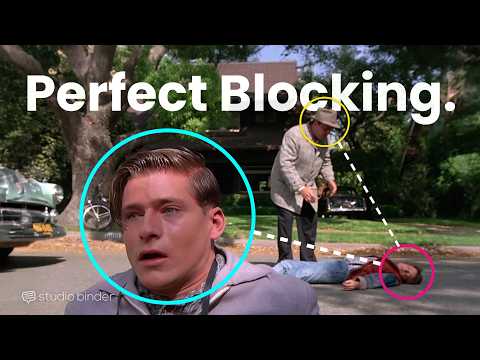
This blog post delves into the exceptional blocking and staging techniques used in Back to the Future, highlighting how director Robert Zemeckis and cinematographer Dean Cundey created a cohesive visual style that enhances storytelling. By maximizing information in each frame and employing dynamic camera movements, they engaged audiences and made the film a classic example of cinematic excellence.
Back to the Future is often hailed as one of the best-constructed screenplays in film history, frequently studied in film schools for its intricate narrative and character development. However, the film's visual storytelling, particularly its blocking and staging, is equally masterful. Director Robert Zemeckis and cinematographer Dean Cundey employed innovative techniques to transform this high-concept film into a cinematic masterpiece.
Blocking refers to the precise staging of actors in a scene to convey meaning and enhance storytelling. In Back to the Future, Zemeckis and Cundey aimed to create a continuous and flowing visual style, allowing audiences to feel as though they were part of the unfolding narrative. Cundey noted that their goal was to make the camera work seamless, avoiding a series of cuts that could disrupt the viewer's engagement with the characters and story.
One of the primary techniques used by Zemeckis and Cundey was to maximize the amount of information presented in each shot. This was achieved through layered compositions, where multiple elements are included in a single frame. For example, a shot featuring Marty and Jennifer places them in the center, with the clock tower behind them and a donation jar in the foreground. This approach allows the audience to absorb relevant story information without unnecessary cuts.
Zemeckis also utilized dynamic camera movements to enhance the storytelling experience. By moving the camera along the X, Y, and Z axes, he created layered shots that added depth and complexity. For instance, a shot featuring Marty in the background transitions smoothly as the camera tilts down and moves laterally, ultimately focusing on Doc in the foreground. This technique not only eliminates the need for cuts but also keeps the audience engaged in the action.
Another effective technique employed in the film is eye trace, which guides the audience's attention through the scene. For example, a yellow car in the background draws the viewer's gaze toward Marty and Jennifer, mirroring Marty's own attention. This method ensures that the audience follows the narrative flow without losing track of the characters' interactions.
Zemeckis excelled in blocking along the Z-axis, where characters move toward and away from the camera. This technique allows for longer takes and a more visually active experience. One notable scene features a stationary camera capturing a minute-long shot that shifts between six blocking positions, showcasing Doc's frenetic energy as he explains the time machine to Marty. This dynamic blocking not only enhances the visual storytelling but also reflects the characters' thought processes.
The film frequently employs multi-step blocking to create seamless transitions between shots. For instance, during a conversation between Doc and Marty, the characters move in and out of the frame, allowing for multiple perspectives within a single shot. This technique not only keeps the action continuous but also visually represents the characters' evolving thoughts and ideas.
The dynamic blocking in Back to the Future serves a dual purpose: it fits the scene's context and aids the audience in processing the narrative beats. The interplay between blocking and dialogue creates a richer viewing experience, where the visual elements complement the story's emotional and thematic depth. For example, when Doc and Marty discuss the challenges of time travel, the blocking reflects their urgency and the stakes involved.
The success of Back to the Future's blocking and staging can be attributed to meticulous preparation. Zemeckis and Cundey's ability to plan complex shots, such as eight shots in one, demonstrates the importance of thorough pre-production work. By carefully scripting, storyboarding, and scheduling, filmmakers can achieve a level of visual storytelling that captivates audiences and elevates the narrative.
In summary, Back to the Future stands as a testament to the power of perfect blocking in film. Through innovative techniques and a cohesive visual style, Zemeckis and Cundey created a cinematic experience that remains engaging and memorable, proving that effective blocking is essential to storytelling in cinema.