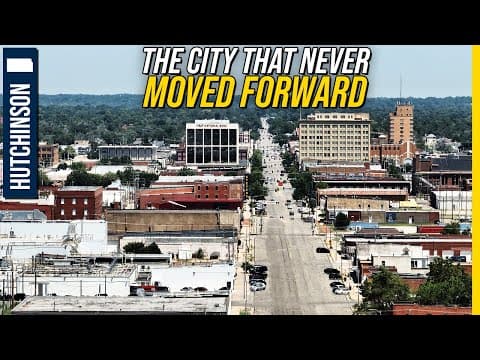
Hutchinson, Kansas, once a thriving city due to its salt mining industry, now faces significant economic stagnation, population decline, and underemployment. Despite some redevelopment efforts, the city struggles to attract young professionals and businesses, leading to a bleak outlook for its future.
Hutchinson, Kansas, often referred to simply as "Hutch," is a city that has seen better days. Nestled about 30 minutes northwest of Hutchinson, this city has become synonymous with stagnation. With a population of around 40,000, Hutchinson is big enough to host events like the Kansas State Fair and attractions such as the Kansas Cosmosphere and Space Center, yet it struggles with economic growth and a lackluster atmosphere.
Upon revisiting Hutchinson after two decades, it is evident that not much has changed. The city has lost approximately 3,000 residents since its peak population of 42,000 in 2010, marking the most significant decline in its history. From 1980 to 2010, the population grew by a mere 2,000, indicating a troubling trend for a city of its size. The poverty rate stands at 15.2%, with a median household income of $58,000, both below the national average. While the unemployment rate is relatively low at 4%, underemployment is a pressing issue, as employers hesitate to expand due to a lack of young professional talent.
The cycle of stagnation in Hutchinson is self-perpetuating. Young people often leave for better opportunities elsewhere and rarely return, leading to a workforce that lacks the skills and dynamism needed to attract new businesses. Consequently, employers are reluctant to invest in the area, further exacerbating the economic decline. This trend has resulted in a significant concentration of economic growth in larger metropolitan areas, leaving smaller cities like Hutchinson behind.
Driving through downtown Hutchinson reveals a mix of vacant storefronts and outdated buildings. Once a bustling retail hub, downtown has struggled to recover since the construction of the Hutchinson Mall in the 1980s, which drew business away from the city center. Although there have been some recent investments aimed at revitalizing downtown, such as plans to convert an old hotel into apartments, the overall appearance remains run-down.
One notable redevelopment project involves the old Landmark Hotel, which is set to be transformed into 36 new apartments. This project, funded by state grants and local investors, is scheduled to begin construction in July 2025, with completion expected in the summer of 2026. However, many other buildings in downtown remain in disrepair, and significant investment is needed to attract young professionals back to the area.
Hutchinson's conservative approach to change poses a significant barrier to revitalization. Local leaders often resist aggressive strategies to attract new businesses and residents, leading to a culture of complacency. Laura Dick, a local banker passionate about revitalizing Hutchinson, faced skepticism when proposing housing developments aimed at attracting young people. Her vision aligns with the need for a more dynamic approach to economic development.
Attracting young talent is crucial for Hutchinson's future. Without a vibrant workforce, the city risks further decline. The lack of investment in housing and amenities discourages young people from returning after college, perpetuating the cycle of stagnation. If Hutchinson fails to adapt and innovate, it may face a long-term decline, with the population potentially dropping to 35,000 in the next decade.
The Hutchinson Mall, which opened in 1985, is a prime example of the city's economic struggles. Once a thriving shopping destination, it has become a shadow of its former self, now rebranded as "Uptown Hutch" in an attempt to attract new businesses. Despite efforts to offer reduced rent to new tenants, the mall remains largely vacant, with only a few notable stores like Hobby Lobby and TJ Maxx.
The closure of major retailers, including Target in 2017, has further diminished the mall's appeal. The loss of these stores reflects a broader trend of retail decline in Hutchinson, as the city struggles to compete with larger markets like Wichita. The decline of the mall has also impacted downtown, which has not seen the revitalization that many similar cities have experienced.
Hutchinson's history is rich, with its roots tracing back to the discovery of salt deposits in the late 19th century. The city thrived as a salt mining hub, contributing significantly to its economy. However, as the economy shifted and industries evolved, Hutchinson failed to adapt, leading to its current state of stagnation.
The salt industry was once the backbone of Hutchinson's economy, with the Hutchinson Salt Company being a major employer. Today, however, the industry has dwindled, and the city must find new avenues for economic growth. The Kansas Cosmosphere and Space Center remains a bright spot, showcasing the city's historical significance in space exploration.
Hutchinson, Kansas, stands at a crossroads. With its rich history and potential for growth, the city must embrace change and innovation to attract new residents and businesses. Without a concerted effort to revitalize downtown, invest in housing, and create a vibrant community, Hutchinson risks becoming a relic of its former self. The time for action is now, or the city may find itself reminiscing about the good old days without a clear path forward.