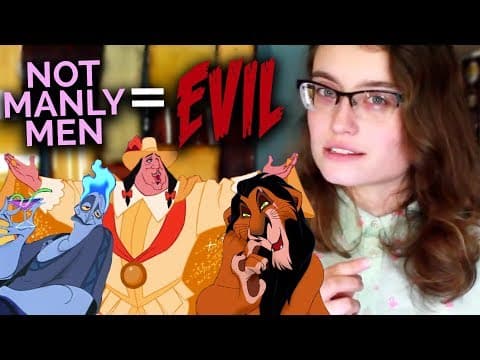
This blog post delves into the concept of queer coding in Disney's male animated villains, examining how traits associated with femininity and cowardice are often used to characterize these figures, reinforcing negative stereotypes about the queer community.
In the realm of animated films, Disney has created a plethora of memorable characters, including a variety of male villains. While many viewers may not have a favorite male villain, a closer examination reveals intriguing patterns in their characterization. This post explores the concept of queer coding in Disney's male animated villains, highlighting how certain traits are often associated with femininity and cowardice, which can perpetuate negative stereotypes about the queer community.
One of the most notable observations about male villains is their frequent portrayal as creepy or predatory. Unlike female villains, who are often depicted as cold and powerful, male villains tend to embody traits that align with what is known as the "sissy archetype." This archetype describes characters who are effeminate or cowardly, often used to insult men by implying they possess feminine qualities. The roots of this archetype can be traced back to the silent film era, and it has evolved into a recognizable trope in modern media.
The characteristics of the sissy archetype often remind viewers of the "sassy gay friend" trope, which features a flamboyant, fashion-loving character. TV Tropes refers to this as the "Camp Gay" trope, suggesting that it was inspired by figures like Oscar Wilde. While there is nothing inherently wrong with being an effeminate, fashion-loving gay man, the predominance of this representation in children's media as a villain can lead to restrictive stereotypes about the diverse queer community.
Queer coding refers to the practice of giving characters traits that subconsciously signal queerness to the audience. It does not necessarily imply that a character is gay or that their villainy is rooted in their queerness; rather, it suggests that society associates queer traits with negative qualities. A significant paper titled "Gender Transgression and Villainy in Animated Film" discusses how villains often exhibit characteristics of gender deviance, which society does not expect from its members.
In animated films, heroes typically embody appropriate gender presentation and desirable traits, while villains reflect undesirable behaviors. This contrast becomes evident when examining the physical characteristics of male villains compared to their heroic counterparts.
Disney heroes are often depicted as solid, muscular, and handsome, representing the epitome of masculinity. In contrast, male villains frequently appear thin, ugly, and lacking in physical strength. For instance, Scar from "The Lion King" is emaciated compared to his brother Mufasa, who has a broad and strong face. Similarly, Hades from "Hercules" has a long, thin face, while Zeus is portrayed with a square, muscular visage.
The wardrobe of male villains often deviates from traditional masculinity. Governor Ratcliffe from "Pocahontas" exemplifies this with his pink attire and frilly cuffs, which would be considered "girly" in the context of Disney heroes. This stark contrast in clothing choices reinforces the notion that male villains are often coded with feminine traits.
Another common trait among male villains is the use of makeup, such as darkened eyelids and lips, which is typically reserved for female characters. Additionally, male villains often exhibit graceful body language, contrasting with the proud and assertive posture of male heroes. This juxtaposition further emphasizes the feminine qualities attributed to these villains.
The implications of queer coding in Disney's male villains are significant. By associating femininity with villainy, these portrayals reinforce traditional gender roles and the idea that masculinity and femininity must be distinct. This can lead to harmful stereotypes, suggesting that men who exhibit feminine traits are somehow lesser or deviant.
While one might hope that contemporary films have moved past these outdated representations, recent examples like King Candy from "Wreck-it Ralph" still reflect these patterns. King Candy is depicted as tiny and wimpy, contrasting sharply with the muscular hero, Wreck-it Ralph. Although Felix, another character, displays some feminine qualities, his heterosexual romantic storyline serves to distance him from any potential queerness.
The exploration of queer coding in Disney's male animated villains reveals a troubling pattern that has persisted throughout the history of animated films. While characters like Scar and Hades may be entertaining and memorable, their problematic representation of queerness serves as a reminder of the stereotypes that continue to influence perceptions of gender and sexuality. It is essential for audiences to recognize these patterns and encourage more diverse and nuanced portrayals of queer characters in the future.
As we reflect on our childhood experiences with these characters, it is crucial to acknowledge the impact they may have had on our understanding of gender and sexual identity. By advocating for varied queer roles in media, we can help foster a more inclusive representation for future generations.