Slovakia is a landlocked Central European country with a rich history, vibrant culture, and a mixed economy focused on industry. It faces challenges in economic development but has opportunities in tourism, technology, and renewable energy.
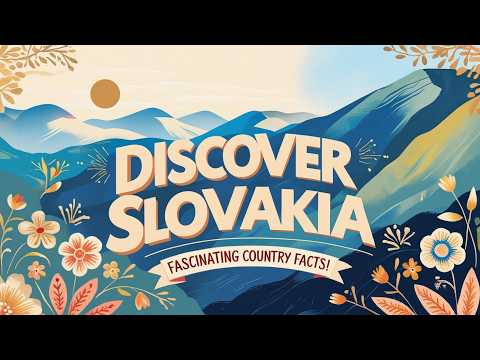
Slovakia, a captivating country in Central Europe, is known for its rich history and vibrant culture. In this blog post, we will explore various fascinating aspects of Slovakia, including its geography, historical background, cultural traditions, economic landscape, and the challenges and opportunities it faces today.
Slovakia is a landlocked country situated in Central Europe. It shares borders with several countries: Poland to the north, Ukraine to the east, Hungary to the south, Austria to the west, and the Czech Republic to the northwest. Covering an area of 49,335 square kilometers, Slovakia is home to approximately 5.4 million people. Its diverse geography includes mountains, valleys, and rivers, making it a picturesque destination for nature lovers.
The history of Slovakia is long and complex, marked by its association with various empires and kingdoms. Throughout the ages, Slovakia has been part of the Roman Empire, the Kingdom of Hungary, the Austro-Hungarian Empire, and the Czechoslovak Republic. It wasn't until 1993 that Slovakia became an independent state, following the peaceful dissolution of Czechoslovakia. This rich historical tapestry has shaped the nation’s identity and cultural heritage.
Slovakia boasts a vibrant cultural scene characterized by rich traditions and customs. One of the most notable aspects of Slovak culture is its folk music, which features various regional styles that reflect the country’s diverse heritage. Traditional costumes, known as "kroj," are still worn during special occasions and festivals, showcasing the country’s artistic craftsmanship and cultural pride.
Slovakia has a mixed economy with a strong emphasis on industry, particularly in automotive manufacturing. The country is a member of the European Union and the Eurozone, using the Euro as its currency. This integration into the European market has facilitated trade and investment, contributing to Slovakia's economic growth.
Slovakia operates under a parliamentary system, functioning as a democratic republic with a multi-party system. The president serves as the head of state, while the prime minister is the head of government. This political structure supports a stable governance framework, allowing for democratic processes and citizen participation.
Education and healthcare in Slovakia are free and compulsory for children up to the age of 15. The country has developed a robust education system, resulting in a high literacy rate among its population. Healthcare services are provided through a network of public and private hospitals and clinics, ensuring access to medical care for all citizens.
Despite its many strengths, Slovakia faces several challenges, including economic development, reducing corruption, and improving infrastructure. However, there are also significant opportunities for growth in sectors such as tourism, technology, and renewable energy. By addressing these challenges and leveraging its opportunities, Slovakia can continue to develop and thrive in the coming years.
In conclusion, Slovakia is a fascinating country with a rich history, vibrant culture, and a mixed economy. While it faces challenges in various areas, there are also numerous opportunities for growth and development. Understanding Slovakia's unique characteristics provides valuable insights into this remarkable nation. We hope this overview has sparked your interest in exploring Slovakia further.