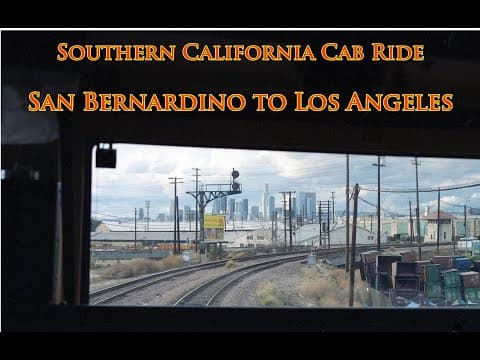
This blog post details a captivating journey aboard the Amtrak Southwest Chief from San Bernardino to Los Angeles, highlighting the train's history, route specifics, and the experience of traveling through Southern California's landscapes.
On March 15, 1999, a unique opportunity arose to experience the Amtrak Southwest Chief, a train that continues the legacy of passenger service initiated by the Atchison, Topeka, and Santa Fe Railway. This blog post recounts the journey from San Bernardino to Los Angeles, showcasing the sights, sounds, and experiences aboard this iconic train.
The Amtrak Southwest Chief operates between Chicago and Los Angeles, providing a vital link across the United States. The train is known for its scenic routes and comfortable travel experience. On this particular day, we boarded the Chief, powered by General Electric's F-42 locomotive number 33, for a segment that would take us through the heart of Southern California.
As we departed from San Bernardino, we noted that the train was running several hours late. The station buzzed with activity, and on our left, the tracks for the Metrolink commuter service were visible, along with a new flyover that connects to the line leading to Los Angeles via Pomona.
The journey from San Bernardino to Buena Park is characterized by a mostly descending grade, starting at an elevation of 1,077 feet above sea level. The maximum speed allowed on this segment is 60 miles per hour, and the train is governed by centralized traffic control all the way to Redondo Junction. This ensures a smooth and safe journey through the varied landscapes of Southern California.
As we rolled out of the station, the sounds of the train filled the air, accompanied by the rhythmic clatter of wheels on tracks. The engineers for this trip, Guy Holloman and Brody Heileman, expertly navigated the route, providing a seamless experience for passengers.
Throughout the journey, communication between the train crew and railway supervisors was crucial. For instance, the crew received updates regarding freight movements and track conditions, ensuring that the train operated safely and efficiently. This behind-the-scenes coordination is vital for maintaining the schedule and safety of all rail operations.
As the train made its way toward Los Angeles, passengers were treated to stunning views of the Southern California landscape. The transition from the mountainous terrain around San Bernardino to the urban sprawl of Los Angeles offered a visual feast, showcasing the diverse geography of the region.
The use of technology in train operations, such as centralized traffic control, enhances the safety and efficiency of rail travel. This system allows for real-time monitoring and management of train movements, which is essential for maintaining schedules and ensuring passenger safety.
The journey aboard the Amtrak Southwest Chief from San Bernardino to Los Angeles is more than just a train ride; it is an experience that connects passengers with the rich history of rail travel in America. From the early days of the Atchison, Topeka, and Santa Fe to the modern comforts of Amtrak, this route continues to be a vital artery for travel across the country. As we arrived in Los Angeles, the memories of the journey lingered, reminding us of the beauty and complexity of train travel in Southern California.