
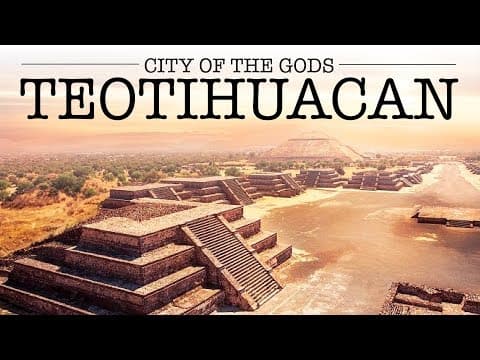
Teotihuacan, known as the City of Gods, is an ancient city near Mexico City that showcases remarkable architectural and cultural achievements. Established around 100 B.C., it features monumental structures aligned with celestial bodies and offers insights into the origins of humankind and ancient civilizations.
Teotihuacan, often referred to as the City of Gods, is a fascinating ancient city located near the Valley of Mexico, approximately 25 miles from modern-day Mexico City. This lost city, established around 100 B.C., is believed to have been one of the largest cities in the ancient world, with a population that may have exceeded 150,000 at its peak. The grandeur of Teotihuacan not only reflects its architectural prowess but also hints at the profound connections between humanity and the divine.
The name Teotihuacan translates to "the place where men become gods" or "where gods were born." This city is a crucial piece in the puzzle of understanding the origins of humankind and the divine. It was built more than a thousand years before the arrival of the Aztecs, who later named it, recognizing its magnificence and scale. Covering an area of 8 square miles, Teotihuacan featured a central thoroughfare known as the Street of the Dead, flanked by monumental structures, including the Temple of the Sun and the Temple of the Moon.
Teotihuacan's architectural achievements are comparable to the pyramids of Egypt. The Temple of the Sun, the largest structure in the city, has a base area similar to that of the Great Pyramid of Khufu at Giza, measuring nearly 750 square feet. The layout of the city is particularly intriguing, with major monuments aligned along a north-south axis. The pyramids along the Street of the Dead are not only aligned with celestial bodies but also mirror the distances between planets in our solar system.
At the heart of Teotihuacan lies the Pyramid of the Sun, which stands 75 meters high and has a base measuring 225 meters. This pyramid is the second largest known pyramid in the world. It is believed that only priests were permitted to ascend its steps for rituals and ceremonies, emphasizing its sacred significance.
The origins of Teotihuacan's construction remain a topic of debate among scholars. Some attribute its creation to the Toltecs, while others suggest the Totonac culture played a significant role. Evidence of multiple cultural influences is evident in the city's layout and structures, with contributions from the Mayan, Mixtec, and Zapotec civilizations. Texts from both the Mayan and Zapotec cultures have been discovered within the temples of Teotihuacan, indicating a rich tapestry of cultural exchange.
Excavations, particularly around the Pyramid of the Moon, have revealed remnants of both animal and human sacrifices, suggesting that these offerings were part of religious rituals aimed at appeasing the gods. The discovery of severed heads and buried animals within the temple underscores the ceremonial importance of the pyramid and the spiritual practices of its inhabitants.
One of the most intriguing findings at Teotihuacan is the presence of mica, a mineral typically found over 3,000 miles away in Brazil. Mica was used extensively in the construction of the city's buildings, hinting at possible connections with other ancient cultures, including Indian, Egyptian, Greek, Roman, and Chinese civilizations. The significance of mica lies not only in its rarity but also in its unique properties; it is stable under various conditions and possesses electrical characteristics, making it an extraordinary material for ancient builders.
The question of humanity's origins continues to captivate our collective imagination. Teotihuacan stands as a testament to the advanced capabilities of ancient civilizations and their quest for understanding the divine. The city's architectural and cultural achievements reveal a deeper connection that transcends time and geography, reminding us of our shared heritage.
As we explore the remnants of Teotihuacan, we are invited to reflect on the complexities of our existence and the enduring search for meaning in our lives. This ancient city not only enriches our understanding of the past but also inspires us to delve deeper into the mysteries of our origins and the potential of human civilization.



















