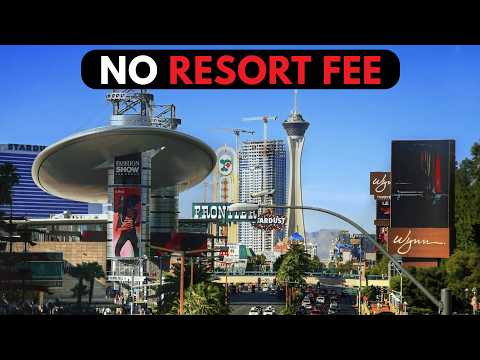
Las Vegas hotels often add hidden resort fees and parking charges, frustrating visitors. However, five hotels defy this trend by offering honest pricing without resort fees or hidden costs. These hotels, including Four Queens, Desert Rose Resort, Marriott's Grand Chateau, Jockey Club, and Casino Royale, provide transparency and respect for consumers, challenging the corporate greed dominating the Strip.
Las Vegas, once known for its integrity and straightforward hospitality, has become a city where hidden fees and deceptive pricing tactics dominate the hotel industry. When booking a hotel on the Strip, the price displayed often serves as bait. Upon arrival, guests face resort fees, utility fees, and exorbitant parking charges that add significantly to the cost of their stay.
These fees are justified by hotel executives as necessary for inflation, pool maintenance, or Wi-Fi connectivity. However, the reality is that these invisible fees add no real value to the guest experience. Instead, they cover managerial incompetence, bloated executive salaries, and shareholder greed. This practice disrespects consumers and turns them into unwitting victims of a financial scheme.
Despite the dominance of corporate monopolies on the Strip, a few hotels resist this trend. These five hotels in Las Vegas do not charge resort fees or hidden parking fees, offering a transparent and fair pricing model. Their existence challenges the deceptive practices of billion-dollar mega-resorts and offers guests an honest alternative.
Located beneath the dazzling canopy of Fremont Street, Four Queens is a rare relic from 1966 that refuses to charge resort fees. A retired visitor from Ohio, who has been coming to Vegas for two decades, praises Four Queens for its honest pricing, contrasting it with the deceptive fees common elsewhere.
While the rooms may show their age, staying here means experiencing authentic Vegas without hidden charges. The Fremont Street Experience nearby offers free concerts and entertainment without additional fees. However, note that Four Queens recently started charging for parking, but this fee is disclosed upfront, unlike resort fees.
Desert Rose Resort offers a radical departure from the typical Vegas hotel by operating without a casino or resort fees. This condo-style lodging model eliminates the need for a large executive structure and the associated hidden fees.
Guests enjoy amenities such as a heated pool, fitness center, and high-speed Wi-Fi at the price advertised online. The resort disproves the claim that resort fees are necessary to cover operational costs, showing that honest profitability is possible without deceptive charges.
Marriott's Grand Chateau is a large, internationally owned property that also does not charge resort fees. It offers rooftop pools, bars, and full amenities, proving that even big hotels can operate transparently.
However, it operates under a vacation club (timeshare) model, which involves high-pressure sales presentations and offers that can lead to costly ownership packages with annual maintenance fees. Guests should be cautious and aware of these sales tactics. Additionally, there is a mandatory $25 daily parking charge.
Nestled between the Cosmopolitan and Bellagio, the Jockey Club is an aging, modest hotel that charges no resort fees. Despite its dated appearance and basic amenities, it stands as a testament to honest business practices.
The Jockey Club shares the same expensive real estate and operating costs as its luxurious neighbors but chooses not to impose hidden fees. This contrast exposes the resort fees of mega-resorts as a deliberate choice driven by corporate greed rather than necessity.
Casino Royale, located directly across from the Mirage Volcano, is the ultimate example of a hotel that refuses to charge resort fees or parking fees. Operating since the 1970s on prime Las Vegas Boulevard real estate, it disproves the argument that high operating costs necessitate hidden fees.
A retired hardware store owner from Michigan compares the practice of adding hidden fees to a store charging extra after ringing up a sale, which would be unsustainable in any other business. Casino Royale’s transparent pricing model challenges the mega-resorts’ justification for resort fees and highlights the corporate greed fueling these charges.
The prevalence of hidden fees in Las Vegas hotels reflects a broader shift from mutual respect and transparency to calculated deception. The mega-resorts’ resort fees are not about maintaining amenities but about subsidizing corporate debt, executive compensation, and inefficient management.
For consumers, especially those who remember a different era of Vegas hospitality, choosing hotels without resort fees is more than a financial decision—it is a stand for principle and integrity. Every booking is a vote for transparency and fairness or for the continuation of exploitative practices.
Las Vegas remains a city of dazzling lights and endless temptations, but beneath the surface lies a complex financial machine fueled by consumer complacency and corporate greed. The five hotels highlighted—Four Queens, Desert Rose Resort, Marriott's Grand Chateau, Jockey Club, and Casino Royale—offer a beacon of honesty in this landscape.
By choosing these hotels, visitors can enjoy their stay without falling victim to hidden fees and deceptive pricing. More importantly, they can support a return to ethical business practices in Las Vegas hospitality.
If you have experiences with hidden fees or know of other hotels that offer transparent pricing, sharing your insights can help foster a larger conversation about fairness and integrity in the industry. Ultimately, the power to demand change lies with the consumer’s wallet and choices.