
The Dark Ages, spanning from the 5th to the 15th century, were marked by extreme violence, rampant disease, and a brutal feudal system. Life for peasants was harsh, with high mortality rates, limited rights, and constant threats from both nobility and invading forces like the Vikings. The era saw bizarre social phenomena, such as mass dancing manias, and a lack of justice, with murder rates soaring. This blog post delves into the grim realities of life during this tumultuous period, highlighting
The Dark Ages, often referred to as the Medieval period, spanned from the 5th to the 15th century and is characterized by a series of brutal realities that shaped the lives of millions. This era was marked by extreme violence, rampant disease, and a harsh feudal system that left the majority of the population—peasants—living in dire conditions. In this blog post, we will explore the chaotic and often horrific aspects of life during the Dark Ages, from the brutal sports of the time to the oppressive social structures that governed daily existence.
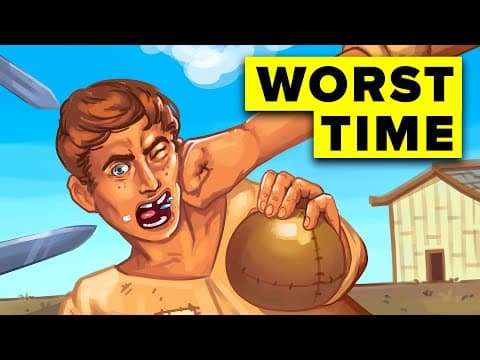
Life in the Dark Ages was not only about survival; it also included forms of entertainment that were often violent and chaotic. One such example is the game of mob football, which was played by peasants in England. In 1194, on Shrove Tuesday, a large crowd gathered in London to participate in this rough sport. According to William FitzStephen, a 12th-century monk, the game quickly escalated from the fields to the streets, resulting in injuries and even deaths. The lack of rules meant that violence was commonplace, leading to a ban on the game by various kings who deemed it a threat to public order.
The social structure of the Dark Ages was dominated by the feudal system, which placed the monarchy at the top and peasants at the bottom. Nobles and lords owned the land, while peasants, many of whom were serfs, worked it under oppressive conditions. Serfs had few rights and were bound to the land, often having to pay fees to their lords for basic rights, such as marriage. The emotional toll of this unfair system was immense, leading to a life described by philosopher Thomas Hobbes as "poor, nasty, brutish, and short."
The Vikings, known for their brutal raids, added to the chaos of the Dark Ages. Between the 9th and 10th centuries, they conducted over 200 raids on England, leaving devastation in their wake. The Anglo-Saxons faced horrific violence, particularly in Northumbria, where Viking leaders like Ivar the Boneless and Ubba slaughtered entire populations. The infamous Blood Eagle execution method exemplified the brutality of the time, as it involved gruesome torture and public displays of violence.
For the average peasant, life was a constant struggle against starvation, disease, and the whims of their lords. The diet of a peasant was often limited to dark bread made from rye or barley, with meat being a rare luxury. Poor harvests could lead to famine, and the psychological stress of such a life was compounded by the lack of coping mechanisms available at the time. The absence of modern mental health resources meant that many suffered in silence.
One of the more bizarre aspects of the Dark Ages was the occurrence of mass dancing manias, where groups of people would dance uncontrollably until they collapsed from exhaustion or even death. This phenomenon, which occurred in various parts of Europe, is thought to have been a response to the extreme stress and hardships faced by the population. Theories suggest that it could have been linked to ergotism, a condition caused by consuming contaminated grain, leading to hallucinations and erratic behavior.
Alcohol consumption was prevalent during the Dark Ages, with ale being a staple for many peasants. It was often safer to drink than water, which was frequently contaminated. The high consumption rates of ale, averaging 275-300 liters per person per year, contributed to the chaotic social environment, as drunkenness often led to violence and conflict.
Justice in the Dark Ages was arbitrary and often brutal. The legal system favored the wealthy, with peasants facing severe punishments for minor offenses. Trials by ordeal, such as holding a hot iron or being submerged in water, were common, and the outcomes were often fatal. The murder rate was alarmingly high, with towns like Oxford experiencing rates of 110 per 100,000 people, a stark contrast to modern statistics.
The oppressive conditions faced by peasants eventually led to uprisings, most notably the Peasants' Revolt of 1381. Fueled by rising taxes and the desire for better rights, the revolt saw peasants marching towards London, demanding justice. Although the revolt was ultimately crushed, it marked a significant moment in history, highlighting the growing discontent among the lower classes.
Disease was rampant during the Dark Ages, with the bubonic plague, known as the Black Death, decimating populations across Europe. The lack of sanitation and understanding of disease contributed to the high mortality rates. Illnesses such as tuberculosis, dysentery, and smallpox were common, and medical practices were often rudimentary and painful, with little regard for patient comfort.
The Dark Ages were characterized by violence, disease, and a lack of justice, creating a grim reality for the majority of the population. The feudal system kept peasants in a state of servitude, while the constant threat of invasion and internal conflict added to their suffering. Despite the chaos, this period also laid the groundwork for future social changes and the eventual rise of more equitable systems. Understanding the Dark Ages is crucial for comprehending the evolution of society and the human condition throughout history.



















