This blog post delves into the current state of Indian Railways, highlighting its historical significance, ongoing challenges in cleanliness, punctuality, and infrastructure, and contrasting it with advancements in other countries. It also discusses the introduction of modern trains like Vande Bharat and RRTS, emphasizing the need for reforms to improve the overall travel experience.
Indian Railways is the fourth largest railway network in the world, spanning over 67,000 kilometers and transporting approximately 23 million passengers daily. Despite its impressive scale and historical significance, the experience of traveling on Indian Railways often leaves much to be desired. This blog post aims to explore the root causes of these challenges through a firsthand journey on the railways.
The inception of Indian Railways dates back to 1832, with the first proposal for its construction. However, it wasn't until 1853 that the first train ran between Bombay and Thane, covering a distance of 34 kilometers with 400 passengers on board. Over the years, the railway network expanded significantly, playing a crucial role in the British colonial economy by facilitating the transport of raw materials and military troops.
By the 1900s, the railway network had grown to 25,000 kilometers, and it continued to evolve through the 20th century, especially after India's independence in 1947. The introduction of diesel and electric locomotives marked a significant modernization phase, with 94% of the network now electrified.
Despite the historical growth and modernization efforts, the current state of Indian Railways is often criticized for its cleanliness, punctuality, and overall passenger experience. During a recent journey, the train was delayed by nearly 45 minutes, a common occurrence that reflects the operational inefficiencies plaguing the system.
Traveling in both General and AC coaches revealed stark differences in cleanliness and hygiene. While the AC coaches offered some level of comfort, the washrooms were often in poor condition, with clogged facilities and unpleasant odors. Passengers frequently expressed their disappointment regarding the sanitation standards, which have not improved significantly over the years.
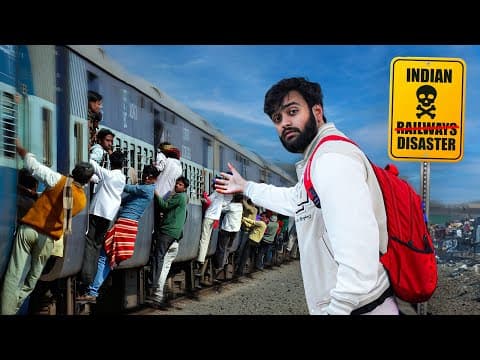
The overcrowding in trains, especially in General and Sleeper classes, is a pressing issue. Many passengers reported uncomfortable conditions, with some even forced to stand due to lack of space. The experience in the General coach was particularly chaotic, highlighting the urgent need for better crowd management and infrastructure.
When compared to railway systems in countries like China and Russia, Indian Railways falls short in terms of speed, efficiency, and passenger amenities. For instance, Russia's Sapsan high-speed train can reach speeds of 350 km/h, providing a premium travel experience with timely service and quality meals. In contrast, Indian passenger trains operate at an average speed of 50-60 km/h, with Vande Bharat Express being one of the few exceptions, achieving an average speed of 84 km/h.
In recent years, Indian Railways has introduced modern trains like Vande Bharat and RRTS (Regional Rapid Transit System) to enhance the travel experience. Vande Bharat, launched in 2019, is designed for comfort and efficiency, operating on select high-speed corridors. RRTS aims to alleviate traffic congestion in the NCR region, providing a faster alternative for commuters.
Despite these advancements, significant reforms are necessary to address the ongoing challenges faced by Indian Railways. The need for technological upgrades, improved decision-making processes, and better training for staff is critical to enhance operational efficiency and passenger satisfaction.
Indian Railways has faced financial challenges, with an operating ratio that indicates spending more than it earns. The shift towards more profitable AC coaches at the expense of non-AC options has led to overcrowding and dissatisfaction among passengers. The government has announced plans to introduce more sleeper coaches to address these issues, but the overall infrastructure still requires substantial investment and modernization.
The journey through Indian Railways reveals a complex picture of a system with rich historical roots but facing significant modern challenges. While the introduction of high-tech trains like Vande Bharat and RRTS marks a step towards improvement, the need for comprehensive reforms in cleanliness, punctuality, and infrastructure remains paramount. As India continues to grow, the expectations for its railway system must also evolve to meet the needs of its citizens effectively.