
This blog post delves into the intricate relationships between enslaved Africans and Native American societies, examining the diverse systems of slavery, the impact of European colonization, and the emergence of maroon communities as forms of resistance and collaboration.
In this discussion, we explore the intersection of slavery and freedom within Native American societies, particularly focusing on the interactions between enslaved Africans and indigenous peoples in North America during the 18th and 19th centuries. This examination reveals the diverse systems of slavery and captivity that existed and how they sometimes overlapped, leading to new opportunities for freedom.
Before delving into the systems of slavery, it is essential to understand what North America looked like prior to European colonization. In the 14th century, the continent was home to a vast array of indigenous cultures, languages, and civilizations. There were approximately 300 languages spoken across North America, with a population in the tens of millions. These societies were diverse, with distinct cultural practices, economies, and ways of life.
Despite this diversity, it is crucial to note that indigenous societies were not devoid of conflict, war, or slavery. Some groups, like the Comanche, were known for their militaristic nature and engaged in the enslavement of other indigenous peoples.
The arrival of Christopher Columbus marked a transformative moment in history, introducing European practices of enslavement to the Americas. While slavery existed among Native American societies, it differed significantly from the chattel slavery that Europeans would impose.
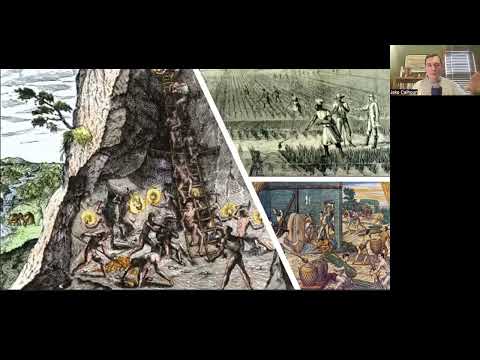
Columbus enslaved the Taino people he encountered, leading to their rapid decline due to warfare, enslavement, and disease. The encomienda system, established by the Spanish, exploited Native American labor for mining and agriculture, particularly in sugar production. As indigenous populations dwindled due to disease, enslaved Africans became a sought-after labor source, leading to the rise of chattel slavery.
Chattel slavery, a term that refers to the permanent and inheritable status of enslaved individuals, became a defining characteristic of European slavery in the Americas. Under this system, enslaved Africans were treated as property, devoid of humanity, and their status was passed down through maternal lines. This understanding of slavery was unique and differed from other forms of servitude found globally.
As European colonists expanded westward, conflicts with indigenous peoples intensified. Captivity became a common practice during these conflicts, with both sides taking captives for various reasons.
Native American groups often took captives during raids, but their approach to captivity differed from European practices. Captives were sometimes integrated into the kinship networks of their captors, allowing for a potential return to a semblance of normalcy within the community. This practice was often motivated by the need to replenish populations decimated by disease and conflict.
The interactions between enslaved Africans and Native Americans led to the formation of maroon communities—groups of escaped enslaved individuals who established independent settlements. These communities often found refuge among indigenous peoples, creating a complex web of collaboration and resistance.
The relationship between enslaved Africans and Native American societies was marked by complexity and nuance. While both groups faced oppression, they also found ways to resist and forge alliances. The legacy of these interactions continues to shape our understanding of American history, highlighting the resilience and agency of those who fought against the systems of oppression that sought to define them.
As we continue to explore this history, it is essential to recognize the diverse experiences and narratives that contribute to our understanding of slavery and freedom in the Americas.



















