
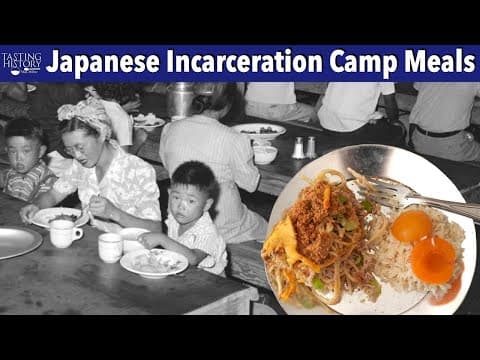
This blog post delves into the food experiences of Japanese Americans in internment camps during World War II, highlighting recipes, challenges, and the cultural significance of meals in the camps, as well as personal stories from survivors like George Takei.
In February 1942, President Franklin D. Roosevelt signed Executive Order 9066, which led to the forced removal of all persons of Japanese ancestry from the West Coast of the United States. Approximately 125,000 Japanese Americans were sent to internment camps scattered across the country. This blog post explores the food experiences of those incarcerated, focusing on what they ate and how they adapted to their circumstances.
The internment of Japanese Americans was a response to fears of espionage and sabotage following the attack on Pearl Harbor. Under the command of U.S. Army Lieutenant General John L. Dewitt, the government forcibly relocated individuals based solely on their ancestry, without any due process. Many of those affected were U.S. citizens, and the camps were often referred to with euphemisms like "detention centers" or "relocation centers," which downplayed the severity of the situation.
Upon arrival at the camps, many Japanese Americans found themselves in poorly constructed facilities, often in remote areas. For instance, at Manzanar in California, the first meals were served in an unfinished mess hall with only one operating stove, relying heavily on canned Army rations. The initial months were chaotic, with no designated cooks, leading to a mix of culinary experiences that varied greatly in quality.
Food became a crucial aspect of life in the camps, serving as a means of comfort and a connection to home. Evelyn Kimura, a resident of the Topaz Relocation Center in Utah, contributed to this by writing a column called "Food Fancies" in the camp's newspaper, the Topaz Times. She provided recipes that could be made with limited ingredients and equipment, such as a tuna noodle casserole known as "Luncheon Tuna."
The recipe for Luncheon Tuna included:
This dish was often reserved for special occasions, as ingredients like canned tuna were considered precious. Cooking methods were limited, with many lacking access to ovens, which made baking difficult.
The food available in the camps was often of poor quality, consisting of military rations and unfamiliar ingredients. Many Japanese Americans were farmers before their internment, and they were eventually able to cultivate gardens and farms within the camps. For example, Manzanar had 440 acres of cultivated fields and orchards, producing surplus vegetables and fruits that could be shared with other camps.
The younger generation, known as Nisei, often found the camp food more palatable than the older Issei generation, who were accustomed to traditional Japanese cuisine. Common camp foods included meatloaf, canned sauerkraut, and spaghetti, which were not staples in Japanese cooking. As a result, meals often featured odd combinations, such as rice with Jell-O or canned fruit.
Despite the harsh conditions, food served as a means of maintaining cultural identity and community. Celebrations, such as the Japanese New Year, included traditional foods like mochi, which were made in communal settings. George Takei, a notable figure who grew up in one of the camps, recalls the excitement of making mochi with family and friends.
As the war progressed and many younger residents were released on work permits, the camps were left with an older population that struggled to maintain the farms. This led to a decline in food quality and availability, reminiscent of the early days of internment. By 1944, the Topaz Times had ceased publishing recipes, reflecting the deteriorating conditions.
The food experiences of Japanese Americans in internment camps during World War II reveal a complex interplay of survival, adaptation, and cultural resilience. Meals provided a sense of normalcy and community amidst the trauma of incarceration. As we reflect on this period, it is essential to remember the stories of those who lived through it, such as George Takei, who continues to educate others about this dark chapter in American history. Through food, they found ways to cope, celebrate, and maintain their cultural identity, leaving a lasting impact on Japanese American cuisine today.



















