
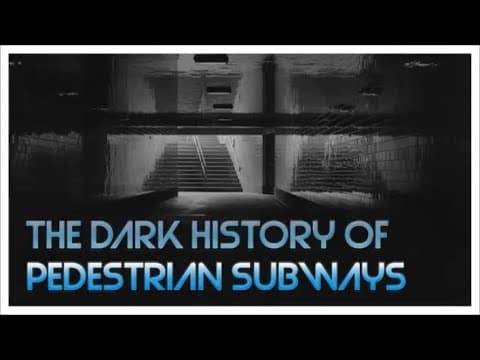
This blog post delves into the history of pedestrian subways in Portland, Oregon, focusing on their original purpose of ensuring safe passage for school children. It discusses the evolution of these tunnels, their decline due to safety concerns, and their current state, highlighting the social issues surrounding them, including homelessness and crime.
In the heart of Portland, Oregon, lies a hidden piece of urban infrastructure: an underground tunnel designed to facilitate pedestrian movement across busy streets. Originally intended to provide safe passage for school children, these tunnels have become notorious for their association with homelessness and crime. This blog post explores the history of pedestrian subways in Portland, their intended purpose, and the challenges they face today.
Located south of downtown Portland, the Kelly Avenue tunnel is one of several pedestrian passageways constructed in the late 1940s. Initially, these tunnels were built to protect children attending the Josiah Failing School from the dangers of heavy traffic. The area surrounding the school was so hazardous that local newspapers dubbed it "Death Island" in 1947, prompting the construction of multiple pedestrian routes, including the Kelly Avenue underpass, which was completed in 1948.
The construction of the Kelly Avenue tunnel coincided with significant urban development in Portland. As the city expanded and traffic increased, the need for safe pedestrian crossings became paramount. The tunnels were designed to provide children with a safe route to school, away from the dangers of busy streets. However, the tunnels quickly became associated with negative connotations, as they were often described as dark, dirty, and unsafe.
Pedestrian subways, as they were known in the past, date back to the 1800s. Initially constructed to protect pedestrians from busy railway lines, their purpose evolved in the 1920s with the rise of automobile traffic. In Portland, the first pedestrian subway was built under Interstate Avenue in 1925, aimed at safeguarding children from the dangers of crossing busy streets.
Despite their initial success, the popularity of pedestrian subways began to wane by the late 1920s. Reports of crime and vandalism in these tunnels led to a decline in their usage. By 1927, the city school board labeled the subway at Oley Green as a hideout for "degenerates," raising concerns about the safety of children using these passageways.
As the years progressed, the reputation of pedestrian subways continued to deteriorate. Incidents of crime, including assaults and robberies, became increasingly common. The tunnels were often described as gathering places for transients and individuals engaging in illicit activities. This negative perception led to a significant decline in pedestrian traffic, as many individuals opted to risk crossing busy streets rather than navigating the dark and potentially dangerous tunnels.
In response to growing concerns, city officials proposed various safety measures, including better lighting and police presence in the tunnels. However, these efforts were often met with resistance due to budget constraints. The city faced a dilemma: while the subways provided a means of safe passage, their maintenance and safety issues made them less appealing to the public.
By the 1930s, many of Portland's pedestrian subways had fallen into disrepair. The Second and Burnside subway, for example, was closed in 1936 due to ongoing complaints from local business owners about the types of people it attracted. Despite attempts to renovate and reopen these tunnels, they continued to be viewed as unsafe and undesirable.
As pedestrian subways fell out of favor, cities began to explore alternative solutions for pedestrian safety. The introduction of crosswalks and traffic signals in the 1930s provided a more accessible and less intimidating means for pedestrians to navigate busy streets. By the late 1960s, the city of Portland officially closed the Broadway and Larabe subway, marking the end of an era for pedestrian tunnels in the city.
Today, remnants of Portland's pedestrian subway system still exist, albeit in a state of neglect. The Kelly Avenue tunnel, for instance, is often filled with graffiti and has become a site for homeless encampments. While some locals advocate for the preservation of these historical structures, others view them as symbols of urban decay.
The story of Portland's pedestrian subways serves as a reminder of the complexities of urban planning and infrastructure. While these tunnels were initially designed to protect children and enhance pedestrian safety, they ultimately became associated with crime and neglect. As cities continue to evolve, the challenge remains to create safe and welcoming spaces for all residents.
The history of pedestrian subways in Portland is a testament to the changing dynamics of urban life. Once seen as a progressive solution to pedestrian safety, these tunnels have become a reflection of the social issues facing many cities today. As we look to the future, it is essential to learn from the past and strive for solutions that prioritize safety, accessibility, and community well-being.



















