
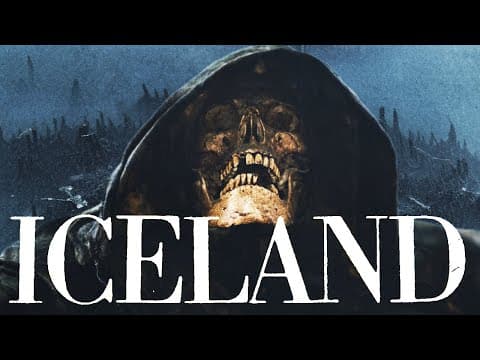
This blog post delves into the rich and complex history of witchcraft in Iceland, tracing its roots from early pagan traditions through the Christianization of the island, the witch trials, and the persistence of magical practices in modern Iceland. It highlights the cultural significance of magic in Icelandic society and the unique characteristics of Icelandic witchcraft, including its gender dynamics and the influence of Christianity.
Throughout history, Iceland has displayed a profound tradition of witchcraft. In a landscape that is both harsh and oppressive, magic was not merely a fringe activity; it was a vital tool for survival. This tradition endured even through the Christianization of Iceland, a phenomenon that did not extinguish pagan beliefs but rather reinforced them. Today, remnants of this rich magical heritage can be found in spellbooks, the names of renowned sorcerers, and the practices of medieval Icelandic magic. This post will explore the entirety of witchcraft in Iceland, from its earliest forms to its surprising presence in modern society.
In the late 9th century, King Harald Fairhair sought to unify Norway under a Christian monarchy. This led to a migration of Norwegians seeking political and religious freedom, who, along with their Celtic slaves, settled in Iceland. The society they established was rooted in their native heritage, governed by local priest-chieftains rather than a single king. These leaders convened annually at the Althing, an assembly that remains Iceland's National Parliament today.
The early Icelandic settlers practiced a form of ancient Germanic paganism, which allowed for significant individual freedom in worship. While some may have worshiped Odin or Freya, others likely did not adhere to any deity. This religious tolerance coexisted with a strong tradition of sorcery, which can be categorized into two types: Galder and Sather. Galder was seen as more honorable, while Sather was viewed as shameful, akin to dark magic. However, these moral distinctions may have been imposed later, as the original practices were more technical in nature.
By the year 1000, much of Northern Europe had converted to Christianity, yet Icelanders resisted this change. Public sacrifices were banned, but private pagan practices continued without significant opposition. The gradual conversion to Christianity accelerated around 1030, coinciding with a period of peace in Iceland. Despite this, many Icelanders retained their old traditions, including witchcraft, which began to intertwine with Christian beliefs.
The era of Icelandic witchcraft during the Christianization process was marked by contradictions. While Christianity condemned witchcraft, elements of the faith began to appear in Icelandic magical practices. This period is often referred to as a dark age for Icelandic magic, as few original texts were produced, and much of what we know comes from sagas and folk tales written later.
The Protestant Reformation in the early 1500s brought renewed pressure on Iceland to conform to European Christian traditions. The Danish crown imposed strict laws against witchcraft, leading to witch trials across the Danish Kingdom. In Iceland, however, the implementation of these laws was chaotic and poorly understood, resulting in a unique situation where most accused witches were men, contrasting sharply with the predominantly female victims of witch trials elsewhere in Europe.
One of the most notable witch trials in Iceland was the Kirkjuból Affair, which unfolded between 1655 and 1660. It centered around Reverend Jon Magnuson, who claimed to be tormented by witchcraft after refusing a marriage proposal from a local family. His accusations against the Johnson family led to a protracted trial that ultimately resulted in the execution of the father and son for witchcraft. This case illustrates the complex interplay of personal grievances and the societal dynamics of witchcraft accusations in Iceland.
Despite the decline of witchcraft practices due to the Protestant Reformation, Icelandic magical traditions persisted. The Galdra Book, written in the late 1500s, remains the most significant Icelandic magical text, containing 47 spells that range from protective incantations to darker forms of magic. This book reflects the blending of pagan and Christian elements, showcasing the unique character of Icelandic witchcraft.
Today, Iceland is predominantly Christian, yet traces of its pagan past endure. The neo-pagan religion of Ásatrú, founded in 1972, seeks to reconnect with ancient Icelandic traditions and has gained a following. While not directly linked to witchcraft, Ásatrú represents a modern revival of Iceland's pre-Christian heritage.
The history of witchcraft in Iceland is a fascinating tapestry woven from threads of paganism, Christianity, and cultural resilience. The harsh landscape of Iceland, combined with its unique social structures, fostered a rich tradition of magic that has persisted through centuries of change. Understanding this history requires a nuanced perspective that acknowledges the beliefs and practices of the past as real and significant to those who lived them. As we explore the legacy of Icelandic witchcraft, we gain insight into the enduring power of cultural traditions and the complexities of human belief.



















