This blog post delves into the unique aspects of Kuwait, focusing on the lesser-known areas and cultural insights that make the country intriguing. It highlights the author's journey to uncover the mysteries of Kuwait's geography, food culture, and the curious 'dark lands' that sparked his curiosity.
Travel vlogging has become a popular genre on platforms like YouTube, often following a predictable format: showcasing fun experiences, exotic foods, and cultural interactions. However, many travel vloggers tend to overlook the subtleties and lesser-known stories that truly define a place. In this post, I aim to share my unique perspective on Kuwait, a country that often flies under the radar for travelers.
Kuwait is frequently described as the least visited country in the Gulf Cooperation Council (GCC) and even the Arabian Peninsula. While many adventurous travelers might brave Yemen's civil unrest for its ancient sites, Kuwait remains largely unexplored. Most foreigners have little knowledge of what Kuwait has to offer, often viewing it as just another Gulf state with flashy cities surrounded by vast deserts.
However, those familiar with Kuwait often describe it as a calm, family-friendly destination with some of the best traditional food in the region. Having sampled cuisine across the GCC, I can personally attest to Kuwait's culinary superiority, particularly its savory rice dishes infused with saffron and butter.
Kuwait's identity has been significantly shaped by its history, particularly the Gulf War. Unlike its GCC neighbors, Kuwait was invaded and occupied by Iraq, and its subsequent liberation helped forge a strong national identity among its citizens. Despite its wealth, Kuwaitis are known for their resilience and down-to-earth nature, contrasting with the ostentatious lifestyles often associated with other Gulf states.
One of the most intriguing aspects of Kuwait is its geographical layout, which presents several anomalies. Kuwait consists of six governorates, with four concentrated around the metropolitan area of Kuwait City, where two-thirds of the population resides. The remaining governorates, Jahra and Ahmadi, are more industrial and home to most of the country's oil fields.
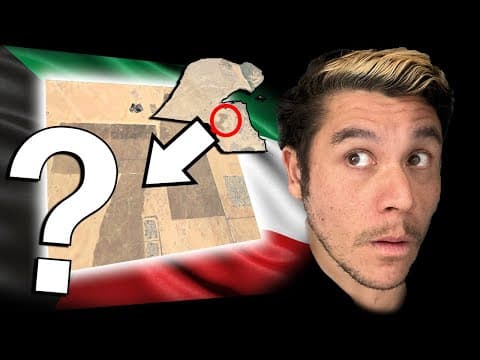
Upon examining satellite images of Kuwait, I noticed peculiar dark patches on the map, which piqued my curiosity. These areas appeared to be fenced-off plots of land, distinct from the surrounding sandy terrain. To uncover the mystery, I reached out to my Kuwaiti subscribers, but even they were unsure of what these areas represented.
Determined to find answers, I embarked on a journey to explore these dark lands. My first stop was the iconic Kuwait Towers, a symbol of the nation, before heading to the Sheikh Jabber Al-Ahmadi Causeway, one of the longest road bridges in the world. This bridge connects Kuwait City to the other side of the bay, where I hoped to discover the secrets hidden in the desert.
As I crossed the bridge, I was struck by the emptiness of the landscape on the other side. The road abruptly ended, leading to a vast expanse of sand and shrubland. This area, known as Subiya, is a popular camping spot for locals, filled with tents and recreational setups.
Upon reaching the dark lands, I found myself in a fenced-off area characterized by geometrically shaped plots of land. The darker color of the soil indicated that these areas were likely undeveloped government land, where shrubs and bushes had been preserved. This raised further questions: Why were these areas fenced off? Did they represent what Kuwait originally looked like before urban development?
Interestingly, I learned that these patches of land might be remnants of Kuwait's natural landscape, preserved amidst the surrounding desert. The government seems to have contained the growth of vegetation to these specific areas, leading to a stark contrast with the barren sands of the Jahra and Ahmadi governorates.
During my exploration, I also discovered the rich food culture of Kuwait. Locals often prepare extra food during gatherings, which is then stored in mosque fridges for those in need, ensuring that no one goes hungry. This practice reflects the community spirit prevalent in Kuwaiti society.
As I navigated through the desert, I encountered various settlements, some of which appeared to be inhabited by Bedouins, semi-nomadic peoples who have historically lived throughout the Arabian Peninsula. This aspect of Kuwaiti culture adds another layer of complexity to the country's identity.
My journey through Kuwait was not just about uncovering the mysteries of the dark lands; it was about embracing curiosity and seeking out the stories that often go untold. While many travelers flock to iconic landmarks, I found value in exploring the lesser-known aspects of a place. In a world filled with famous attractions, sometimes the most intriguing experiences lie in the shadows, waiting to be discovered.
Kuwait may not be the first destination that comes to mind for travelers, but it offers a unique blend of history, culture, and geography that is worth exploring. So, the next time you consider a travel destination, remember that sometimes the most fascinating stories are found in the places that others overlook.