This article celebrates 1.5 million subscribers by sharing nine captivating stories behind some of rock history's greatest songs. From the mysterious origins of Iron Butterfly's "In-A-Gadda-Da-Vida" to the haunting tale of "Gloomy Sunday," and the unexpected success of Strawberry Alarm Clock's "Incense and Peppermints," these stories reveal the rich, often surprising backgrounds of legendary tracks.
A couple of weeks ago, it was brought to my attention that we hit 1.5 million subscribers. To celebrate this milestone, I decided to share some love for a lost art in the music business: the greatest hits record, but with a twist. Instead of just listing hits, I present my picks for the nine greatest song stories in rock history. These stories are a mix of well-known tales with new details and some lesser-known gems.
Back in the day, greatest hits compilations were vital parts of our music collections. Albums like Beatles' Red and Blue, Eagles' 1971 to 1975, Fleetwood Mac, Queen, Journey, and Billy Joel's greatest hits were beloved for gathering all the hits in one place. Today, I bring you nine stories behind some of the greatest songs, each with fascinating backgrounds.
Some of rock's greatest songs come together when nobody is paying attention, and "In-A-Gadda-Da-Vida" is proof of that. Written by the band's organist Doug Engel in 1967, fueled by a gallon of Red Mountain wine, the song's title originated from Engel's drunken slurring of "In the Garden of Eden" into "In-A-Gadda-Da-Vida."
Drummer Ron Bushy transcribed the lyrics exactly as he heard them, and the band decided to keep the garbled title because it sounded exotic and mysterious, fitting the era's fascination with Eastern spirituality.
The song was recorded somewhat accidentally during a soundcheck while waiting for their producer. The tape was rolling, capturing a 17-minute jam session that became the final track. The song featured neoclassical organ, eastern influences, a guitar riff, and a 2.5-minute drum solo.
A heavily edited single version reached number 30 on the Billboard Hot 100 in August 1968 and charted for 17 weeks. The full version was popular on FM radio, and the album sold tens of millions, becoming one of the biggest-selling records ever.
Before Neil Sedaka became a solo star, he was the lead singer of The Tokens, a doo-wop trio from Brooklyn. After Sedaka left, Jay Siegel took over lead vocals. In 1961, they recorded "The Lion Sleeps Tonight," a reconstruction of the 1939 South African song "Mbube" by Solomon Linda.
The Tokens transformed the song with new lyrics by George David Weiss. Jay Siegel's soaring falsetto and soprano Anita Darian's backing vocals elevated the track. Anita, classically trained with a four-octave range, insisted on singing an octave higher than written, which producers initially doubted but ultimately embraced.
Initially placed on the B-side of the single "Tina," DJs flipped the record and played "The Lion Sleeps Tonight," which hit number one on the Billboard Hot 100 and topped Canadian charts. Anita Darian later performed with the New York Philharmonic and provided voices for Alvin and the Chipmunks.
This iconic track from The Breakfast Club was written by Steve Schiff and Keith Forsey, who envisioned the song for the film and Simple Minds. Despite multiple pitches, Simple Minds initially rejected the song six times, preferring to write their own material.
Forsey shopped the song to other artists, but no one accepted it. Chrissie Hynde of The Pretenders, married to Simple Minds' lead singer Jim Kerr, loved the song but was pregnant and couldn't commit to a video. She persuaded Jim to meet director John Hughes and watch the film.
After seeing The Breakfast Club, Jim Kerr warmed up to the idea. Simple Minds recorded the song in a few hours, with Jim improvising the iconic opening. The song closed the film and became a defining anthem of the 1980s.
Kenny Loggins, known for his movie soundtracks like Footloose and Top Gun, also has a rich catalog beyond the big hits. The story behind "House at Pooh Corner" involves a legal challenge from Disney, who claimed copyright over the song.
Kenny was initially told the song couldn't be released due to Disney's legal claims. However, his girlfriend turned out to be the daughter of Disney's CEO. She took Kenny to meet her father, who listened to the song and overruled the lawyers, allowing the song's release.
AC/DC formed in 1973 but lacked the right frontman energy with original singer Dave Evans. Bon Scott, after a severe motorcycle accident in 1974 that left him in a coma for three days, recovered and worked as a roadie for AC/DC.
Despite initial doubts and a heated exchange where Bon doubted the band's ability to rock and the band thought Bon was too old, a jam session convinced them all. Bon Scott became the iconic frontman who propelled AC/DC to legendary status.
The MAS*H TV show, premiering in 1972, used the melancholic and serene theme "Suicide is Painless," contrasting with the show's humor and satire about war.
The music was composed by Johnny Mandel, with lyrics by 14-year-old Mike Altman, son of the film's director Robert Altman. Robert wanted the "stupidest song ever" and asked his son to write the lyrics, which he did in minutes.
Though the lyrics were not used in the TV version, the instrumental theme became one of the most recognizable TV themes ever. Mike Altman earned millions from the song, far more than his father earned directing the film.
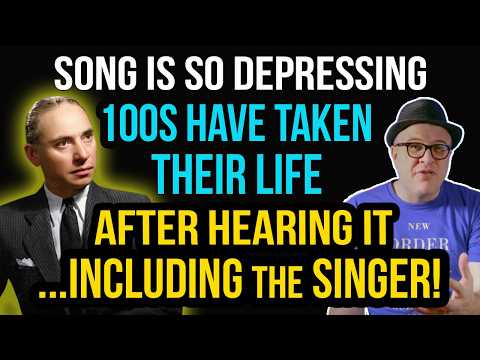
Composed by Hungarian trapeze artist and songwriter Rezső Seress in 1932, "Gloomy Sunday" is known as the Hungarian suicide song. After surviving a near-fatal fall that injured his hand, Seress taught himself piano and composed the song during a period of heartbreak.
The song's tragic lyrics about a man driven to suicide were linked to numerous suicides, with victims reportedly found with the sheet music or record playing. The song was banned in several countries.
Seress, of Jewish heritage, was deported to a German labor camp during WWII but survived. In 1968, he attempted suicide while the record played and later completed the act in hospital. He called the song his "fatal fame."
For 17 years, an unidentified song haunted the internet, known only from a mixtape cassette recorded by a teenager named Darius in the 1980s from North German radio. The song was labeled "Blind the Wind," but no one knew the band or title.
In 2007, a clip was uploaded online, sparking a global search. Despite many leads, the mystery remained unsolved until 2024, when a Reddit user found a newspaper article about a new wave band called Fex from Kiel, Germany.
Contacting former band member Michael Herdrich, they confirmed the song was "Subways of Your Mind," recorded in 1983. The band reunited and performed at the radio station where the mystery began. The song has since been used in pop culture.
This 1967 psychedelic classic was never meant to be a hit. Originally a B-side, the band disliked the lyrics, which were written by John S. Carter using a rhyming dictionary, resulting in a psychedelic riddle.
The instrumental was developed by guitarist Ed King and keyboardist Mark Weitz, but the band struggled to find a lead vocalist. Producer Frank Slay turned to 15-year-old Greg Munford, a friend of the band who happened to be in the studio.
Greg's performance clicked instantly, and he sang the hit live with the band for a while before choosing to study music composition at USC and later earning a degree in musicology from the University of Chicago.
These nine stories showcase the rich, surprising, and sometimes haunting backgrounds of some of rock history's greatest songs. From accidental jams and mysterious origins to legal battles and tragic tales, each song carries a unique story that adds depth to its legacy.
What are your favorite song stories? Should there be a volume two? Share your thoughts and keep the music alive.
Three chords and the truth, my friends.