
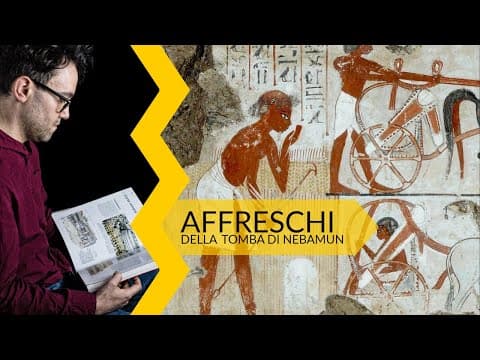
The frescoes from the tomb of Nebamun, a high-ranking official in ancient Egypt, provide a vivid portrayal of agricultural life and social practices during the reign of Amenhotep III, showcasing both naturalistic and stylized artistic elements.
The frescoes from the tomb of Nebamun, a grain accountant during the reign of Amenhotep III, offer a fascinating insight into ancient Egyptian society and its artistic conventions. Acquired by the British Museum in 1821, these fresco fragments were originally part of the painted decorations in the chapel of offerings within Nebamun's tomb.
Nebamun held a significant position as a high-ranking official in the temple of Amun at Karnak. His role as a grain accountant was crucial in managing agricultural resources, and the frescoes depict various aspects of his life and duties. In several fragments, Nebamun is shown tending geese, suggesting his involvement in agricultural activities beyond mere accounting.
One notable fresco fragment features an elderly farmer standing opposite two officials in carts, positioned in front of a sycamore tree. This scene illustrates the farmer inspecting the field and checking its boundaries under Nebamun's orders. At the farmer's feet lies a white boundary stone, accompanied by an inscription that reads: "as far as the great sky god allows, this boundary stone is exact." This inscription emphasizes the importance of land demarcation in agricultural practices.
The artistic style of the frescoes reflects the conventions of Egyptian art during this period. The schematic representation of the two officials and their chariots is typical, yet the portrayal of the elderly farmer stands out due to its naturalistic details. The farmer's baldness and gray tufts of hair provide a striking contrast to the stylized depictions of pharaohs and deities, who were often represented in a more idealized manner.
Interestingly, the fresco also features two different animals pulling the cart, which diverges from the usual depiction of horses. Scholars suggest these animals could be onagers, a wild species of donkey, or possibly mules or hinnies, which are hybrids of horses and donkeys.
The collection of frescoes includes various scenes that further illustrate Nebamun's life and the agricultural practices of the time. Other fragments depict:
One particularly intriguing fragment highlights the practice of leaving animals in the tomb as provisions for the spirit of the deceased, showcasing the beliefs and customs surrounding death and the afterlife in ancient Egypt.
The frescoes of Nebamun not only serve as artistic masterpieces but also as historical documents that provide a window into the daily life, social structure, and agricultural practices of ancient Egypt. Through their unique blend of naturalism and stylization, these artworks continue to captivate and educate us about a civilization that thrived thousands of years ago.



















