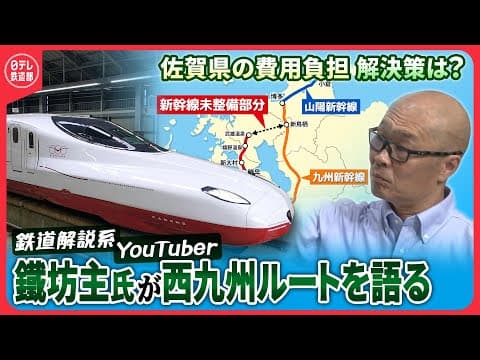
This blog post discusses the implications of the full realization of the Kyushu Shinkansen's West Kyushu route, focusing on the transportation dynamics in Saga Prefecture, the balance of costs and benefits between Saga and Nagasaki, and the potential operational strategies for JR Kyushu to ensure commuter satisfaction.
In recent discussions surrounding the Kyushu Shinkansen's West Kyushu route, the focus has shifted to how this development will impact transportation in Saga Prefecture. With the potential for a direct connection between Hakata and Nagasaki in just 51 minutes, the implications for local commuters and the operational strategies of JR Kyushu are significant.
Saga Prefecture currently relies on a limited number of trains connecting it to major hubs like Hakata and Nagasaki. The existing service frequency is insufficient, with only one or two trains running during peak times. The introduction of the Shinkansen could potentially increase this frequency, but the specifics of the operational strategy remain unclear.
The discussion suggests that the new Shinkansen services could include various types of trains, such as:
The expectation is that JR Kyushu will implement a mix of these services to cater to different commuter needs, potentially offering three trains per hour from Saga to Hakata.
Despite the anticipated benefits, there are concerns from Saga regarding the adequacy of train services post-Shinkansen implementation. The fear is that the introduction of high-speed trains might lead to the discontinuation of existing rapid services, leaving commuters with fewer options. This concern is compounded by the fact that many current services stop at smaller stations, which may not be served by the new Shinkansen.
Saga's residents are particularly worried about losing rapid train services that currently connect them to Hakata. The expectation is that even with the Shinkansen, there should be a robust local train service to ensure that all areas remain accessible. The balance between Shinkansen and local services is crucial for maintaining commuter satisfaction.
One of the most contentious issues in the discussions is the financial burden of the Shinkansen project. The construction costs are expected to be significant, with Saga potentially facing a disproportionate share of the expenses compared to Nagasaki. The current framework suggests that while Saga will bear a larger financial burden, the benefits of the Shinkansen will primarily favor Nagasaki.
The challenge lies in creating a fair distribution of costs between the two prefectures. Saga's officials argue that the existing rules for cost-sharing do not adequately reflect the realities of the new service, as the benefits will not be evenly distributed. This has led to calls for a reevaluation of how costs are allocated, with suggestions that Nagasaki should contribute more to the project.
To address these concerns, JR Kyushu must develop a comprehensive operational strategy that balances the needs of both prefectures. This includes:
The future of the Kyushu Shinkansen's West Kyushu route presents both opportunities and challenges for Saga Prefecture. While the prospect of faster travel times is appealing, it is essential that JR Kyushu addresses the concerns of local commuters regarding service frequency and financial burdens. A balanced approach that considers the needs of both Saga and Nagasaki will be crucial in ensuring the success of this ambitious project. As discussions continue, it is vital for all stakeholders to engage in open dialogue to find solutions that benefit everyone involved.