
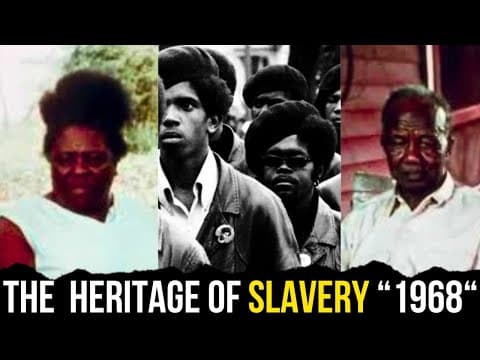
This blog post examines the complex legacy of slavery in America, highlighting the historical context, personal narratives, and ongoing struggles for equality faced by Black Americans. It discusses the origins of slavery, the resistance against it, and the implications of this history on contemporary society.
South Carolina, known for its beautiful harbor and historic significance, is also a site of profound sorrow and tragedy. The history of slavery in America is deeply intertwined with the story of Charleston, where countless Africans were forcibly brought to work as slaves. This blog post delves into the heritage of slavery, exploring its roots, the resistance it sparked, and its lasting impact on American society.
In 1619, the first Africans were brought to America, marking the beginning of a dark chapter in the nation’s history. By 1860, the number of enslaved Black men, women, and children had surged to four million. For white Americans, the New World represented possession, while for Black Americans, it meant dispossession. Slavery was not just a condition but an attitude that permeated society.
Norwood Hasty, a descendant of slave owners, expressed a controversial view on slavery, arguing that it was necessary for the care of untrained Africans. He reminisced about a time when he believed enslaved people were happier, a sentiment that reflects a deeply ingrained racial bias. Hasty's perspective highlights the refusal to acknowledge the inherent immorality of slavery and the ongoing struggle for Black Americans to gain recognition as equals.
The slave trade was a horrific enterprise, with enslaved individuals subjected to inhumane conditions. Gustavus Vasa, a former slave, recounted his terrifying experience aboard a slave ship, where he was packed tightly with others, suffering from sickness and despair. Upon arrival in America, enslaved people faced the brutal reality of being sold at auction, often separated from their families.
Despite the oppressive conditions, resistance was a constant theme in the lives of enslaved people. From the early days of slavery, there were numerous revolts, including the notable insurrection led by Nat Turner in 1831. The fear of rebellion led slave owners to implement stricter laws, yet the spirit of resistance persisted.
One of the most daring plots was orchestrated by Denmark Vesey, a freed slave who aimed to capture Charleston with the support of thousands. His plan was ultimately betrayed, leading to severe repercussions for the Black community. This incident exemplifies the lengths to which enslaved individuals would go to fight for their freedom.
The legacy of slavery continues to shape the experiences of Black Americans today. Activists like Bill Saunders argue that the remnants of slavery still influence societal structures, with many whites acting as modern-day masters and many Blacks feeling like slaves. The struggle for equality remains a pressing issue, as systemic racism persists in various forms.
The Great Migration saw over 400,000 Black Americans leave the South for northern cities like Chicago, seeking better opportunities. However, they often encountered new forms of discrimination and segregation, leading to a complex relationship between Black and white communities in urban settings.
As Black Americans continue to fight for their rights, the echoes of their ancestors' struggles resonate in contemporary movements. Activists emphasize the need for a collective effort to dismantle systemic racism and achieve true equality. The heritage of slavery is not just a historical footnote; it is a living legacy that demands recognition and action.
The heritage of slavery is a profound aspect of American history that shapes the present. Understanding this legacy is crucial for addressing the ongoing struggles for equality and justice faced by Black Americans. As we reflect on this dark past, it is essential to acknowledge the resilience and strength of those who fought against oppression and to commit to a future where all individuals are recognized as equals.



















