
This blog post delves into the fascinating history of Bannerman Island, its founder Francis Bannerman, and the legacy of military surplus catalogs that emerged from his enterprise. It covers the origins of Bannerman's business, the significance of his castle, and the unique collection of catalogs that document military history.
In the realm of military history and collectibles, few stories are as intriguing as that of Bannerman Island and its founder, Francis Bannerman. This post takes you through the captivating history of Bannerman Island, the castle that once stood there, and the legacy of military surplus catalogs that emerged from Bannerman's enterprise.
Bannerman Island, located on the Hudson River in New York, has a rich history tied to its founder, Francis Bannerman. Born to a Scottish family, Bannerman's early life was marked by hardship. His father, involved in military service, left the family in need. Young Bannerman took to the waters, fishing out discarded ropes from ships to sell, which helped support his family.
As he grew older, Bannerman's entrepreneurial spirit led him to establish a store selling surplus military goods. His business flourished, and he began acquiring large quantities of surplus items, especially after conflicts like the Spanish-American War. This acquisition spree necessitated a larger space, leading him to purchase Bannerman Island, where he built a castle to house his growing collection.
The castle on Bannerman Island served as both a warehouse and a museum, showcasing an extensive array of military surplus items. From the early 1900s until the 1960s, Bannerman's catalogs were published periodically, featuring everything from weapons to military insignia. However, after Bannerman's death, the castle fell into disrepair. A series of unfortunate events, including an explosion and a fire, led to its current state of ruin.
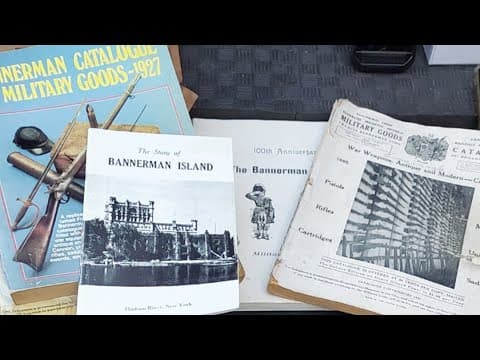
Bannerman's catalogs were more than just sales tools; they became historical documents. They indexed items from various wars, including the Civil War and the Spanish-American War, and provided insights into military life and equipment. The catalogs were printed on fragile newspaper-like paper, making them delicate artifacts of their time.
The first catalog, a reprint from 1903, is a testament to the early days of Bannerman's business. Over the years, various editions were published, including a notable 1925 original catalog. Collectors today seek these catalogs for their historical value, with many available through online platforms like eBay.
The narrator of this story shares a personal connection to Bannerman Island and its catalogs. Growing up, they were introduced to these catalogs, which sparked a lifelong interest in military history. A road trip in 2012 aimed at visiting the castle was thwarted by car troubles, but years later, they finally visited the site, deepening their appreciation for Bannerman's legacy.
The narrator's collection includes various reprints and original catalogs, showcasing the evolution of Bannerman's business and the historical context of the items sold. Each catalog serves as a window into the past, revealing prices and descriptions of military items that once were available for purchase.
In a recent live unboxing, the narrator revealed a new addition to their collection: a hardcover version of a 1933 catalog. This particular catalog was significant not only for its content but also for the unexpected treasures found within, including a newspaper clipping about a fire that destroyed Bannerman's castle. Such discoveries highlight the ongoing fascination with Bannerman's history and the importance of preserving these artifacts.
Bannerman Island and its military surplus legacy offer a unique glimpse into American history, entrepreneurship, and the evolution of military collectibles. The story of Francis Bannerman is one of resilience and innovation, and his catalogs continue to serve as valuable resources for historians and collectors alike. As interest in military history grows, so too does the importance of preserving the stories and artifacts that connect us to our past.



















