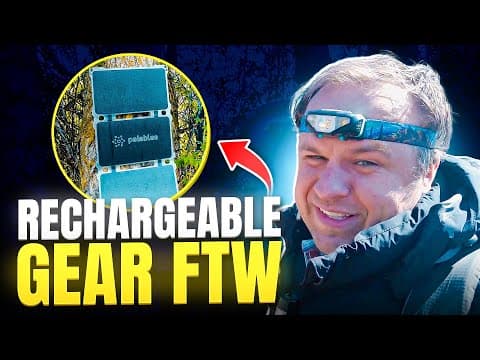
This blog post recounts an adventurous exploration of the ice caves in St. Anthony, Idaho, highlighting the performance of Pale Blue's rechargeable headlamp and solar panel in challenging conditions, including cold, wet caves and rainy weather.
In the heart of Idaho lies a unique adventure waiting to be explored: the ice caves of St. Anthony. This blog post chronicles an exciting expedition into these caves, showcasing the performance of Pale Blue's innovative gear, including a rechargeable headlamp and a solar panel, under challenging conditions.
Dressed in winter gear despite the warm desert temperatures of around 72-73°F, the journey begins with anticipation. The Pale Blue headlamp, powered by a rechargeable battery, is ready for the exploration ahead. The initial tests of the battery have been promising, having endured travel, drops, and even x-rays. Now, it faces the ultimate challenge: the cold, wet conditions of the ice caves.
The entrance to the cave is not straightforward. After climbing through a small opening, the adventure continues into the cave, which is also a lava tube—a common geological feature in Idaho. The excitement builds as the exploration begins, but the conditions are expected to be wet and cold.
The Pale Blue headlamp proves to be user-friendly with a large button on top that allows for easy control. A single tap turns it on low, another tap increases the brightness, and a long press activates the floodlights. This feature is particularly useful in cave environments where bright lights can cause temporary blindness when too close to walls.
Upon entering the cave, it quickly becomes apparent that the conditions are not ideal. The cave is flooded, making further exploration difficult. Despite the setback, the adventure continues as another entrance is discovered, although it leads to a dead end. The cave, described as almost a grotto, may not be deep, but the experience remains enjoyable.
Despite the challenges posed by the flooded cave, the Pale Blue headlamp holds up well, demonstrating its durability and reliability in adverse conditions. The adventure may have been short-lived, but it was filled with fun and exploration.
Originally, the plan was to showcase the gear on a sunny day. However, the weather took a turn for the worse, resulting in a downpour. Surrounded by trees and facing an overcast sky, the Pale Blue solar panel was set up to test its performance in the rain. Surprisingly, it continued to charge devices effectively, even under less-than-ideal conditions.
The Pale Blue solar panel is designed to be weather-resistant, and it impressively charges devices even in the rain. Although the charging speed may not be optimal, just 15 minutes of exposure can yield a full 1.5 volts. This efficiency is particularly noteworthy, especially when considering the unpredictable nature of outdoor adventures.
As the journey continues, the road becomes washed out, leading to low cell coverage. In such situations, having a reliable communication tool is essential. The ham radio, powered by the Pale Blue 21-watt solar panel, becomes a lifeline. In just over an hour, the solar panel fully charges the radio, providing approximately a day and a half of regular use.
In an environment where communication can be challenging, keeping the radio charged is crucial. The ability to maintain power for the radio while camping ensures safety and connectivity, even in adverse weather conditions.
The exploration of the ice caves in St. Anthony, Idaho, highlights the importance of reliable gear in outdoor adventures. The Pale Blue headlamp and solar panel not only performed well in challenging conditions but also provided peace of mind during the journey. Whether facing flooded caves or rainy weather, having dependable equipment can make all the difference in ensuring a successful and enjoyable adventure.