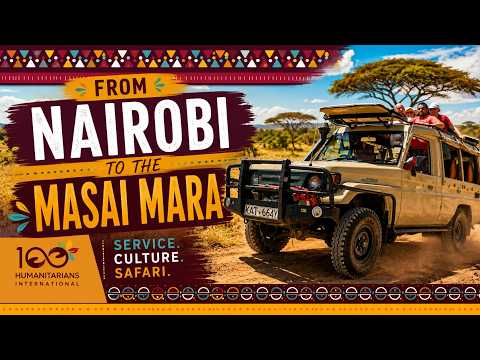
Traveling from Nairobi to the Maasai Mara is not just a physical journey but a transformative experience that immerses travelers in the vibrant culture, stunning landscapes, and rich history of Kenya. This blog post details the sights, sounds, and emotions encountered along the way, highlighting the deeper connection to the land and its people.
The journey from Nairobi to the Maasai Mara is more than just a transfer; it serves as a portal, shifting travelers from the fast-paced city life to the serene rhythm of the wild. This blog post takes you through the captivating experience of this journey, showcasing the vibrant culture, stunning landscapes, and the rich history of Kenya.
As you climb into a safari jeep just after breakfast, the streets of Nairobi buzz with life. The city pulses with energy, and you can already feel the call of something deeper, older, and more expansive waiting on the horizon. Over the next several hours, you will pass through villages, forests, markets, and mountains, witnessing a side of Kenya that few tourists take the time to appreciate. This marks the beginning of a grand adventure.
Starting in the heart of Nairobi, the streets are alive with movement, sound, and color. It is early, but the city is already vibrant. Matatus (shared taxis) honk, and boda bodas (motorbikes) weave through traffic. Street vendors call out their offerings, and people rush by, heading to offices, shops, schools, and markets. You pass roadside stands stacked with fresh produce, including bananas, tomatoes, potatoes, and cabbage, while women in colorful kangas add to the visual tapestry. The air is filled with the scent of fresh morning roasted maize and exhaust, creating a blend of life and motion.
As you move out of the city center, the buildings gradually give way to sprawling informal settlements, such as the Kibera slums, known as the "chocolate city." Here, homes are stacked closely together, with rust-brown tin roofs glistening in the morning sun. Narrow alleyways pulse with movement, and you continue to watch as the density thins, revealing small farms and more spaced roadside markets. Trees and brush begin to replace concrete, allowing you to truly see the landscape.
Nairobi is alive with hustle, yet the pulse of the Maasai Mara is stronger. As the road turns towards the Rift Valley escarpment, you feel the air shift; it cools and clears, and the view begins to open. Your driver pulls off at the Rift Valley overlook, where you can see the vast valley stretching out below, dotted with scattered villages, endless sky, and rolling hills in the distance. Vendors offer their wares and drinks, and many will gladly take your picture.
Continuing down the escarpment, you may spot baboons lounging casually on the roadside, grooming each other or curiously observing passing cars. Vendors sell roasted maize still steaming from the coals. A bit further down the road, you pass one of Kenya's oldest churches, a quiet and humble reminder of history carved into the land. This is the land of beginnings, migrations, and memories.
As you descend into the Rift Valley basin, the landscape changes again. If it has been rainy, the fields are lush and green, quieter, with herds of goats meandering along the road. Women carry water and firewood with graceful balance, and there is a rhythm here that resonates with the heartbeat of the land. Roadside vendors sell fruit, cabbages, woven shukas, and grilled corn, each stand telling a story and each face reflecting resilience. This is the Kenya that rarely makes it to travel brochures, yet it is the Kenya that stays with you forever.
Suddenly, you are surrounded by low mountains filled with towering trees. The light softens, and the air is infused with the scents of pine, spice, and earth. You have entered the edge of the Mau Forest, a cool, lush sanctuary in the middle of your journey. It feels sacred, quiet, and alive. The forest is one of Kenya's most vital ecosystems, serving as a source of rivers and a refuge for wildlife, reminding you that even amidst progress, nature holds its own.
As you drive through the forest, conversations grow quiet, and you begin to listen differently. Eventually, the road changes again; the forest thins, the horizon widens, and the air becomes drier. You start to see the hustle and bustle of Narok Town and beyond that, small villages where Maasai homesteads dot the hillsides. Rectangular bomas (homes) fenced with thornbrush are visible, with cows and goats grazing nearby, tended by Maasai shepherd boys.
This is the threshold, the edge of the Mara. As you approach, the plains stretch out before you, golden and green, scattered with acacia trees and the silhouettes of the Serengeti Hills in the distance. However, the destination is not just the Maasai Mara; it is also about the people you will meet, the gardens you will plant, and the stories you will hear.
The road from Nairobi to the Maasai Mara is a journey into something wild, but it is also a journey into something real, human, and shared. As you step out of the jeep and into the dust, you begin to understand that you did not just travel across Kenya; you crossed into purpose. This journey is an invitation to connect with the land and its people, creating memories that will last a lifetime.