
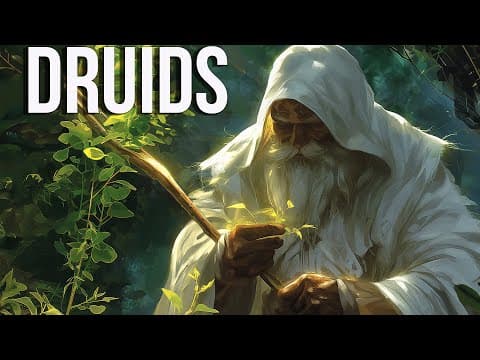
The Druids were influential figures in ancient Celtic society, known for their roles as philosophers, teachers, and spiritual leaders. Their practices, deeply connected to nature and the cosmos, faced decline with the rise of the Roman Empire and the spread of Christianity. Despite this, elements of Druidic beliefs have persisted and evolved into modern interpretations, emphasizing environmentalism and spirituality.
The Druids were pivotal figures in the Celtic tribes of Gaul, Britannia, and Ireland. However, much of what was documented about them in ancient times was lost with the fall of the Roman Empire. Descriptions of the Druids vary, with some portraying them as philosophers, others as magicians or priests. Their name is thought to mean "wise men of the oak," reflecting their deep connection to nature and the sacredness of trees.
The exact origins of the Druids remain uncertain. Julius Caesar, in his accounts of the Roman conquest, suggested that Druid teachings originated from Britannia, while a Greek scholar claimed they were influenced by the philosopher Pythagoras. The Druidic class was divided into three main categories:
This structure reflected a society where the oral transmission of knowledge was sacred, and writing down Druid teachings was forbidden. Druids underwent extensive training, memorizing vast amounts of knowledge in verse form, a process that could take up to 20 years. Their studies encompassed theology, astronomy, and divination.
Upon completion of their training, Druids formed a privileged class, exempt from taxes and military service, and were responsible for settling disputes within their communities.
Sources about the Druids are often scant and unreliable. Roman author Pliny described them harvesting mistletoe from oak trees with a golden sickle, a ritual believed to hold deep significance related to life, death, and renewal. There are scattered references to Druids engaging in animal or human sacrifices, but specific details are limited.
By the third and fourth centuries, references indicate that Druids continued to exist post-Roman conquest, albeit with diminished social status. For instance, some Druids took on roles such as innkeepers. Latin texts from the early Middle Ages mention Druids, primarily in biographies of saints, but do not provide new insights into their practices.
The oak tree held a special significance in Druidism, symbolizing the Druids' reverence for nature and their belief in the interconnectedness of all life. The oak was seen as a portal to higher knowledge and the spiritual world, reinforcing the idea that Druids were the sages of the oak. They believed that every tree contained a spirit, with the oak possessing unique powers due to its strength, longevity, and association with lightning.
The Gathering of the Mistletoe was one of the best-known rituals associated with the oak tree. Mistletoe, seen as a powerful symbol of life and fertility, was harvested during this ceremony, which likely held significant meaning for the Druids.
Druids researched the properties of trees for medicinal and spiritual purposes, integrating this knowledge into their healing practices. They emphasized conservation and ecological balance, understanding that the health of the ecosystem was essential for the well-being of all living beings. This ancient wisdom resonates today amid growing awareness of environmental sustainability.
Sacred woodlands, where many Druid rituals took place, were viewed as powerful places where the physical and spiritual worlds interacted. Druids held ceremonies in these areas to celebrate seasonal changes, weddings, and rites of passage, as well as for divination and meditation.
A key element of Druidic culture was the Druid Wheel of Life, a cosmogrammatic wheel divided into eight festivals marking seasonal changes and major astronomical events. Each festival had its own symbolism and associated deities, including:
These festivals were not merely observations of nature but also moments for the community to come together, celebrate, and reflect on the deeper meanings of seasonal changes.
The decline of Druidism is closely tied to the spread of the Roman Empire and the subsequent Christianization of Europe. As the Romans conquered Gaul and Britannia, the influence and presence of Druids in civic life diminished. They faced significant persecution, as their beliefs were seen as a threat to Roman order. This led to crackdowns on Druidic practices, including the banning of their cults and the destruction of sacred sites.
The rise of Christianity further contributed to the decline of Druidism, as many ancient rituals were lost or transformed to fit the new faith. The oral tradition, a core aspect of Druidic practice, suffered greatly, leading to the loss of much knowledge and wisdom over time.
Despite the setbacks, the legacy of the Druids did not entirely disappear. Elements of their beliefs and practices have persisted in folk traditions, legends, and agricultural practices. The modern revival of Druidism began in the 18th century with the formation of the Ancient Druid Order, marking a transition from historical Druidism to contemporary interpretations.
This revival was characterized by a focus on pantheism, the belief that the universe is a living divine being. Modern Druids sought to combine nature worship with spirituality, reimagining ancient practices to fit contemporary life. During the 19th century, Druidism evolved further, influencing and being influenced by other spiritual and cultural movements.
In the 20th century, Druidism experienced a resurgence as more people sought alternatives to traditional religions and secular materialism. New Druidic orders emerged, each with unique interpretations and practices, focusing on spiritual practice, environmental protection, education, and community.
The revival of Druidism represents both a continuation and a reimagining of ancient traditions. While modern Druids may not resemble their historical counterparts, they embody the Druid spirit—a profound respect for nature, a quest for wisdom, and a commitment to the well-being of the planet. The legacy of the Druids continues to inspire those seeking a deeper connection to the natural world and a more harmonious way of living.



















