
This article delves into the legends of blonde and red-haired inhabitants of New Zealand, exploring their origins, cultural significance, and the archaeological evidence that supports these myths. It discusses the connections between these ancient peoples and modern populations, as well as the implications for understanding New Zealand's history.
New Zealand's history is often told through the lens of its indigenous Māori culture, which claims that the islands were uninhabited until around 800 years ago. However, oral traditions from the Māori tribes speak of legendary beings—blonde fairy folk and red-haired giants—who inhabited the land long before the arrival of the Māori. This article explores these fascinating legends, the evidence supporting them, and their implications for understanding New Zealand's past.
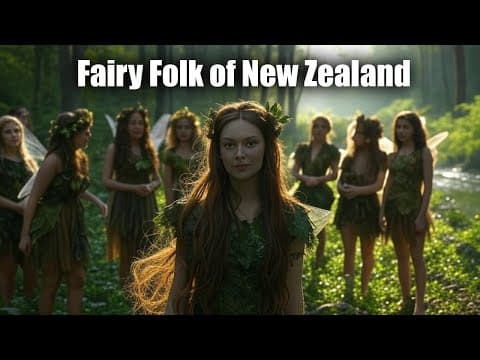
According to Māori oral traditions, the first canoes that arrived in New Zealand encountered a race of blonde-haired fairies known as the pupar. These elusive beings were said to live in hobbit-like burrows and were rarely seen, although their laughter and the sounds of their small canoes, or wakas, could be heard at night. The Māori respected these fairy folk, who were described as having light skin and hair, often seen fishing along the Misty Mountains.
One legend recounts how a Māori individual witnessed these blonde people fishing one early morning. Startled, they fled, leaving behind a fishing net that the Māori adopted, attributing this fishing technology to the fairies. Additionally, the Māori learned to craft a flute from these beings, which was said to have magical properties, capable of enchanting women who would then disappear.
Another group described in Māori legends consisted of tall, fair-skinned agriculturalists with golden hair. These people were believed to have carved out amphitheaters and were likely the origin of the intricate facial tattoos that are a hallmark of Māori culture. Contrary to popular belief, only a small percentage of the population received these tattoos, which were reserved for individuals of high rank.
Modern descendants of these ancient populations are referred to as the Waka blonds. They are Māori but possess a distinct lineage that differs from the broader Polynesian ancestry. Some individuals, like an elderly woman of Persian descent, have undergone DNA analysis revealing connections to both Persian and Peruvian ancestry, suggesting a complex migration history.
The Māori legends recorded by ethnologist Elen Best over a century ago tell of ancestors migrating from a hot country, likely India, due to a disastrous war with darker-skinned peoples. This narrative challenges the mainstream view that Polynesians originated from Taiwan, proposing instead that they came from a much older civilization in Persia, now known as Iran.
In 1996, archaeologists discovered a pile of large rocks in the North Island, which sparked debate over whether they were a natural formation or evidence of human construction. Analysis confirmed that the stones were not naturally occurring in the area, suggesting they were cut and transported by humans. This discovery, along with other archaeological findings, points to the existence of ancient civilizations in New Zealand that predate the Māori.
Despite the compelling evidence of ancient civilizations, much of this information has been suppressed by New Zealand authorities. For instance, a significant archaeological exploration in the Northland Wpol Forest revealed evidence of ancient temples and irrigation systems, but the findings have been classified until 2063. This raises questions about the motivations behind such suppression and the need for transparency in understanding New Zealand's history.
The legends of the fairy folk in New Zealand bear striking similarities to Celtic folklore, particularly the tales of the Fay in the British Isles. These beings are often depicted as magical and otherworldly, with connections to sacred sites. Anthropological studies suggest that the Túatha Dé Danann, a mythical race in Irish mythology, may have roots in ancient Aryan tribes, similar to those described in Māori legends.
Recent genetic studies have revealed that the fair-skinned Māori share ancestry with ancient Celtic populations, further intertwining the histories of these distant cultures. The discovery of ancient skeletons in New Zealand, some of which have been linked to Celtic origins, supports the notion that these fairy folk were not merely mythical but part of a rich tapestry of human history.
The legends of the blonde and red-haired inhabitants of New Zealand challenge the conventional narratives of the region's history. They suggest a complex interplay of migration, cultural exchange, and ancient civilizations that have shaped the identity of modern New Zealand. As more archaeological evidence comes to light, it becomes increasingly important to acknowledge and explore these narratives, celebrating the diverse heritage that contributes to the rich cultural landscape of New Zealand today.



















