
This blog post delves into the historical significance of the Yuhwa civilization and its connections to the origins of the Korean people, particularly focusing on Gojoseon. It discusses archaeological findings, cultural implications, and the ongoing debate about the historical narratives surrounding these ancient civilizations.
The vast expanse of Manchuria, a land rich in history, has long been a subject of fascination for historians and archaeologists alike. Recent discoveries in this region have sparked renewed interest in the origins of the Korean people and their connection to the ancient Yuhwa civilization. This blog post aims to explore these connections, shedding light on the archaeological findings that suggest a deeper relationship between Gojoseon, the first Korean state, and the Yuhwa civilization.
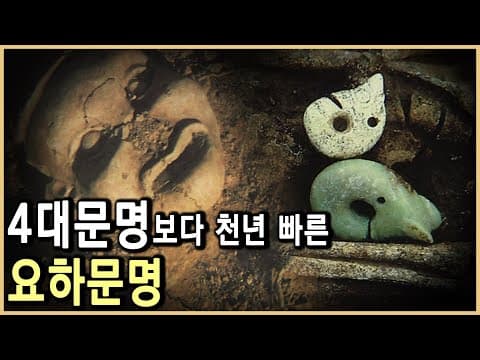
The Yuhwa civilization, often referred to as the Yuhwa culture, emerged around 6,000 years ago in the region surrounding the Yuhwa River. This civilization is notable for its advanced societal structures and cultural practices, which predate many known civilizations in China. The discovery of significant archaeological sites, such as the Hongshan culture, has revealed a wealth of artifacts that indicate a complex society with religious and political systems.
Gojoseon, established around 2333 BCE, is recognized as the first Korean state. According to historical texts, it was founded by Dangun, a legendary figure believed to be the son of a heavenly god and a bear-woman. The cultural practices and beliefs of Gojoseon are thought to have been influenced by the earlier Yuhwa civilization.
The archaeological evidence suggests that the people of Gojoseon may have inherited cultural and religious practices from the Yuhwa civilization. The goddess worship and totemic beliefs observed in Yuhwa artifacts resonate with the foundational myths of Gojoseon, indicating a continuity of cultural practices.
The relationship between the Yuhwa civilization and Gojoseon has sparked considerable debate among historians. Traditional narratives often emphasize the centrality of the Yellow River civilization in Chinese history, sidelining the contributions of northern cultures like Yuhwa. However, recent findings challenge this view, suggesting that the Yuhwa civilization was not only contemporaneous with but also influential in the development of early Korean states.
The discoveries in the Yuhwa region have led to a reevaluation of the historical narratives surrounding the origins of Korean civilization. As more evidence emerges, it becomes increasingly clear that the cultural and historical landscape of Northeast Asia is far more interconnected than previously thought. The Yuhwa civilization's advancements in agriculture, metallurgy, and social organization may have played a crucial role in shaping the early Korean states.
The exploration of the Yuhwa civilization and its connections to Gojoseon reveals a rich tapestry of history that challenges conventional narratives. As archaeological research continues, it is essential to recognize the significance of these findings in understanding the origins of the Korean people. The Yuhwa civilization, with its profound cultural and historical implications, serves as a reminder of the complex interplay between different civilizations in shaping the identity of nations. The journey into this ancient past not only uncovers the roots of the Korean people but also enriches our understanding of human history as a whole.



















