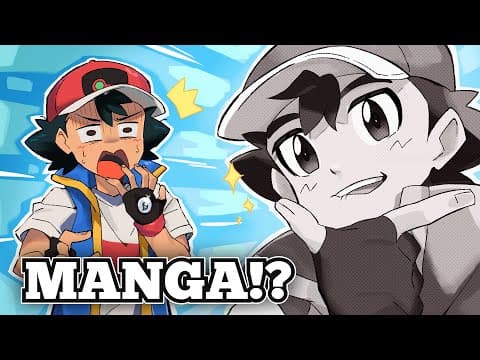
The Pokémon Journeys manga, while featuring charming artwork and a more cohesive narrative than the anime, ultimately falls short by skipping significant plot points and failing to complete the series, leaving readers wanting more.
The Pokémon Journeys manga adaptation, which began in August 2020, has sparked discussions among fans regarding its quality compared to the Pokémon Journeys anime. In this review, we will delve into the manga's strengths and weaknesses, examining its art, pacing, and narrative choices across its four volumes.
The Pokémon Journeys manga consists of four volumes, covering Ash's adventures up to his battle with Vulner. However, a significant drawback is that the manga does not complete the series, missing out on exciting moments that could have enriched the story. Despite this, we will evaluate the material presented fairly.
Volume 1 includes chapters 1-6, adapting the first 17 episodes of the anime. The manga immediately captures attention by skipping the first episode and jumping directly into Ash's introduction. This choice allows for a more engaging start, showcasing Pikachu's backstory and its origins with Mew. The early continuity references to Ash's past adventures are a highlight, setting a nostalgic tone.
The manga closely follows the anime's plot, with Ash visiting Aace Lab and encountering Lugia before meeting Go. The pacing is notably better than the anime, as the manga selects key adventures to create a more cohesive story. For instance, instead of a filler episode, the manga introduces Scorbunny, providing a more impactful introduction to Go and the Galar region.
However, Go's character suffers due to the manga's selective focus, as many of his captures are skipped, which detracts from his goal of catching Pokémon. Despite this, the manga effectively introduces the Pokémon World Coronation Series (PWC) much earlier than the anime, enhancing the overall flow.
Volume 2 covers chapters 7-12, adapting episodes 18 through 40. It begins with RABoot's goodbye, which serves as a strong follow-up to the previous chapter. The manga also introduces Riolu as Ash's first capture, a decision that aligns well with the character's development.
However, the manga continues to skip significant captures, including Ash's Dragonite and Gengar, which feels disrespectful to the characters. The placement of Ash's first PWC battle is well-executed, leading into Leon's battle with Ryhan, but the omission of key moments, such as Ash's battle with Karina, leaves a gap in continuity.
Volume 3, covering chapters 13-18, adapts episodes 42 through 60. This volume is arguably the weakest, as it condenses the Darkest Day Arc into just two chapters, failing to capture the depth of the storyline. While the artwork remains impressive, the rushed adaptation diminishes the impact of the narrative.
One positive change is the tag battle featuring Ash and Go, which allows for character development and evolution moments. However, the manga's inconsistency in handling captures continues to frustrate readers, as it skips over important story beats.
The final volume includes chapters 19-24, adapting episodes 65 through 80. This volume features better pacing and focuses on significant episodes, such as Ash's battle with Iris and the introduction of Project Mew. The battles are well-handled, showcasing the manga's strength in action scenes.
However, the adaptation of the detective Drizal episode feels misplaced, and the skipping of key captures continues to detract from the overall experience. The final chapters employ a dual protagonist approach, allowing both Ash and Go to pursue their goals simultaneously, which aligns with the series' intended direction.
In conclusion, the Pokémon Journeys manga offers a charming art style and a more cohesive narrative than the anime. However, its tendency to skip important plot points and the lack of a complete series adaptation leave much to be desired. While it may serve as a quick overview for those who prefer not to watch the anime, the manga ultimately feels disjointed and incomplete. Fans may find enjoyment in the reshuffled events, but the experience pales in comparison to the full anime series. The best takeaway from the manga is the minimal presence of Chloe and Team Rocket, which many fans appreciate.