
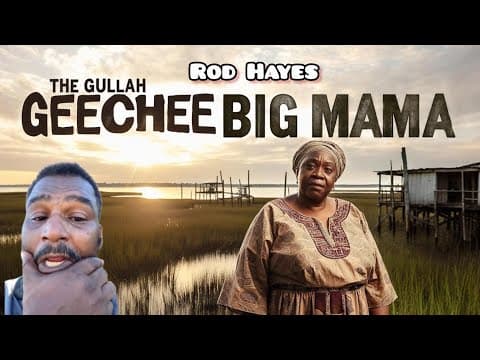
This article delves into the rich history of the Gullah Geechee Big Mama from the Carolinas, highlighting the often overlooked diversity of tribes in the region, the confederacy of Big Mamas, and the global connections during the Gula Wars. It challenges common narratives about African heritage and emphasizes the importance of perspective in understanding history.
The history of the Carolinas, particularly South Carolina, is often associated with Charleston, a city renowned for its rich and complex past. However, there is much more to the story, especially when it comes to the Gullah Geechee culture and the influential figure known as the Big Mama. This article explores the broader historical context of the Carolinas, the diversity of tribes in the region, and the significant role played by the Big Mama during pivotal moments such as the Gula Wars.
Charleston is frequently highlighted in discussions about South Carolina's history due to its status as a major city with a well-documented past, particularly concerning slavery. However, this focus can overshadow other important areas and narratives within the state, such as the upstate regions like Sburg and Greenwood. These areas also have rich histories that contribute to the overall understanding of the region's cultural and tribal diversity.
Contrary to popular belief that the Gullah Geechee people represent the sole tribal presence in the Carolinas, there were actually multiple tribes inhabiting the area. This diversity is crucial to understanding the cultural fabric of the region. The Gullah Geechee Big Mama is part of a larger confederacy of Big Mamas across the Carolinas, indicating a network of tribal leadership and influence.
The Big Mamas formed a confederacy, a powerful alliance that played a significant role during the Gula Wars. This confederacy was so interconnected that communication among them was described as telepathic, a necessity given the absence of modern communication tools like telephones. Chiefs from various tribes, even from distant places such as Hawaii, the Tongan and Samoan Islands, New Zealand, and Australia, came to pay homage and send soldiers to support the defense against invasions.
This global involvement highlights the extensive reach and influence of the Big Mama confederacy and the Gullah Geechee people. It also explains the diverse phenotypical features found within the community, reflecting a blend of bloodlines from various parts of the world.
The concept of "tying into the vine" refers to unions and marriages that create a unified family tree, essential for maintaining and correcting bloodlines. This practice was vital in preserving the integrity of the tribes' blood amidst external invasions and societal disruptions.
This perspective challenges the widely accepted "Out of Africa" theory, which is a relatively recent ideology, less than 200 years old. The theory is often used as a tool of conditioning, shaping how history is perceived rather than reflecting ancient truths.
Perspective plays a crucial role in how history is understood. It is defined by the viewpoint of the observer, which can differ significantly from the reality experienced by those within the culture or event. Recognizing this helps to identify rifts in information and encourages a more nuanced understanding of history beyond mainstream narratives.
The history of the Gullah Geechee Big Mama and the Carolinas is a testament to the rich, diverse, and interconnected cultures that have shaped the region. By looking beyond the commonly spotlighted areas like Charleston and embracing the broader tribal confederacies and global connections, we gain a deeper appreciation of the resilience and complexity of these communities. Understanding the importance of perspective and challenging established narratives allows for a more authentic and comprehensive view of history.
This exploration invites readers to reconsider the stories they have been told and to acknowledge the profound heritage and influence of the Gullah Geechee Big Mama and her confederacy across the Carolinas and beyond.



















