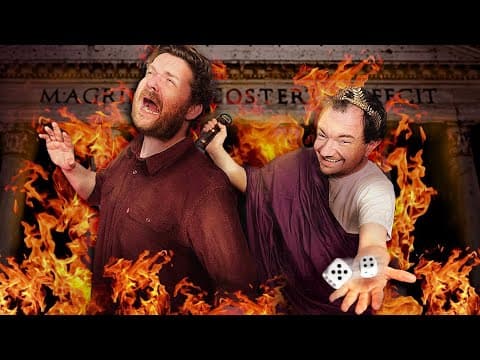
This blog post delves into a creative interpretation of Monopoly set in the Roman Empire, exploring the roles of various factions, the dynamics of power, and the humorous interactions among players as they navigate the challenges of rebuilding Rome while engaging in political intrigue and gladiatorial combat.
In a fascinating blend of history and gaming, a group of players embarks on a journey to recreate the grandeur of the Roman Empire through a unique version of Monopoly. This game, humorously dubbed "Monopoly, But THE ROMAN EMPIRE!!", invites players to assume the roles of various factions within Roman society, each with distinct powers and responsibilities. As they navigate the complexities of power, politics, and gladiatorial combat, the players engage in a lively discussion about the nature of history and the legacy of the Roman Empire.
The game of Monopoly has its roots in a game originally called "The Landlord's Game." This historical context sets the stage for the players to explore the concept of landlords and their influence, drawing parallels to the lords of medieval times. However, the focus quickly shifts to the grandeur of the Roman Empire, where emperors and senators wielded significant power.
As the game begins, the players are introduced to their characters, representing noble families of Rome. The host, embodying the persona of Julius Caesar Augustus Germanicus, sets the tone with a humorous yet authoritative demeanor. The players are tasked with rebuilding Rome, which is humorously described as a city in decay, filled with dirty streets and in need of revitalization.
Each player selects a character that represents a faction within Roman society:
These roles come with special powers that influence the game's dynamics, allowing for strategic maneuvering and alliances.
As the players dive into the game, they quickly realize that the path to power is fraught with challenges. The mechanics of the game mirror the political intrigue of ancient Rome, where alliances can shift, and betrayal lurks around every corner. The players engage in discussions about their strategies, making prophecies about each other's fates and attempting to consolidate power.
The Senate plays a crucial role in the game, with players representing different factions and vying for influence. The host explains the rules of Roman procedure, emphasizing the importance of acquiring properties and consolidating power. Players can engage in combat in the arena, trade properties, or even attempt tyrannicide to eliminate rivals.
Throughout the gameplay, humor is a constant companion. The players engage in witty banter, making puns and jokes that lighten the atmosphere. The host's portrayal of Julius Caesar is particularly entertaining, as he navigates the absurdities of the game while referencing historical events and figures. The comedic elements serve to enhance the experience, making the historical context more accessible and enjoyable.
As the game progresses, the players face various challenges, including financial difficulties and the threat of losing their properties. The host introduces unexpected events, such as a fire spreading through Rome, which adds an element of chaos to the proceedings. Players must adapt their strategies to survive and thrive in this tumultuous environment.
The ability to make prophecies becomes a significant aspect of the game. Players attempt to predict each other's downfalls, leading to a mix of tension and anticipation. The prophecies not only influence gameplay but also serve as a humorous commentary on the unpredictability of fate in both the game and history.
As the game draws to a close, the players reflect on their experiences, discussing the parallels between the game and the complexities of Roman history. The humorous interactions, strategic maneuvering, and unexpected twists create a memorable experience that highlights the enduring legacy of the Roman Empire. Through this unique interpretation of Monopoly, players gain a deeper appreciation for the intricacies of power, politics, and the human experience in ancient Rome.