
This blog post delves into the fascinating history of short-lived countries, examining their origins, struggles, and the political turmoil that led to their brief existences. From the Republic of Ezo in Japan to the Russian Democratic Federative Republic, we explore how these nations, despite their fleeting moments, left lasting impacts on history and the lives of their people.
In the United States, there is an amusement park chain called Six Flags, named after the six nations that have claimed Texas throughout its history. While Texas proudly boasts its time as an independent nation, the Republic of Texas lasted only nine years. This raises an intriguing question: what defines a country, and how many have existed for even shorter periods? In this post, we will explore the histories of several short-lived countries, some of which lasted mere days or months.
Before diving into the stories of these ephemeral nations, it is essential to clarify what constitutes a country. The definition can be contentious, as many territories claim independence while others contest their status. Generally, a country can be defined by three criteria:
While this definition simplifies the complexities of international law, it serves as a useful framework for our exploration.
Our first example is the Republic of Ezo, which emerged during a tumultuous period in Japan's history. Following the forced opening of Japan's ports by the U.S. Navy in 1854, political unrest led to the fall of the Tokugawa Shogunate. In 1869, a naval admiral named Inamoto Takiyaki declared independence on Hokkaido, naming it the Republic of Ezo. This democratic republic, inspired by models from France and America, lasted only from January to June of that year before being reconquered by the Imperial Navy. Despite its brief existence, the Republic of Ezo was a precursor to Japan's eventual modernization.
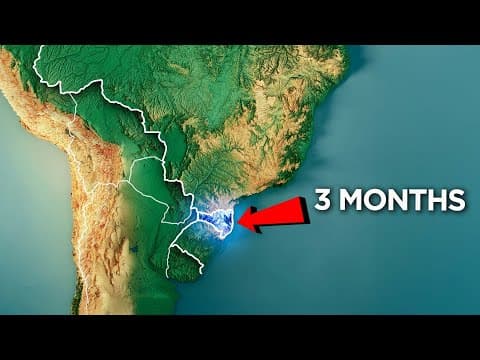
Next, we turn to Brazil's Juliana Republic, which arose from the Brazilian Civil War (1835-1845). The conflict was primarily economic, with the Farrapos, a rebel group, seeking control over the southern meat market. On July 22, 1839, they captured the city of Laguna and declared independence. However, the Juliana Republic lasted less than four months, as it was retaken by the Imperial Army. The war continued for years, culminating in the tragic Pango Massacre, where many black soldiers were killed, highlighting the complexities of the conflict and the struggle for abolition.
In 1885, Louis Riel, a prominent indigenous leader, declared a provisional government in Canada's Northwest Territories, known as the Provisional Government of Saskatchewan. This government was established in response to grievances against land surveys that threatened indigenous rights. Unfortunately, it lasted only 53 days before being dismantled by the Canadian army. Riel's legacy remains controversial, as he was later tried for treason and executed, marking a significant moment in Canadian history.
During the U.S. Civil War, South Carolina was the first state to secede from the Union, declaring itself the Palmetto Republic on December 20, 1860. This secession was short-lived, lasting only 50 days before South Carolina joined the Confederacy on February 8, 1861. The Palmetto Republic's brief existence is a reminder of the intense divisions that characterized this period in American history.
One of the most intriguing entries on our list is the Russian Democratic Federative Republic, which existed for less than a day. Following Tsar Nicholas II's abdication on March 2, 1917, a provisional government was established. However, the Bolsheviks dissolved this government shortly after elections were held on January 18, 1918, effectively ending the brief existence of the Russian Democratic Federative Republic. This event had profound implications for Russia and the world, shaping the course of the 20th century.
While these nations may have existed for only a short time, their impacts were significant. They often arose from political turmoil, civil wars, and struggles for independence, reflecting the complexities of national identity and governance. The stories of these countries remind us that the quest for autonomy and recognition is a recurring theme in human history.
The exploration of short-lived countries reveals the fragility of nationhood and the tumultuous nature of political landscapes. As we reflect on these brief nations, we recognize that the divisions and conflicts that led to their creation are not unlike those we see today. Movements for independence and self-determination continue to emerge worldwide, reminding us that the quest for identity and governance is an ongoing journey.
In a world where borders and nations are constantly shifting, the role of mapmakers and historians becomes increasingly vital. Understanding the past can help us navigate the complexities of the present and future. As we continue to witness the rise and fall of nations, it is essential to remember the lessons learned from these short-lived countries and the enduring human spirit that drives the quest for freedom and recognition.



















