
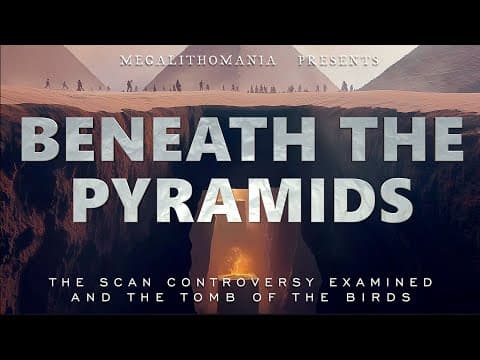
Recent explorations and discoveries beneath the Giza Plateau, particularly in the Tomb of the Birds, suggest a complex cave system linked to ancient Egyptian beliefs and possibly older civilizations. This blog post delves into the findings, historical context, and implications of these discoveries.
In a recent exploration of the Giza Plateau, significant discoveries have emerged regarding the area beneath the central pyramid. Andrew Collins, a prominent researcher in the field, has been at the forefront of these findings, particularly concerning the Tomb of the Birds, a site he first investigated in 2008. This blog post will explore the connections between the Tomb of the Birds and the newly discovered cave systems, as well as the implications of these findings for our understanding of ancient Egyptian civilization.
Andrew Collins has indicated that there is substantial evidence suggesting the existence of a complex cave system beneath the Giza Plateau. This system, which he and his colleagues discovered in 2008, appears to connect to the central pyramid and possibly extends to the second pyramid as well. The use of advanced radar technology, such as the TeraSAR-X satellite data collected in 2007, has revealed the extent of these caves, suggesting they may be linked to ancient Egyptian beliefs about the afterlife and the underworld.
The ancient Egyptians referred to Giza as "Rosow," meaning the mouth of the passages or caves. This name reflects the significance of the cave systems in their mythology, particularly in relation to the Duat, the Egyptian underworld. Collins posits that these caves may have been used by early Egyptians as a means to access their spiritual beliefs and rituals associated with death and the afterlife.
The Tomb of the Birds, located near the Great Pyramid, is a crucial site in this exploration. During a recent visit, Collins and his team revisited the tomb to gather more information about its structure and significance. The tomb features rectangular slots in the walls, believed to have housed bird mummies, which were removed in the 1840s by Colonel Howard Vyse and his engineer John Perring.
Upon entering the Tomb of the Birds, Collins and his team navigated through a series of chambers and tunnels. They observed natural formations and signs of past human activity, including striations on the walls that may have symbolic meanings. The cave system itself is believed to have been formed through natural erosion over thousands of years, possibly dating back to when the Mediterranean Sea reached the northern base of the plateau.
The cave system's connection to the second pyramid is particularly intriguing. Radar scans indicate that the caves extend towards this pyramid, which was historically associated with Hermes Trismegistus, a figure linked to wisdom and the secrets of ancient Egypt. Collins suggests that the caves may lead to a secret chamber, often referred to as the Hall of Records, which could contain ancient knowledge and texts.
Local legends speak of a giant snake, Elh Hanash, that guards the secrets of the cave system. According to tradition, anyone who attempts to enter the secret chamber will be blinded, except for one who will only lose sight in one eye. This myth adds a layer of mystique to the exploration of the caves and their potential significance in ancient Egyptian culture.
The discoveries beneath the Giza Plateau challenge our understanding of ancient Egyptian civilization. If the cave system predates the dynastic Egyptians, it could indicate the existence of an earlier culture with advanced knowledge and practices. Collins suggests that these findings may be linked to the Elder Culture of Egypt, which existed thousands of years before the known dynasties.
As new data continues to emerge, it is essential for researchers to remain open-minded yet skeptical. The implications of these discoveries could reshape our understanding of ancient Egypt and its history. Collins emphasizes the need for further exploration of the cave systems to uncover the truths hidden beneath the Giza Plateau.
The exploration of the Tomb of the Birds and the surrounding cave systems offers a fascinating glimpse into the complexities of ancient Egyptian beliefs and practices. As researchers like Andrew Collins continue to investigate these sites, we may uncover more about the mysteries of the past and the civilizations that once thrived in this iconic region. The connection between the caves and the pyramids not only enriches our understanding of ancient Egypt but also invites us to ponder the deeper meanings behind these monumental structures.



















