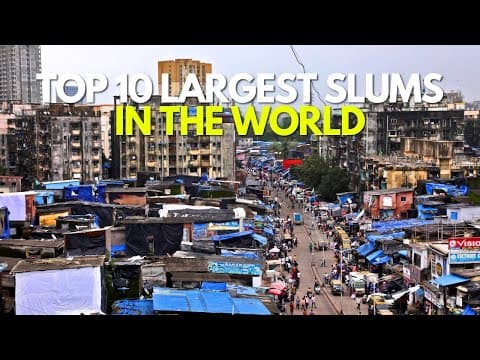
This blog post explores the top 10 largest slums in the world, highlighting the resilience, innovation, and community spirit of their residents despite facing extreme poverty and challenging living conditions.
Welcome back to our exploration of the world's most intriguing and challenging places. Today, we focus on slums—areas often overlooked yet rich in resilience, innovation, and community spirit. In this post, we will delve into the top 10 largest slums in the world, where millions live under difficult conditions but continue to adapt and thrive.
Manshiyat Naser, known locally as Garbage City, is home to around 60,000 people, many of whom work as informal waste collectors. The residents, known as the Zolene, have developed an efficient recycling system that processes 80-90% of Cairo's waste, far surpassing most formal waste management systems. Despite harsh living conditions, including a lack of clean water and sanitation, the Zolene community has built schools, churches, and health centers, showcasing their resilience and resourcefulness.
With a population exceeding 700,000, Ciudad Bolívar is a city within a city, formed by people fleeing violence in rural areas. Life here is challenging, marked by high unemployment and crime. However, local residents have organized to improve their living conditions, creating community centers and youth programs aimed at providing alternatives to gang violence. This community embodies a spirit of perseverance and hope amidst adversity.
Often referred to as the Venice of Africa, Makoko is a floating slum with a population estimated between 100,000 and 300,000. Residents navigate narrow waterways in canoes, relying on fishing and small markets for their livelihoods. Despite overcrowding and sanitation issues, community-led initiatives have established floating schools and health centers, symbolizing hope and ingenuity in the face of constant threats from government eviction efforts.
Petare is one of the largest and most densely populated slums in Latin America, with over 700,000 residents. The area struggles with poverty, violence, and political instability, yet the community remains tight-knit. Residents are actively involved in local and national politics, advocating for better living conditions. Despite the challenges, there is a strong sense of community and determination to fight for a better future.
Khayelitsha, with an estimated population of over 2 million, is one of the largest slums in South Africa. Established during the apartheid era, it faces severe poverty and overcrowding. Despite high unemployment and crime rates, numerous NGOs and community groups work to improve living conditions through educational programs and health care services. The vibrant cultural scene in Khayelitsha contributes to a growing sense of pride among residents.
Home to over 4 million people, Nezahualcóyotl is characterized by dense housing and limited infrastructure. The area has grown rapidly since the mid-20th century, leading to issues with flooding and structural stability. Despite these challenges, Nezahualcóyotl boasts a rich cultural heritage, with community organizations striving to improve living conditions and provide better opportunities for residents.
Rocinha is the largest favela in Rio de Janeiro, housing between 100,000 and 200,000 people. This vibrant community is marked by poverty and inadequate infrastructure, yet it thrives with small businesses and cultural expressions. Residents have developed grassroots organizations to improve living conditions, focusing on education and health care. Rocinha is a testament to resilience and creativity in the face of adversity.
With a population of over 2.4 million, Orangi Town is one of the largest slums in Asia. Despite facing poverty and inadequate infrastructure, residents have initiated community-led projects to improve sanitation and living conditions. The Orangi Pilot Project has significantly enhanced access to sanitation services. The community's solidarity and determination to create better lives for themselves are evident in their ongoing efforts.
Dharavi is often referred to as India's largest slum, with around 1 million residents living in a densely packed area. Despite harsh conditions, Dharavi is a hub of economic activity, generating over 1 billion dollars annually through small-scale industries. The community has developed its own systems of governance and support, showcasing resilience and resourcefulness amidst the challenges of poverty and health issues.
Kibera is often considered Africa's largest slum, with a population ranging from 250,000 to 1 million. It symbolizes the challenges faced by slums across the continent, including extreme poverty and inadequate infrastructure. However, Kibera is also a place of resilience, with numerous social enterprises and grassroots organizations working to improve living conditions. The community's creativity and determination shine through, as residents strive for a better future.
These top 10 largest slums in the world are not just places of despair; they are also centers of hope, resilience, and untold stories. The communities within these slums continue to fight, innovate, and build their futures despite overwhelming challenges. What struck you most about these communities?