
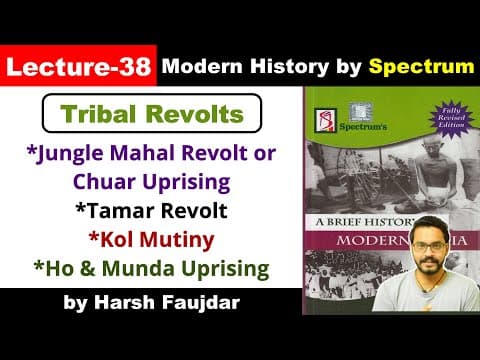
This blog post delves into four significant tribal uprisings in India: the Chuar Uprising, Tamar Revolt, Kol Mutiny, and Ho & Munda Uprising, highlighting their causes, key figures, and impacts on British colonial rule.
In this post, we will discuss four notable tribal uprisings in India: the Chuar Uprising, the Tamar Revolt, the Kol Mutiny, and the Ho & Munda Uprising. Each of these revolts played a crucial role in the resistance against British colonial rule and reflected the struggles of tribal communities to maintain their way of life.
The Chuar Uprising, also known as the Jungle Mahal Revolt, occurred in the region between the Chotanagpur Plateau and the Bengal plains. This area was administratively significant and was home to the Chuar tribe, a subgroup of the Bhumiya tribal community. The Chuar people primarily engaged in farming and hunting, and they often worked for local zamindars (landlords) as guards or police, known as "pays."
The British colonial administration sought to strengthen its control over Bengal, demanding increased revenue from the zamindars. In 1767, the British Resident of Midnapore ordered the demolition of the mud forts belonging to these zamindars, which were symbols of their status. This demand for revenue, coupled with the destruction of their forts, led to widespread discontent among the zamindars and the Chuar people.
In 1768, Jagannath Singh, a zamindar from the region, united the zamindars and the Chuar people to launch an armed rebellion against the British. The uprising was initially successful, forcing the British to concede. However, in 1771, when the Chuar people rebelled again, the British were better prepared and suppressed the revolt with significant force.
The most significant uprising occurred in 1798 under the leadership of Durjan Singh, who led the Chuar people against the British policies that had stripped them of their rights and lands. This revolt was marked by fierce resistance but ultimately faced brutal suppression by the British forces.
The Tamar Revolt took place in 1798 in the Chotanagpur region, led by Bhola Nath Sahay. Similar to the Chuar Uprising, this revolt was a response to the British interference in the tribal way of life.
The British were attempting to establish their dominance and control over the tribal communities, which was met with resistance. The tribal people, who preferred an isolated way of living, were opposed to the British encroachment into their lives.
The revolt expressed anger against the British and their policies, particularly against the "dika" system, which involved the recruitment of outsiders into tribal areas. The Tamar Revolt was suppressed by the British forces led by Lieutenant Colonel Lutyens Cooper.
The Kol Mutiny occurred in 1831 and involved the Kol tribe, also from the Chotanagpur region. The British were promoting a settled way of life, which conflicted with the nomadic lifestyle of the Kol people.
The British began transferring large tracts of land to outsiders, including moneylenders and settled farmers, which led to the dispossession of the Kol people. This encroachment on their lands prompted the Kol to revolt.
Under the leadership of Buddho Bhagat, the Kol people launched a violent uprising against the outsiders. Initially, the revolt was successful, resulting in the deaths of many outsiders. However, the British responded with a large military force, ultimately suppressing the mutiny.
The Ho and Munda Uprising took place between 1820 and 1837 in the Singhbhum region of Jharkhand. This uprising was characterized by the unification of the Ho and Munda tribes against British expansion.
The British were attempting to establish control over Singhbhum, leading to increased tensions with the local tribes. The introduction of new revenue policies and the influx of outsiders further aggravated the situation.
The Ho and Munda tribes attempted to resist British control but faced significant military suppression. The uprising highlighted the growing discontent among tribal communities against colonial policies.
The Chuar Uprising, Tamar Revolt, Kol Mutiny, and Ho & Munda Uprising are significant events in the history of tribal resistance against British colonial rule in India. Each uprising reflects the struggles of tribal communities to protect their land, culture, and way of life from external interference. Understanding these uprisings provides valuable insights into the broader context of India's fight for independence and the complexities of colonial rule.



















