
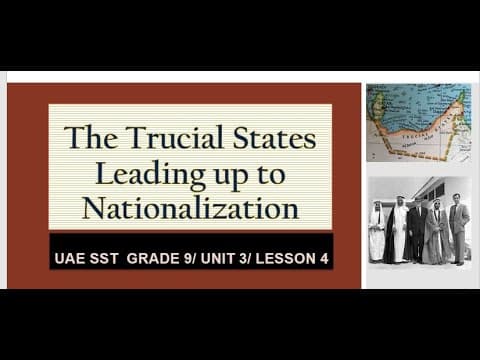
Exploring the Trucial States: A Historical Overview of the UAE
The Trucial States, now known as the United Arab Emirates, were a group of sheikhdoms along the Persian Gulf that entered into treaties with the British in the 19th century. This blog post delves into their history, the significance of these treaties, and the transformation into the modern UAE.
The Trucial States, a term that refers to a collection of sheikhdoms located along the southern coast of the Persian Gulf, played a crucial role in the formation of what is now known as the United Arab Emirates (UAE). This blog post will explore the history of the Trucial States, the significance of their treaties with the British, and how these agreements shaped the region into the modern nation we see today.
Historical Background
The Trucial States consisted of seven emirates: Abu Dhabi, Dubai, Sharjah, Ajman, Umm Al-Quwain, Fujairah, and Ras Al Khaimah. These emirates were known for their strategic location along trade routes and their rich natural resources, particularly pearls and later oil.
In the 19th century, the British Empire sought to secure its interests in the region, particularly to protect trade routes to India and to counteract the influence of other powers, such as the Ottomans and the Persians. As a result, the British entered into a series of treaties with the rulers of these sheikhdoms.
The Treaties with the British
The first significant treaty was signed in 1820, known as the General Maritime Treaty. This agreement aimed to suppress piracy and ensure safe passage for British ships in the Gulf. Over the years, additional treaties were established, including the 1892 Perpetual Treaty, which effectively made the Trucial States a protectorate of the British Empire.
These treaties granted the British control over the foreign affairs of the Trucial States while allowing the local rulers to maintain internal governance. This arrangement provided a degree of stability in the region, which was often plagued by tribal conflicts and external threats.
Transformation into the United Arab Emirates
The discovery of oil in the 1950s marked a turning point for the Trucial States. The newfound wealth from oil revenues allowed the emirates to invest in infrastructure, education, and healthcare, significantly improving the quality of life for their citizens.
As the British began to withdraw from their protectorates in the 1960s, the rulers of the Trucial States recognized the need for unity to ensure their sovereignty and stability. In 1971, six of the emirates formed the United Arab Emirates, with Ras Al Khaimah joining shortly after. This federation allowed the emirates to pool their resources and work together on common goals.
Conclusion
The history of the Trucial States is a fascinating tale of colonial influence, local governance, and eventual unity. The treaties with the British played a pivotal role in shaping the political landscape of the region, leading to the establishment of the UAE as a modern nation. Today, the UAE stands as a testament to the resilience and adaptability of its people, transforming from a collection of small sheikhdoms into a thriving global hub for business and tourism.



















