
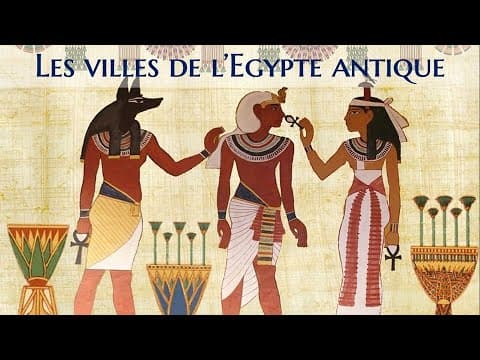
This blog post delves into the urban organization and characteristics of ancient Egyptian cities, highlighting their historical significance, architectural achievements, and the socio-economic factors that shaped their development.
Ancient Egypt is recognized as one of the oldest civilizations in the world, alongside Mesopotamia and the Indus Valley. This civilization dates back to around 3100 BC, with roots in sedentary life beginning as early as 6000 BC. The emergence of the first villages occurred between 6000 and 4000 BC, leading to the formation of complex societies and urban centers.
Religion played a crucial role in the lives of ancient Egyptians, influencing various aspects of their civilization, including urban planning. While much of what we know about ancient Egypt focuses on monumental structures like pyramids and temples, recent archaeological discoveries have shed light on the urban characteristics of their cities.
Ancient Egypt experienced several significant empires:
The capitals of these empires varied, with Memphis serving as the capital during the Old Kingdom, Luxor during the Middle Kingdom, and Thebes during the New Kingdom.
The ancient Egyptians made numerous contributions that shaped their society and urban life:
The ancient Egyptians viewed cities as vital centers of trade, culture, and governance. The hieroglyph representing a city—a circle with a cross—symbolized both protection and exchange, indicating that cities were fortified spaces where commerce and social interaction occurred.
Archaeologist Flinders Petrie reconstructed the layout of the city of Kahun, revealing a planned urban environment. The city featured:
The location of cities was often determined by economic needs, particularly proximity to the Nile. This ensured access to water for agriculture and trade. Additionally, the presence of complex funerary sites often led to the establishment of nearby urban centers, as these sites required a workforce and clergy to maintain them.
Funerary complexes were central to ancient Egyptian culture, often comprising pyramids and temples. These complexes not only served as burial sites but also as centers for religious activities, reflecting the Egyptians' deep reverence for the afterlife. The construction of these complexes necessitated the establishment of nearby settlements to support the workforce involved in their construction.
The social hierarchy in ancient Egypt was well-defined, with the pharaoh at the top, followed by high officials, artisans, and laborers. Contrary to earlier beliefs, recent research suggests that the pyramids were likely built by seasonal laborers rather than slaves, who were compensated for their work.
The urban organization of ancient Egyptian cities reveals a sophisticated society that valued planning, economic stability, and religious devotion. The cities were not only centers of power but also hubs of culture and innovation, reflecting the complexities of life in ancient Egypt. Through archaeological findings, we gain a deeper understanding of how these urban centers functioned and their significance in the broader context of human civilization.



















