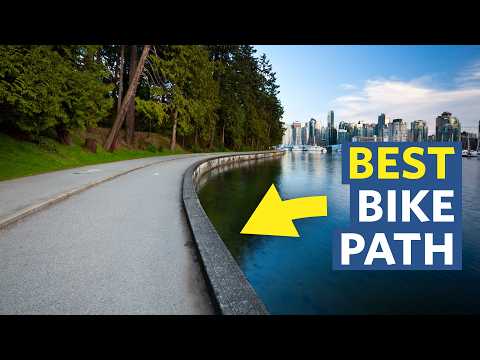
The Vancouver Seawall is the world's longest continuous waterfront bike path, stretching 28 km. This blog post recounts a journey along the Seawall, highlighting its scenic views, urban and natural landscapes, and the experience of long-distance cycling in a city setting.
The Vancouver Seawall is a remarkable 28 km bikeway that holds the title of the world's longest continuous waterfront bike path. This impressive stretch of cycling path offers a unique blend of urban and natural landscapes, making it a must-visit for both locals and tourists. In this blog post, I recount my experience riding the Seawall from the Vancouver Convention Center to Spanish Banks Park, sharing insights and reflections along the way.
Before embarking on my journey, I needed to secure a bike. I rented an e-bike from Spokes Bicycle Rental, conveniently located near the Seawall's starting point. The rental process was seamless, with professional staff and quality bikes. I opted for an e-bike but kept it on the lowest setting to ensure I had enough battery for the return trip.
While there isn't an official map of the Seawall, I gathered information that suggested starting at the Vancouver Convention Center. The path begins in an urban setting, transitioning through various neighborhoods and parks, including Cole Harbor, Stanley Park, Falls Creek, and Kitalano, before reaching Spanish Banks Park.
As I set off from the Convention Center, the path felt very urban, with storefronts lining the waterfront. I was surprised by the number of seaplanes taking off and landing near Cole Harbor, creating a lively atmosphere. Cycling through this area, I reflected on the nature of long-distance biking. While my usual commute is only 5-6 km, the growing interest in longer bike commutes, especially with the rise of e-bikes, is evident. The key challenge remains the lack of dedicated long-distance bike paths separated from traffic.
Upon entering Stanley Park, I was greeted by a more natural environment. The path here is quieter and free from car traffic, allowing for a more leisurely ride. I encountered wildlife, including a flock of Canada geese, which added to the charm of the park. The path features several rest stops, including one near the iconic totem poles, where visitors can learn about their significance.
The Seawall path has a rich history, with its construction beginning in 1917 and the final segment completed in 1980. The path's design reflects the city's evolution, with sections becoming one-way to accommodate the growing number of cyclists. As I cycled along, I appreciated the stunning views of the harbor and landmarks like the Lions Gate Bridge.
Exiting Stanley Park, I entered the False Creek area, which has undergone significant redevelopment since Expo 86. This neighborhood features wide, comfortable bike paths that separate cyclists from pedestrians, making it one of the best cycling experiences in North America. However, I encountered a flock of geese that momentarily halted my progress, adding a humorous twist to my journey.
As I continued towards Kitalano, the path became more residential, with families and dog walkers enjoying the area. However, I soon faced a jarring transition as I had to navigate through streets with car traffic, a stark contrast to the previous sections. The path's quality varied, with some areas feeling less prioritized for cyclists.
Navigating the Seawall proved challenging at times, especially when signage was unclear. I found myself taking detours and even pushing my bike over grassy areas to find the correct path. Despite these hiccups, I enjoyed the journey and the opportunity to explore different neighborhoods.
The final stretch of my ride took me through Jericho Beach Park, where I encountered a mix of gravel paths and suburban landscapes. The absence of geese in this area was surprising, replaced instead by playful rabbits. After a long ride, I finally reached Spanish Banks Park, the official end of the Seawall.
Completing the 28 km ride was a rewarding experience. The Seawall offers a unique perspective of Vancouver, showcasing its diverse neighborhoods and natural beauty. The bike rental cost around $60 for six hours, a worthwhile investment for such an enriching experience.
The Vancouver Seawall exemplifies the potential of long-distance bike paths for bicycle tourism. As more people seek sustainable travel options, cities can benefit from developing dedicated cycling infrastructure. E-bikes are making long-distance cycling accessible to a broader audience, paving the way for future bike highway networks.
In conclusion, my ride along the Vancouver Seawall was not just a physical journey but also a reflection on the importance of cycling infrastructure in urban environments. I look forward to returning to Vancouver and exploring more of what this beautiful city has to offer on two wheels.