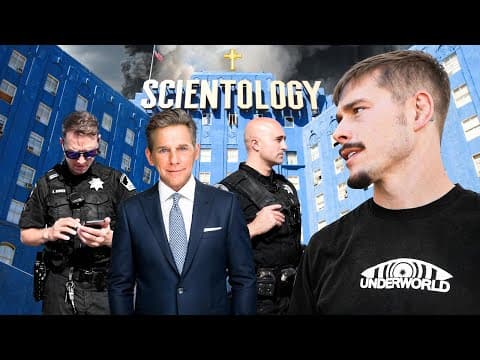
This blog post explores the controversial practices and allegations surrounding Scientology, detailing the experiences of former members, the church's influence in Clearwater, Florida, and the challenges faced by those who attempt to expose its inner workings.
Scientology, often described as a family-destroying human trafficking cult, has garnered significant attention for its controversial practices and the experiences of its former members. Founded by L. Ron Hubbard, a prolific science fiction writer, Scientology is based on the belief that humans are spiritual beings known as Thetans, who have lived multiple lives. This blog post aims to uncover the dark secrets of Scientology, exploring its origins, practices, and the harrowing stories of those who have escaped its grasp.
Scientology is a religion that claims to offer a path to spiritual enlightenment and freedom. According to its teachings, a galactic overlord named Zenu brought billions of beings to Earth millions of years ago, where they were imprisoned in volcanoes and subsequently exploded. This event allegedly created Thetans, invisible spirits that attach themselves to individuals, causing various negative experiences in their lives, including anxiety and addiction. To rid themselves of these Thetans, followers must undergo a series of costly auditing classes and often sign billion-year contracts pledging their loyalty to the church.
Many former members recount their experiences of growing up in Scientology as traumatic and isolating. For instance, Jenna Miscavige, the niece of the church's leader David Miscavige, shared her story of being raised in a highly controlled environment. She described enduring intense indoctrination, physical labor, and emotional manipulation. From a young age, she was subjected to rigorous programs, such as the purification rundown, which required her to spend hours in a sauna, often leading to physical distress.
Another former member, Serge, recounted his experience of being groomed for a role within the church's auditing team from a young age. He described a system where children were exploited for labor, often working long hours with little regard for their well-being. Aaron Smith-Levin, who was also raised in Scientology, shared that he was taken out of public school at the age of 12 to work full-time for the church, highlighting the extreme measures taken to indoctrinate young members.
Scientology's influence is particularly pronounced in Clearwater, Florida, where the church has acquired a significant amount of real estate, turning the city into a virtual ghost town. Since purchasing the Fort Harrison Hotel in 1975, Scientology has invested hundreds of millions into acquiring over 200 properties, many of which remain vacant. This has led to concerns among local residents about the church's impact on the community and its businesses.
Local entrepreneur Tony shared his struggles with the church, detailing how he faced harassment and threats for operating a business in Clearwater. He described the church's tactics as overbearing, creating a negative stigma that affects local businesses and discourages community engagement.
David Miscavige, who took control of Scientology after L. Ron Hubbard's death in 1986, has been the subject of numerous allegations, including physical abuse and intimidation of former members. Reports indicate that he has maintained a tight grip on the church, using tactics reminiscent of authoritarian regimes to silence dissent. Despite the serious allegations against him, Miscavige has rarely spoken publicly, opting instead for scripted media appearances.
Scientology is notorious for its secrecy and aggressive security measures. Investigators and former members have reported encounters with church security that resemble confrontations with a private army. The church employs tactics such as surveillance and intimidation to deter individuals from speaking out or attempting to expose its practices. This culture of fear has made it difficult for many to leave the church or share their experiences.
As the internet has made information about Scientology more accessible, the church's membership has declined significantly. Many former members believe that the church is slowly becoming extinct, unable to recruit new followers due to its tarnished reputation. The stories of abuse and manipulation are increasingly coming to light, leading to calls for accountability and legal action against the church.
The investigation into Scientology reveals a complex web of manipulation, control, and secrecy. The experiences of former members highlight the psychological and emotional toll of being involved in the church. As more individuals come forward with their stories, the hope is that the truth about Scientology will continue to emerge, leading to greater awareness and potential reform. The question remains: how long can an organization built on such a foundation of fear and control sustain itself in the face of growing scrutiny?