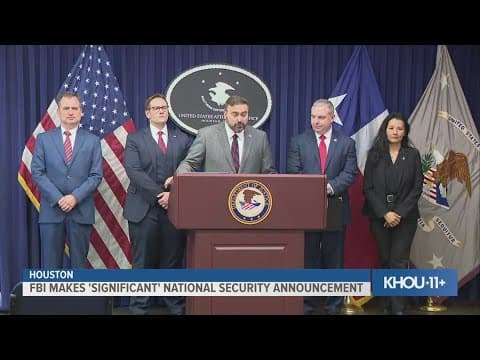
The FBI has arrested Xu Zhu Wei, a Chinese state-sponsored hacker, for cyber intrusions against U.S. universities and a law firm. This marks a significant step in combating state-sponsored cybercrime, particularly during the COVID-19 pandemic. The investigation revealed a sophisticated operation aimed at stealing critical research and confidential information, highlighting ongoing threats to American innovation and security.
In a significant development in national security, the FBI has announced the arrest of Xu Zhu Wei, an alleged Chinese state-sponsored hacker, for his involvement in cyber intrusions against several U.S. institutions. This marks the first time in many years that such an arrest has been made, underscoring the ongoing threat posed by state-sponsored cybercrime.
Before delving into the details of the case, it is important to acknowledge the recent devastating flooding in Central Texas, which has affected many families and communities. The FBI extends its heartfelt sympathies to those impacted by this tragedy.
The case against Xu Zhu Wei and his co-defendant Zhang Yu stems from a grand jury indictment returned in 2023 in Houston. The indictment alleges that Xu, under the direction of the Chinese State Security Bureau, was part of a hacking group known as Halia or Silk Typhoon. This group targeted various institutions, including three universities and a major international law firm based in Washington, D.C.
The indictment details a series of cyber intrusions that began in February 2020, coinciding with the early days of the COVID-19 pandemic. At that time, the Chinese government was accused of withholding critical information about the virus's origins. Xu was allegedly tasked with hacking into specific American universities and accessing the email accounts of researchers involved in COVID-19 research, including virologists and immunologists.
Xu is accused of exploiting vulnerabilities in software to insert malicious code, known as web shells, into targeted accounts. This allowed him to maintain access to the accounts and extract gigabytes of sensitive COVID research, which were then transferred to his handlers at the State Security Bureau.
In addition to targeting universities, Xu allegedly hacked into the email systems of a prominent law firm to access confidential information about U.S. policymakers and government agencies. The searches conducted during these intrusions included terms related to Hong Kong and the Ministry of State Security (MSS).
The investigation into Xu's activities was extensive, spanning over five years and involving multiple countries. The FBI's Houston office played a crucial role in this operation, working alongside international partners, including Italian authorities, who arrested Xu upon his arrival in Milan.
FBI officials highlighted the calculated nature of the Chinese government's efforts to steal American innovation, particularly during a time when U.S. scientists were under immense pressure to develop vaccines against COVID-19. The FBI's cyber team meticulously traced Xu's movements and uncovered a sophisticated espionage operation that compromised thousands of computers worldwide.
Xu's arrest is particularly notable as it represents a rare instance of successfully apprehending a state-sponsored hacker. The FBI had been waiting for Xu to make a mistake that would allow them to bring him to justice. His travel from Shanghai to Milan provided that opportunity. He is currently in custody in Italy, awaiting extradition to the United States.
The implications of this case extend beyond the immediate legal proceedings. The hacking of U.S. universities and law firms is not merely a violation of intellectual property rights; it represents a broader attack on American scientific innovation and the legal system. The FBI emphasized that these actions hinder American progress and threaten national security.
FBI officials have made it clear that the Chinese government's cyber activities pose a significant long-term threat to the United States. The agency continues to monitor and combat these threats, as evidenced by the recent apprehension of another alleged Chinese spy just days before Xu's arrest.
As the FBI prepares for Xu's extradition, the agency remains vigilant in its efforts to protect American institutions from foreign adversaries. The arrest of Xu Zhu Wei serves as a reminder of the ongoing challenges posed by state-sponsored cybercrime and the importance of international cooperation in addressing these threats. The FBI's commitment to safeguarding American innovation and security will continue as they work to bring those responsible for such cyber intrusions to justice.