Federal agents arrested Nakima Levy Armstrong and Shontel Louisa Allen for leading a disruptive mob that stormed a church service in Minneapolis, violating the FACE Act which protects religious freedom. Armstrong, a civil rights lawyer and activist, also faces scrutiny over her nonprofit's financial practices. The arrests signal a firm stance against attacks on places of worship and highlight concerns about grievance politics exploiting social causes for personal gain.
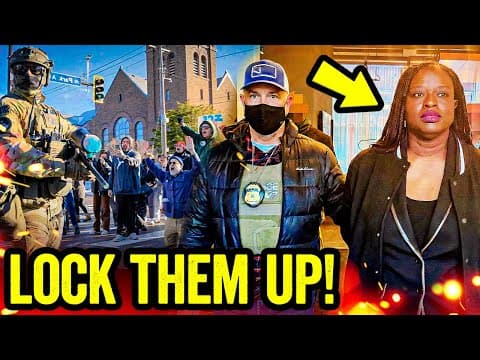
Federal agents, acting under the direct orders of Attorney General Pam Bondi, have arrested Nakima Levy Armstrong, a civil rights lawyer and activist, along with Shontel Louisa Allen, for their roles in leading a mob that stormed a church service in Minneapolis. This incident was not merely a protest or an exercise of free speech but a criminal act that disrupted a place of worship and terrorized families.
On a recent Sunday, approximately 40 far-left agitators entered Cities Church in St. Paul, Minnesota, during an active worship service. The group chanted slogans such as "ICE out" and "Justice for Nay," disrupted the service, and terrorized families, including children. They screamed racial insults at congregants and forced the service to end prematurely. The Minnesota Wisconsin Baptist Convention condemned the event as an unacceptable trauma.
Video footage shows protesters confronting the lead pastor, blocking exits, and creating chaos inside the sanctuary. The protesters targeted this church because one of its eight pastors, David Easterwood, was believed to be the acting director of the ICE field office in St. Paul. Ironically, Pastor Easterwood was not officiating the service that day, but this did not deter the mob.
Nakima Levy Armstrong organized the protesters through her radical justice network. She used Facebook to call on her followers to storm the church. Within 48 hours of the incident, Attorney General Pam Bondi announced the arrests, stating that Homeland Security Investigations (HSI) and FBI agents executed the arrests in Minnesota. Bondi emphasized that attacks on places of worship would not be tolerated.
Nakima Levy Armstrong and others have been charged with a federal crime under US Code 18 Section 241, known as the Freedom of Access to Clinic Entrances (FACE) Act. This law prohibits the use of force, threats, or physical obstruction to interfere with anyone exercising their First Amendment right to religious freedom.
Nakima Levy Armstrong is not just a street activist; she has been running a lucrative nonprofit organization while claiming to fight poverty. According to a review of her tax filings by Fox News, Armstrong earned over $1.1 million in six years as the executive director of the Wayfinder Foundation, an anti-poverty nonprofit.
In 2024 alone, Armstrong received nearly $216,000 in salary plus an additional $40,000 in benefits. Meanwhile, the foundation awarded just under $160,000 in grants to the communities it claimed to serve. Over her tenure from 2019 to 2024, Armstrong personally collected nearly $1 million in salary and $200,000 in additional compensation, while the foundation distributed approximately $700,000 in grants.
One of the major donors to her foundation was the Black Lives Matter Global Network Foundation, raising further questions about the financial operations of these organizations.
Nakima Levy Armstrong's case exemplifies what is increasingly being called the grievance industrial complex. This term refers to activists who, under the guise of fighting for the rights of the oppressed, end up enriching themselves without effectively helping the communities they claim to serve.
This phenomenon has been extensively documented, with organizations like the Southern Poverty Law Center (SPLC) turning grievance politics into a multi-million dollar industry. The situation in Minneapolis highlights how grievance politics can exploit social causes for personal financial gain.
The arrests of Nakima Levy Armstrong and Shontel Louisa Allen mark a significant moment in the enforcement of laws protecting religious freedom. The federal government's firm stance against attacks on places of worship sends a clear message that such actions will be prosecuted to the fullest extent of the law.
Moreover, the revelations about Armstrong's nonprofit financials shed light on the broader issue of grievance politics and the potential for exploitation within activist movements. This case serves as a reminder to scrutinize the motivations and operations behind social justice organizations.
The incident at Cities Church and the subsequent arrests underscore the importance of protecting constitutional rights while ensuring accountability for those who disrupt public order and safety under the pretense of activism.
This comprehensive overview provides insight into the recent arrests related to the Minneapolis church disruption, the legal framework involved, and the broader implications for activism and nonprofit accountability.