The FAA has prohibited its employees from attending safety advisory panels, raising concerns about air travel safety and the implications of diversity hiring narratives in the aviation sector.
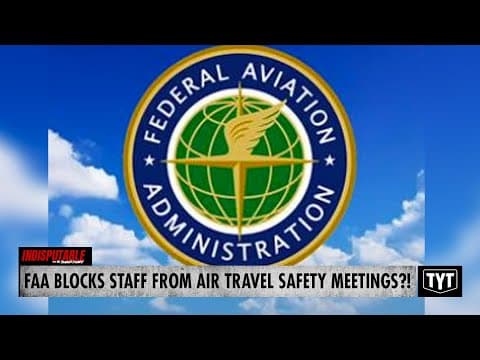
The Federal Aviation Administration (FAA) has recently come under scrutiny for a directive that bans its employees from participating in advisory panels aimed at enhancing air travel safety. This decision has sparked significant debate about the implications for aviation safety and the broader narrative surrounding diversity hiring practices within the agency.
According to reports, the FAA issued a directive stating that employees should not attend safety hearings, either in person or virtually, until further notice. This ban raises serious questions about the agency's commitment to safety, as these advisory panels are crucial for discussing and resolving outstanding issues in the aviation sector. The panels typically consist of government and industry representatives who collaborate to find consensus on various safety concerns, including pilot training, mental health, and emerging technologies.
An anonymous FAA employee expressed concern, stating, "It appears that safety is being forced to take a back seat due to fear of retribution, which means we all lose." This sentiment reflects a growing anxiety among FAA staff regarding the prioritization of safety in light of political pressures.
This directive comes at a time when the Department of Transportation is investigating a serious incident involving American Eagle flight 5342. The investigation has drawn attention to the FAA's operational practices and the potential impact of political appointments on safety protocols. Former President Donald Trump appointed former Representative Sean Duffy to lead the Department of Transportation, and he has suggested, without evidence, that diversity hiring practices at the FAA may have contributed to the collision.
The narrative surrounding diversity hiring has become a contentious topic, particularly in the context of the FAA's recent challenges. Critics argue that diversity initiatives are being scapegoated for systemic issues within the agency. Notably, statistics indicate that a significant portion of government failures can be traced back to decisions made by white males, yet this demographic is often not held accountable as a group.
JD Vance, the Vice President of the United States, has commented on the stress that diversity hiring can place on existing employees, suggesting that it leads to a dilution of standards in hiring practices. He stated, "When you don't have the best standards in who you're hiring, it means on the one hand you're not getting the best people in government, but on the other hand, it puts stresses on the people who are already there."
The criticism of diversity hiring often hinges on the assumption that individuals hired through these initiatives lack the necessary qualifications for their roles. However, this perspective overlooks the fact that all candidates must meet baseline qualifications before being considered for positions. Diversity initiatives are intended to create a more equitable hiring process, not to lower standards.
The argument against diversity hiring often lacks concrete evidence. Proponents of diversity initiatives challenge critics to provide examples of individuals who were hired solely based on diversity considerations and subsequently proved incompetent in their roles. The absence of such evidence suggests that the narrative may be more about political posturing than about genuine concerns for safety and competence.
The FAA's decision to ban employee participation in safety meetings raises significant concerns about the future of air travel safety. As investigations continue and political narratives evolve, it is crucial to prioritize safety and ensure that qualified individuals are leading the charge in addressing the challenges facing the aviation industry. The ongoing debate about diversity hiring practices must also be approached with nuance, recognizing the importance of qualifications while striving for a more inclusive workforce.
In the end, the safety of air travel should remain the paramount concern, free from the influence of political agendas and unfounded narratives.