
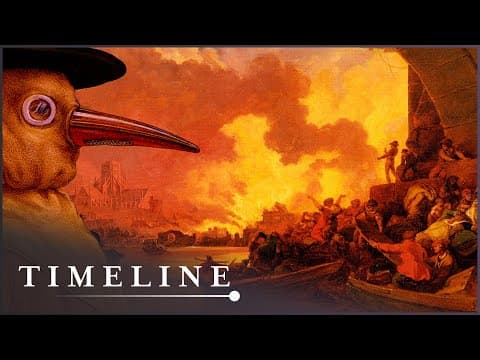
The year 1666 was marked by the Great Plague and the Great Fire of London, leading to immense suffering and loss of life. The plague claimed around 110,000 lives, while the fire destroyed a significant portion of the city, reshaping London forever. This post explores the events, societal impacts, and the aftermath of these calamities.
The year 1666 stands out in history as one of the most devastating periods for Londoners, marked by the Great Plague and the Great Fire. These two calamities not only caused immense suffering and loss of life but also reshaped the city and its society.
The Great Plague, which began in December 1664, was a resurgence of an earlier epidemic that had claimed over 40,000 lives in 1625. As spring approached in 1665, the plague returned with a vengeance, instilling fear in the hearts of Londoners. The city, then a much smaller place than today, was densely populated, with estimates suggesting around a million residents living in cramped conditions.
London in the 17th century was a cauldron of filth and disease. Timber-framed houses were packed tightly together, and sanitation was virtually non-existent. The streets were filled with rotting rubbish, and the stench of open sewers permeated the air. The lack of understanding about hygiene and disease transmission contributed to the rapid spread of the plague, which was later identified as being transmitted by rat fleas.
As the plague spread, it left a trail of death and despair. The mortality rate was staggering, with some weeks seeing over 7,000 deaths. The bills of mortality published weekly documented the grim reality of the epidemic, and the streets of London became eerily quiet as fear gripped the population. Many fled the city, while others abandoned sick family members in their homes.
In response to the crisis, officials marked plague-stricken houses with a red cross and employed watchmen to prevent contact with the infected. Despite the efforts of some doctors who remained in the city, the medical practices of the time were rudimentary and often ineffective. Quack doctors proliferated, selling dubious remedies that did more harm than good.
The plague not only caused physical suffering but also moral decay. Reports of parents abandoning their children and individuals attempting to infect others emerged. The societal structure was under immense strain, with many people succumbing to despair and desperation.
Just as the plague began to wane, a new disaster struck. On September 2, 1666, a fire broke out in a bakery on Pudding Lane. The conditions in London, with its timber-framed buildings and a summer drought, created a perfect storm for a catastrophic fire. The flames spread rapidly, fueled by strong winds and the highly combustible materials that filled the city.
Initially, the response to the fire was chaotic. The Lord Mayor of London, Sir Thomas Bloodworth, underestimated the situation, believing it could be easily contained. It wasn't until the fire had spread significantly that organized efforts began to combat it. King Charles II intervened, ordering the demolition of houses to create firebreaks, but by then, much of the city was already engulfed in flames.
The fire raged for several days, destroying approximately 13,200 houses, 87 parish churches, and significant landmarks such as St. Paul's Cathedral and the Royal Exchange. Despite the scale of the destruction, remarkably few lives were lost directly to the flames, with estimates suggesting only eight deaths. However, the aftermath left many homeless, and the harsh winter that followed claimed countless more lives.
In the wake of the fire, Londoners faced immense challenges. With no insurance to cover their losses, many were left destitute. The city was in ruins, and a citizens' inquiry was launched to investigate the causes of the fire, leading to the scapegoating of a French watchmaker, Robert Hubert, who falsely confessed to starting the blaze.
The rebuilding of London began in earnest in 1667, with significant changes to urban planning and architecture. Sir Christopher Wren played a crucial role in the reconstruction, designing over 50 churches, including the iconic St. Paul's Cathedral. The city emerged from the ashes with improved infrastructure and a renewed sense of resilience.
The events of 1665 and 1666 were pivotal in shaping the history of London. The Great Plague and the Great Fire tested the limits of human endurance and societal structure. Yet, from the devastation arose a stronger, more resilient city, determined to rebuild and improve. The spirit of London, unbroken by these trials, serves as a testament to the strength of its people in the face of calamity.



















