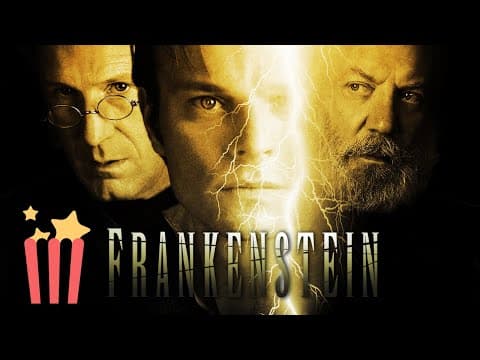
This blog post explores the first part of the 2004 film 'Frankenstein,' focusing on Victor Frankenstein's obsession with life and death, his relationships, and the moral dilemmas he faces in his quest for knowledge, ultimately leading to tragic consequences.
The 2004 film adaptation of Mary Shelley's classic novel "Frankenstein" delves into the life of Victor Frankenstein, a man driven by an insatiable thirst for knowledge and a desire to conquer death. This blog post will explore the key themes, character relationships, and moral dilemmas presented in the first part of the film, highlighting how Victor's ambition leads to tragic outcomes.
The film opens with Captain Robert Walton and his crew stranded in the icy wilderness, where they encounter Victor Frankenstein, who is in a state of distress. Victor's urgent plea to find a creature he has unleashed sets the stage for the unfolding drama. He warns Walton that no one is safe while this creature roams free, hinting at the dark consequences of his scientific pursuits.
Victor Frankenstein reflects on his childhood, describing a happy upbringing filled with love and support from his parents. However, his fascination with death and the mysteries of life begins to overshadow his youthful innocence. After the death of his mother, Victor becomes increasingly obsessed with the idea of overcoming death, leading him to pursue knowledge in science and medicine.
Victor's relationships with Elizabeth, an orphan taken in by his family, and his friend Henry are pivotal in shaping his character. Elizabeth represents love and normalcy, while Henry embodies the spirit of friendship and support. Despite their influence, Victor's ambition drives him to isolate himself in his studies, neglecting the bonds that matter most.
Victor's journey to the university marks a turning point in his life. Under the guidance of Professor Waldman, he immerses himself in the study of natural philosophy, physics, and chemistry. His enthusiasm for science grows, but so does his obsession with the idea of reanimating life. Victor's belief that he can unlock the secrets of creation leads him to experiment with electricity, culminating in a pivotal moment where he successfully reanimates a dead dog.
Victor's experiments raise profound ethical questions. He grapples with the implications of his actions, questioning whether it is right to play God. His friend Henry warns him about the dangers of his pursuits, emphasizing that knowledge can lead to unintended consequences. Despite these warnings, Victor's ambition blinds him to the potential horrors of his experiments.
In a climactic moment, Victor successfully brings a creature to life, but the result is far from what he envisioned. Instead of a beautiful creation, he is confronted with a grotesque being that embodies his darkest fears. This moment marks the beginning of Victor's descent into despair as he realizes the ramifications of his actions.
As Victor grapples with the reality of his creation, he becomes increasingly isolated and tormented. His relationships suffer, and he is haunted by the knowledge that he has unleashed something monstrous upon the world. The film poignantly illustrates the theme of ambition leading to destruction, as Victor's quest for knowledge ultimately results in tragedy.
The first part of the 2004 film "Frankenstein" serves as a powerful exploration of the dangers of unchecked ambition and the moral dilemmas inherent in the pursuit of knowledge. Victor Frankenstein's journey from a hopeful young man to a tormented creator highlights the tragic consequences of his actions. As the story unfolds, it raises critical questions about the ethical responsibilities of scientists and the potential fallout of their discoveries. The film invites viewers to reflect on the balance between ambition and morality, a theme that resonates deeply in today's world of rapid scientific advancement.