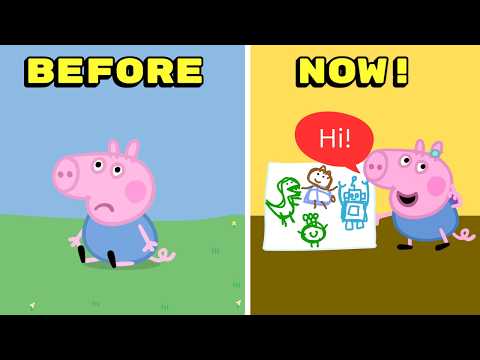
George Pig, a beloved character from Peppa Pig, has been diagnosed with moderate hearing loss and fitted with a hearing aid. New episodes explore his experience with sound, his first words beyond 'dinosaur,' and his emotional journey of self-expression and acceptance. This storyline marks significant character development and representation for children with hearing impairments.
A month ago, a video was made about George Pig being diagnosed with moderate hearing loss. Initially, only announcement clips, trailers, and teasers were available, but now the actual episodes have been released, revealing a much deeper and emotional story than expected. These episodes do not just show George getting a hearing aid and moving on; they explore how George experiences the world with his hearing aid, the new sounds he can finally hear, and the moment he discovers his own voice.
One episode titled "George's Day in the Life," part of the Peppa Pigtails series, is told from George's audio perspective. We hear what George hears: the ice cream van's melody is muffled and faint, and Peppa's voice sounds distant and unclear. Everyday sounds that most people take for granted do not come through the same way for George.
Throughout the episode, George manages by watching faces and waiting for Peppa to tap his shoulder instead of calling him. Peppa has been helping him without realizing it by tapping him to get his attention and making sure he looks at her when she talks. For 20 years, viewers have seen George as a quiet toddler obsessed with dinosaurs, but it turns out he was experiencing sound differently all along.
In the main Peppa Pig episode "Hearing Test," the family discovers George's moderate hearing loss in his left ear during routine hearing checks. George is fitted with a bright blue hearing aid right in the episode.
Following this, a Peppa Pigtails episode called "Hearing Aid" shows George attending playgroup wearing his new hearing aid for the first time. The other kids are excited, and Susie Sheep starts talking loud and slow, assuming George forgot how to speak. Peppa quickly corrects Susie, teaching the kids how to interact properly with George.
Madame Gazelle asks George to explain how he got his hearing aid. Although nervous, Peppa offers to help by drawing pictures while George tells the story. George draws the hospital, the hearing test (depicted as robots beeping, dinosaurs roaring, and aliens aliening), and the machine that made his hearing aid, complete with silly sound effects. He even corrects Peppa's narration, showing his ownership of his story.
The class cheers, and the narrator delivers a poignant line: "George's hearing aid will always help him when he needs it. Just like his big sister, Peppa." This line highlights that George has two supports navigating the world: his hearing aid and Peppa.
For 20 years, George has only said "dinosaur" and nothing else. Now, in front of his entire class, he explains his medical diagnosis through drawings and corrects Peppa when she gets details wrong. This is unprecedented character development for George, who is no longer just a toddler things happen to but a kid taking control of his own story.
The most emotional moment comes in the new Peppa Pig episode "Favorite Sound," released on March 9th. George can finally hear clearly enough with his hearing aid to say something he has never said before: Peppa's name.
In the episode, Peppa helps George explore all the new sounds he can hear, like the ice cream van melody and birds chirping. She wants to share her favorite sound, muddy puddles, but George wanders off following a butterfly—a symbol of transformation, reflecting George's own metamorphosis.
Peppa gets upset, but then George approaches her and says, "Peppa." His sister's face lights up, marking a touching milestone in the show.
This storyline is more than a sweet moment in a children's show; it is a powerful representation of hearing loss. Globally, 34 million children are deaf or hard of hearing, many of whom rarely see themselves represented on screen, especially in preschool shows. In the UK alone, over 54,000 children are deaf, with nearly a quarter deaf in one ear like George.
Studies show that 98% of parents of children with hearing loss believe seeing deaf characters on TV positively impacts their kids, helping them develop a stronger sense of self and feel less isolated.
George's story is unique because it is not just representation but character evolution. He goes from a toddler who says only "dinosaur" to a child who explains his medical diagnosis and corrects his sister, taking ownership of his narrative.
The show's commitment is evident beyond the episodes. There is a new YouTube channel, Peppa Pig Sign Language for Kids, featuring British and American Sign Language interpreters. Hasbro has released toys of George with his hearing aid, and Peppa Pig theme parks have updated the George character to wear a hearing aid during meet and greets. This is a permanent change, showing George thriving with his hearing aid, Peppa's support, and now his own voice.
George Pig's journey with hearing loss in Peppa Pig is a groundbreaking and heartfelt storyline that combines representation with meaningful character development. From experiencing the world in silence to finding his voice and confidently sharing his story, George's evolution resonates deeply with audiences and offers hope and visibility to children with hearing impairments.
Which moment from George's journey touched you the most? Share your thoughts and experiences, and if you want to explore more about George's hearing loss, check out the related videos and playlists dedicated to Peppa Pig deep dives. This story is a beautiful reminder of the power of inclusion and the importance of giving every child a voice.