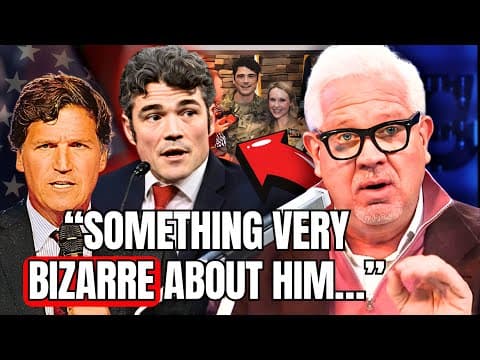
Joe Kent, former director of the National Counterterrorism Center, resigned amid allegations of leaking information and made controversial claims about Iran and Israel's involvement in Middle East conflicts. Glenn Beck and others criticize Kent's assertions as lacking evidence and promoting conspiracy theories, emphasizing the need for facts over opinions in discussions about war and foreign policy.
Recently, Joe Kent, the former director of the National Counterterrorism Center, made headlines by resigning from his position and making controversial claims regarding the ongoing war against Iran. His resignation letter and subsequent media appearances have sparked intense debate and scrutiny, particularly concerning his allegations about Israel's role in Middle Eastern conflicts and the nature of the threat posed by Iran.
Joe Kent resigned from his position citing his inability to support the ongoing war against Iran. In his resignation letter addressed to President Trump, Kent stated that Iran posed no imminent threat to the United States and claimed that the war was initiated due to pressure from Israel and its influential American lobby. He described his revelations as "Pentagon Papers stuff," suggesting that his disclosures could significantly impact America's course.
Kent's resignation was followed by interviews with prominent media figures such as Tucker Carlson, where he reiterated his claims. Notably, Kent suggested without evidence that Israel might have been involved in the assassination of Charlie Kirk, a claim that has been widely criticized as baseless and conspiratorial.
Glenn Beck and other commentators have expressed strong criticism of Kent's statements. Beck highlighted the irresponsibility of Kent's claims, especially given the lack of concrete evidence. He emphasized the danger of spreading conspiracy theories, particularly those that echo anti-Semitic tropes, such as the unfounded assertion that "Jews control the United States."
Beck also pointed out the inconsistency in Kent's stance, noting that Kent had previously acknowledged Iran as an imminent threat just months before his resignation. This sudden shift raised questions about the motivations behind Kent's statements.
Furthermore, reports emerged that Kent was under investigation by the FBI for leaking classified information. This context suggests that his resignation and public allegations might have been attempts to preempt the investigation and shape the narrative.
A recurring theme in the criticism of Kent's claims is the call for evidence-based discourse. Commentators stressed the need for facts rather than opinions or gut feelings, especially when discussing matters as serious as war, national security, and international relations.
The spread of misinformation and conspiracy theories not only misleads the public but also has real-world consequences, including the potential to inflame tensions and divide societies. Responsible journalism and public discourse require a commitment to truth and verification.
In the broader context of the discussion, the distinction between Judaism and Zionism was addressed. Some individuals attempt to separate criticism of Israeli policies (Zionism) from anti-Semitism (opposition to Judaism). However, this separation has been challenged as a myth.
A documentary titled "Zionism and Judaism: The False Separation" explores this topic in depth, arguing that Judaism as a faith and the political movement of Zionism are deeply intertwined. The documentary examines religious texts such as the Torah to demonstrate how the connection to the land of Israel is central to Jewish identity and history.
This nuanced understanding is crucial in navigating the complex debates surrounding Israel, Palestine, and Middle Eastern politics.
Joe Kent's resignation and subsequent allegations have stirred significant controversy, highlighting the challenges of discerning truth in a landscape rife with misinformation and ideological bias. The criticisms from Glenn Beck and others underscore the necessity of grounding discussions in verified facts and approaching sensitive topics with responsibility and care.
As the situation develops, it remains essential for media outlets, public figures, and citizens alike to prioritize truth and avoid the pitfalls of conspiracy theories that can exacerbate divisions and misunderstandings.
This article aims to provide a comprehensive overview of the events and discussions surrounding Joe Kent's resignation and the broader implications for U.S. foreign policy and media discourse.