Stories are powerful tools that shape human values and culture. Hollywood has systematically removed heroism and moral clarity from its narratives, leading to audience disengagement and cultural demoralization. Successful films with sincere, virtuous heroes prove audiences still crave meaningful stories. The future lies with new creators who embrace heroism and goodness in storytelling.
Stories are not mere entertainment; they are the most dangerous and powerful technology humanity has ever created. More potent than any weapon, stories shape our beliefs, values, and even the course of history. Every religion, nation, and revolution has been founded on stories. For example, the American Revolution was ignited not just by muskets but by pamphlets that inspired belief and action.
Wars begin and end with stories that motivate people to fight or seek peace. Paul Lindbarger, the architect of modern psychological warfare for the U.S. military and a science fiction writer, believed words wield more power than bombs. This idea echoes Aristotle's philosophy from 2400 years ago, who described storytelling as a mechanism for moral education and catharsis — an emotional purification experienced when audiences witness characters navigate virtue and vice.
According to Aristotle, stories do not just reflect the human condition; they shape it. Change the stories, and you change the people.
For decades, billions of dollars have been spent to dismantle the stories that inspire belief in something greater than ourselves. The American entertainment industry, the most powerful storytelling apparatus in history, has been hijacked. Whether due to ideology, arrogance, incompetence, or something darker, the industry has sacrificed humility and responsibility for selfishness and ambiguity.
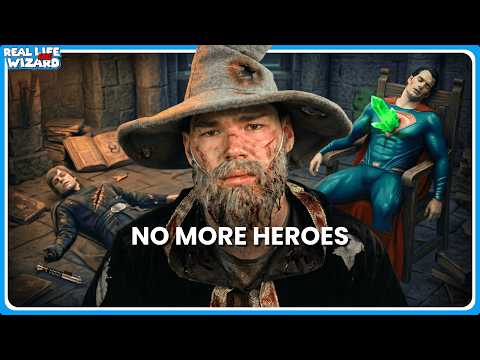
The result is a cultural landscape where good and evil are erased, conscience is silenced, and dignity is dulled. Life is portrayed as morally gray and not worth fighting for. The heroes that once inspired courage, sacrifice, and moral clarity have been killed off on purpose.
Aristotle argued that virtue is formed through habituation — you become what you repeatedly do and consume. Stories were the mechanism by which civilizations practiced virtues together. Watching a hero choose courage over cowardice or sacrifice over selfishness is a moral exercise for the audience.
Aristotle insisted that dramatic characters must be good, not perfect, but aimed toward goodness. Removing goodness from stories leads to losing the audience because humans inherently recognize right and wrong and require moral nourishment.
The consequences of removing heroism are evident in the decline of the North American box office, which is down 23% from pre-pandemic levels, with ticket sales plummeting 40% in a decade. Movie attendance per capita has dropped 46% since its peak. In 2024, many big-budget films failed to attract audiences, including Superman, which did not break even on a $350 million budget.
Frequent moviegoers have halved, and 69% of moviegoers want more original stories. Preferences have shifted dramatically toward watching at home, with 64% preferring their couch over theaters in 2024, compared to 57% favoring theaters in 2018.
Despite the decline, some films have succeeded spectacularly by embracing sincerity, heroism, and respect for the audience. Examples include:
These films share DNA of sincerity, optimism, practical craftsmanship, and protagonists oriented toward goodness.
Modern Hollywood favors morally gray characters because they are easier to write and require less craft. These characters often do not grow, sacrifice, or choose the hard right over the easy wrong. This approach is lazy storytelling, dressed up as complexity and maturity.
More dangerously, this moral ambiguity conditions audiences to accept corruption and cynicism as the norm, lowering expectations for leaders and institutions in real life. It teaches that idealism is naive and goodness is performative.
Iconic heroes like Luke Skywalker, Superman, and Spider-Man have been deconstructed or sidelined, losing their moral backbone and cultural significance. This has led to the closure of comic book shops and a cultural low for franchises like Star Wars.
Audiences have stopped supporting stories that strip away heroism, and Hollywood has blamed the audience instead of acknowledging the failure of their product.
Ryan Gosling recently acknowledged that it is Hollywood's job to make films worth watching, not the audience's job to keep theaters open. The audience has always been ready for meaningful stories; the problem lies with the industry.
The success of films like Project Hail Mary proves that audiences crave heroes who struggle, fail, and try to do the right thing.
The future belongs to new filmmakers, writers, and storytellers who embrace heroism and goodness. The barrier to entry for storytelling has never been lower — anyone can create and distribute stories without needing Hollywood's permission.
If you are a creator, take up the mantle to tell stories that matter. If you are not a creator, support those who are by sharing their work, buying their books, playing their games, and watching their films.
Stories have always mattered because they shape our values and culture. Hollywood killed your heroes to demoralize and dehumanize you, but it is time to take them back.
We are witnessing a cultural demoralization fueled by the removal of heroism from stories. However, the power to change this lies with creators and audiences alike. By embracing stories with virtue, courage, and hope, we can rebuild a culture that inspires and uplifts.
Until then, support meaningful storytelling and reject the cynical narratives that seek to dull our conscience and dignity.
Create, innovate, and inspire others to do the same. The future of storytelling is in your hands.