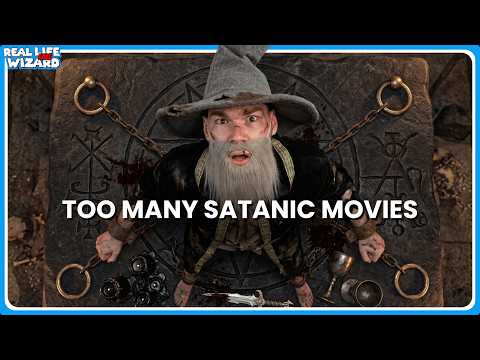
Hollywood continues to produce a steady stream of satanic and occult-themed movies, often portraying evil as dominant and God as absent or weak. This trend, exemplified by films like Ready or Not and its sequel, reveals a pattern of misrepresenting Christian theology and oversimplifying complex narratives, leading to uninspired storytelling and a cultural conditioning that emphasizes darkness over light.
Hollywood has been relentlessly producing satanic and occult-themed movies, with new releases appearing every few weeks. Recent examples include Ready or Not 2, They Will Kill You, Undertone, and Forbidden Fruits, all revolving around satanic cults, human sacrifices, and demonic encounters. This surge is not entirely new but has become more pronounced and mainstream than ever before.
The volume of occult and satanic media now surpasses even superhero content. While such themes were once underground, they are now openly embraced by the film industry. This trend coincides with societal revelations about the dark deeds of elites, some of whom allegedly worship multiple Satans, as referenced in Christian scripture.
The question arises: why is Satan such a prevalent figure in horror and occult films? Horror writer H.P. Lovecraft, an atheist, created cosmic horrors based on humanity's insignificance rather than biblical demons. Yet, Hollywood overwhelmingly favors biblical demonology and satanic fan fiction over Lovecraftian themes.
This overuse has led to a saturation where satanic elements lose their scare factor due to lack of originality. Moreover, biblical stories inherently balance evil with the greatest good—Jesus Christ. However, Hollywood often ignores this balance, focusing solely on evil without acknowledging the divine authority of Christ.
The Ready or Not films illustrate this phenomenon well. The original 2019 film was a contained thriller about a single satanic family bound by a deadly pact. It succeeded due to its focused narrative, claustrophobic setting, and dark humor. The satanic elements were subtle and built up gradually, culminating in a satisfying conclusion where justice was served.
In contrast, Ready or Not 2 expands the scope to a global satanic conspiracy, diluting the original's tension and intimacy. The sequel leans heavily into absurdist humor and gore, losing the thriller essence. The characters become one-dimensional villains seeking power, ignoring the theological implications of their choices.
The sequel's portrayal is incoherent within its own logic: characters knowingly choose eternal damnation for temporary power, without grappling with the consequences or the existence of Christ as king. This lack of theological engagement undermines the story's credibility.
Hollywood often cherry-picks elements of Christian theology, emphasizing satanic rituals, blood sacrifices, and demonic power while neglecting the presence and authority of God. This inversion of the theological hierarchy—portraying Satan as co-equal or victorious over God—has been a staple since films like Rosemary's Baby (1968), The Exorcist (1973), and The Omen (1976).
These films established a genre where evil often triumphs ambiguously or outright, and God is absent or powerless. This trend continues in franchises like The Conjuring, Insidious, and even in seemingly innocent films like Hocus Pocus, which features witches engaged in satanic rituals.
Father Francesco Bamonte, president of the International Association of Exorcists, critiques these films for misrepresenting Christian theology. He explains that Satan is a created being subordinate to divine authority, not an equal opposite to God. In the Gospel of Mark, demons recognize Jesus' authority and beg for mercy, highlighting the hierarchy ignored by Hollywood.
Many satanic films fail to address the logical questions their premises raise. If characters acknowledge the reality of Satan and hell, why would they willingly choose damnation? The absence of faith or divine presence in these stories results in narratives that are theologically incoherent and unsatisfying.
This selective storytelling reduces complex spiritual realities to mere aesthetics, stripping away the depth and balance inherent in the source material. It also conditions audiences to view evil as dominant and spectacular, while goodness is marginalized or mocked.
Several reasons contribute to this trend:
Hollywood's approach to Christianity is unique compared to other religions, where similar fan fiction tactics would be met with significant resistance.
Over decades, these films have shaped public perception, portraying demonic power as unstoppable and visually spectacular, while God is diminished or absent. This narrative influences societal views on good and evil, often glorifying darkness and neglecting the light.
Hollywood's fascination with satanic movies reflects a deeper cultural and theological disconnect. While these films can be entertaining, their selective and often inaccurate portrayal of Christian theology leads to uninspired storytelling and a skewed worldview. Recognizing the full context of these narratives—including the authority of God and the reality of goodness—is essential for more balanced and meaningful storytelling.
Until then, audiences are left with a steady stream of satanic fan fiction that entertains but often fails to engage with the profound truths underlying its source material.
Create, innovate, inspire, and for the love of God, be discerning in the stories you consume.