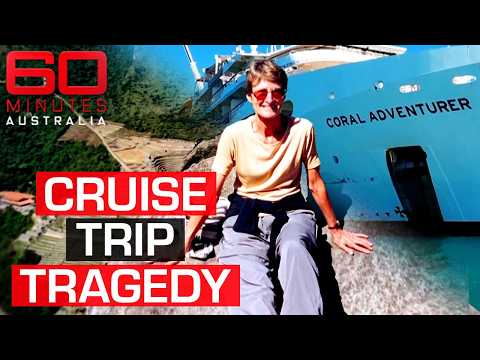
In October last year, Suzanne Reece, an 81-year-old passenger on the luxury cruise ship Coral Adventurer, was left behind on Lizard Island during a guided hike and died of heat exposure. The cruise ship sailed off without her, and it took five hours before the crew realized she was missing. The incident exposed severe safety failures and negligence by the cruise company, leaving the family devastated and seeking answers.
In October last year, a tragic incident unfolded on the Coral Adventurer, a luxury cruise ship owned by NRMA, when 81-year-old passenger Suzanne Reece was left behind on Lizard Island in the Great Barrier Reef during a guided hike. The ship sailed off without her, and she died of heat exposure alone on the remote island. This article explores the events leading to this tragedy, the failures of the cruise company, and the impact on Suzanne's family.
Suzanne Reece was a fit, healthy, and strong 81-year-old woman with a lifelong passion for travel and adventure. An experienced bushwalker and former accountant, she had undergone a medical checkup before the cruise and was given a clean bill of health. She was excited to embark on a $30,000 luxury cruise around the top of Australia aboard the Coral Adventurer.
The Coral Adventurer's first stop was Lizard Island, a remote and breathtaking location in the Great Barrier Reef. On the day of the incident, Suzanne joined a small group of passengers for a 4-kilometer guided hike to the summit of Cook's Look track. The hike was challenging, especially under the intense heat, with temperatures reaching 30°C in the morning and rock surfaces heating up to 50°C.
During the hike, Suzanne reportedly felt unwell and was instructed by the guides to return to the beach alone. This decision was contrary to standard safety protocols, which require that anyone feeling unwell should be accompanied and that assistance should be radioed for immediately. Suzanne attempted to make her way back alone but became disoriented and fell off the radar of the guides and crew.
After the hikers were taken back to the ship by tender and the beach was cleared at 3:35 p.m., the Coral Adventurer set sail. However, the crew failed to notice that Suzanne had not returned. It took a staggering five hours and the ship traveling 50 nautical miles before the crew realized she was missing and turned back to search for her.
Search and rescue teams scoured Lizard Island, including a rescue helicopter dispatched from Cairns. Suzanne's body was found near the beach, just 50 meters from the walking track, but tragically, it was too late. She had died of heatstroke, abandoned and alone.
Suzanne's daughter, Kate Reece, and son-in-law, Andrew Cowie, were unaware of the search until they received a late-night knock from police. They had last heard from Suzanne via text on the morning of the hike. The family has expressed shock and disbelief over how such negligence could occur and have criticized the cruise company and NRMA for their lack of transparency and communication.
Despite multiple requests, the family has received minimal information about the circumstances of Suzanne's death. The company has not confirmed basic details such as when they realized Suzanne was missing. Furthermore, the family had to request a refund for Suzanne's unused cruise fare, which was not automatically offered.
Marine search and rescue veteran Peter Graham, who has trained cruise staff on safety protocols, condemned the incident as unforgivable. Standard procedure requires a headcount of passengers after excursions and immediate action if someone is missing. The failure to radio in Suzanne's condition, to accompany her, and to conduct a proper headcount before departure represents a series of critical safety failures.
Former Coral Adventurer guide Fern Trent confirmed that it was mandatory to have passengers sign on and off the ship and that no one should be left alone if feeling unwell. The decision to send Suzanne down the hill alone was shocking and against protocol.
Six months after the incident, the family continues to seek answers. NRMA and Coral Expeditions have admitted to safety failures and introduced additional safety procedures since Suzanne's death but have declined interviews and have not provided detailed explanations.
The incident has raised serious questions about risk management and passenger safety on luxury cruises, especially those catering to older travelers. The Coral Adventurer was also involved in another serious incident two months later when it struck a reef in Papua New Guinea, highlighting ongoing safety concerns.
The death of Suzanne Reece on Lizard Island is a heartbreaking tragedy resulting from a series of preventable failures by the Coral Adventurer's crew and management. It underscores the critical importance of strict safety protocols, clear communication, and accountability in the cruise industry. For Suzanne's family, the hope remains that a thorough investigation will provide the answers and justice they deserve.
This story serves as a sobering reminder that even in the most luxurious and seemingly safe travel experiences, vigilance and care are paramount to protect the lives of passengers, especially the vulnerable.