American Bandstand, a pioneering music and dance TV show that shaped American youth culture for 37 years, ended in 1989 following a censorship incident involving a rap performance. The show's rigid control, censorship policies, and resistance to evolving music genres led to its decline amid competition from MTV and changing audience tastes.
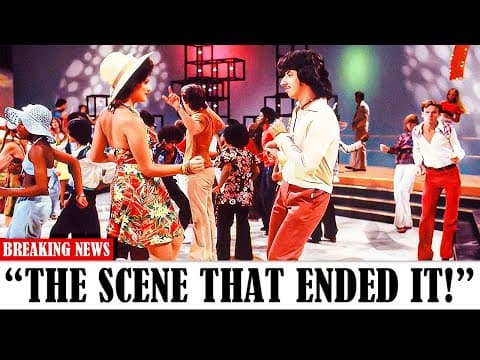
For 37 years, American Bandstand was a defining force in American youth culture, influencing music, fashion, and dance across the nation. However, beneath the surface of smiles and dance floors lay decades of strict control, censorship, and rigid standards. An infamous incident in August 1989 exposed these tensions and ultimately sealed the show's fate.
American Bandstand began in 1952 as a local Philadelphia program called Bandstand, airing on WFI TV. The concept was simple: play popular records and let local teenagers dance live on television. The show quickly gained popularity, with teenagers lining up for a chance to appear on camera and parents concerned about school attendance.
Bob Horn, the original host, acted as the gatekeeper, controlling which dancers appeared and which songs were played. However, his tenure ended abruptly in 1956 due to legal troubles and rumors of inappropriate behavior.
Dick Clark took over as host in July 1956 and transformed the show within weeks. His genuine charm and authentic interest in teenagers resonated with audiences. Clark minimized commentary, letting music and dancers take center stage, and he understood the commercial potential of standardizing youth culture nationally.
On August 5, 1957, American Bandstand debuted nationally on ABC, uniting teenagers across the country in shared music and dance experiences. By 1960, the show reached 20 million viewers daily, with Clark wielding immense influence over which artists succeeded.
In 1960, congressional investigations revealed Clark's financial entanglements with the music industry, including ownership stakes in music companies and copyrights to numerous songs that received disproportionate airtime. Despite evidence of payola practices, Clark maintained a clean image and was reprimanded but allowed to continue after divesting his music interests.
In contrast, other figures like DJ Alan Freed faced career destruction for similar accusations, highlighting issues of power and race in the industry.
Following the scandal, Clark implemented strict censorship policies throughout the 1970s and 1980s. Internal memos documented directives to alter artist costumes, cut protest lyrics, and reject performances that did not fit a mainstream, family-friendly format.
A 1981-1983 operations report explicitly stated that content must be accessible and non-confrontational, systematically excluding provocative or politically engaged material regardless of artistic merit.
Academic studies confirmed Clark's role as the sole decision-maker for all aspects of production, including artist selection, song content, and even costume choices.
The launch of MTV in 1981 revolutionized music television by offering 24-hour music videos with creative freedom and professional production. American Bandstand's format, requiring teenagers to dance to pre-selected, lip-synced records, began to feel outdated.
Clark attempted to modernize the show with new artists and updated graphics but tightened control further, systematically rejecting hip hop, new wave, electronic music, and socially conscious artists.
A 1983 content analysis showed only 6% of acts were non-traditional, with the majority adhering to the old lip-sync and choreography model.
In 1986, ABC proposed shortening the show from 60 to 30 minutes, but Clark resisted and eventually moved American Bandstand to syndication in 1987, securing a contract with USA Network to maintain greater control.
Clark stepped down as on-camera host in 1989 but retained complete production and content control. David Hirs was selected as the new host but struggled to connect with audiences accustomed to Clark's presence.
On August 12, 1989, during a taping at Universal Studios, a young rapper from Compton was scheduled to perform a song addressing social confrontation and street violence with uncensored lyrics. This was the first time American Bandstand had agreed to film a rap performance with uncensored content.
However, after the dress rehearsal, Dick Clark, still overseeing content, rejected the performance, stating, "This is not what Bandstand has ever played or will ever play."
Despite the artist having full broadcasting rights, the performance was censored and deleted minutes before airing. This act of censorship was about maintaining the show's brand image rather than legal compliance.
Within 72 hours, contracts were frozen, and internal meetings revealed irreconcilable tensions between preserving the traditional format and embracing new music genres like hip hop and socially conscious music.
Clark refused to compromise, stating, "If you are reorienting Bandstand as a channel for social experimentation, you can do it without me."
The show was abruptly canceled after the September 2 taping, with USA Network announcing the end of American Bandstand on October 7, 1989.
American Bandstand's cancellation was not due to a sudden scandal or ratings collapse but the accumulation of contradictions: profiting from black music while excluding black teenagers, surviving payola scandals while maintaining financial conflicts of interest, and claiming to showcase youth culture while suppressing genuine voices.
Clark's absolute control over artist selection, content, and production maintained consistency but ultimately prevented necessary evolution in a rapidly changing media landscape.
The August 12, 1989 censorship incident symbolized the show's fundamental contradiction and resistance to change, leading to its demise.
American Bandstand shaped American youth culture for nearly four decades but ultimately fell victim to its own rigidity and censorship. The show's inability to adapt to new musical expressions and social realities, combined with strict content control, led to its quiet disappearance from television.
Its story serves as a powerful reminder of the challenges institutions face when balancing tradition with innovation and the importance of embracing authentic voices in cultural expression.
What are your thoughts on American Bandstand's legacy and its final years? Share your comments and reflections.