This article explores how Bari Weiss, appointed to lead CBS under the Ellison ownership, censored a 60 Minutes investigative segment exposing the Trump administration's deportation of Venezuelan men to a brutal concentration camp in El Salvador. The censorship reflects a broader agenda to protect MAGA interests and suppress uncomfortable truths, revealing conflicts between free speech claims and actual media control.
In recent developments within the media landscape, Bari Weiss has taken a prominent role at CBS, a network now under the ownership of the Ellison family, who acquired Paramount, CBS's parent company. This shift has sparked controversy, particularly regarding editorial decisions that appear to align with protecting certain political interests, notably those of the MAGA movement and Israel.
This article delves into the circumstances surrounding the censorship of a 60 Minutes investigative segment that exposed the Trump administration's deportation of hundreds of Venezuelan men to a notorious concentration camp in El Salvador. The segment was reportedly killed by Bari Weiss, raising serious questions about media freedom, journalistic integrity, and political influence.
The Ellisons, described as Zionist billionaire owners, brought Bari Weiss on board to run CBS. Their apparent goal is to transform CBS into a "both sides" factory, promoting false equivalence and softening criticism of MAGA while protecting Israel at all costs.
Bari Weiss's track record includes efforts to remove pro-Palestine voices from academic institutions, indicating a history of censoring dissenting perspectives. Her appointment is seen as a strategic move to steer CBS's editorial direction in line with the Ellisons' interests.
The 60 Minutes segment in question investigated the Trump administration's deportation of hundreds of Venezuelan men to El Salvador, a country most of them had no connection to. The White House labeled these men as terrorists and gang members, invoking a centuries-old wartime power to deport them immediately without due process.
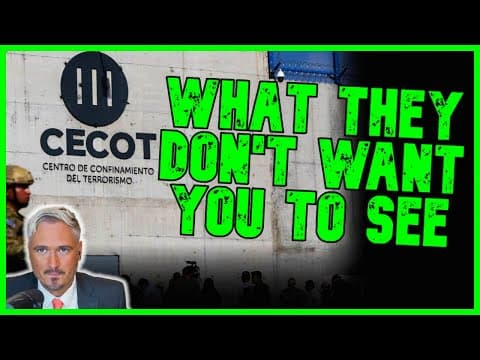
The deportees were sent to the Terrorism Confinement Center (Secot), built in 2022 as part of Salvadoran President Nayib Bukele's anti-gang crackdown. The prison is designed to hold 40,000 inmates and is notorious for its harsh conditions:
President Bukele has even allowed social media influencers to tour the facility, showcasing it as a point of pride.
The 60 Minutes team, along with students from UC Berkeley's Human Rights Center, confirmed that many of the deportees were not gang members but innocent people wrongfully labeled as criminals. The segment highlighted the violation of both U.S. and international law, describing the treatment as clear torture.
Despite the investigative team's efforts, Bari Weiss intervened to kill the story. She claimed the segment would air later and cited the need to get someone from the administration on the record. However, the administration refused to comment, effectively giving them a kill switch to suppress the story.
This move has been widely criticized as a war on facts, truth, and journalism. CBS staff reportedly despise Weiss's approach, viewing her as an official government censor rather than a journalistic leader.
Bari Weiss founded an outlet called the Free Press, which critics argue is neither free nor independent. She also launched the University of Austin, which some describe as a scam. While promoting free speech, Weiss simultaneously seeks to control discourse boundaries by excluding voices like Nick Fuentes and Hasan Piker, contradicting her stated principles.
The 60 Minutes segment was banned in the United States but accidentally aired in Canada. Viewers in Canada recorded and shared the segment online, allowing wider access despite the censorship attempts.
The segment reveals the Trump administration's role in deporting innocent people to a brutal prison, violating due process and court orders. It implicates figures like Marco Rubio, who allegedly cut deals with Bukele to facilitate these actions.
The deportations and treatment of detainees violate U.S. and international laws. The segment calls for accountability, stating that those responsible must face justice for these human rights abuses.
The censorship of this 60 Minutes segment by Bari Weiss and CBS under the Ellisons' ownership highlights the troubling intersection of media control, political influence, and suppression of truth. It exposes how journalistic integrity can be compromised to protect powerful interests, undermining the very principles of a free press.
The public's access to the censored segment through Canadian broadcasts underscores the importance of vigilance and resistance against censorship. It also serves as a call to action for accountability and the defense of human rights.
Share this information widely to raise awareness about the censorship and the human rights violations it sought to conceal. Support independent journalism and demand transparency and accountability from media organizations and political leaders alike.
This article is based on a detailed analysis of the events surrounding the censorship of the 60 Minutes segment exposing the Trump administration's deportation policies and the role of Bari Weiss in suppressing this critical story.