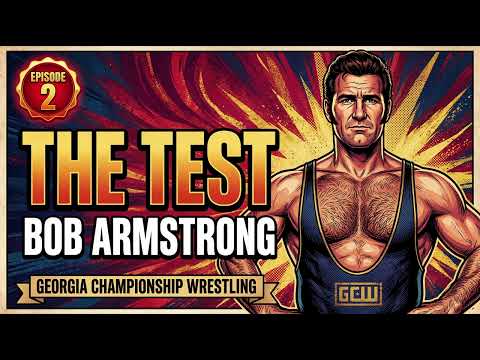
How Bob Armstrong Proved His Dedication and Potential in His First Year of Wrestling
Bob Armstrong transitioned from a firefighter to a promising wrestler in 1966, impressing mentors with his natural ability and steady demeanor. Through a series of tests involving varied bookings, match strategies centered on his signature headlock, and handling wins and losses gracefully, Bob earned respect and proved his commitment. The ultimate test awaited after a month-long booking hiatus.
On Monday morning, August 1st, 1966, Paul Jones sat in his Atlanta office and made a pivotal phone call to Eddie Graham in Tampa, Florida. The conversation centered on Bob Armstrong, a rookie wrestler with an unusual background as a firefighter who had only trained three times. Despite limited training and a two-month absence due to firefighting duties, Bob possessed the size, look, and natural ability that Paul believed could not be taught.
Paul had sent Bob to Florida to be evaluated by Eddie, hoping to see how he handled pressure outside the Georgia territory. Eddie's feedback was positive; Bob did everything asked of him, followed directions without hesitation, and showed remarkable composure and physical conditioning. Eddie noted that Bob's firefighting experience contributed to his steadiness and lack of panic in the ring.
Eddie proposed a strategic plan to test Bob's commitment and resilience. The plan involved varying the number of bookings Bob received each month to observe his reaction to the ups and downs of wrestling schedules. The ultimate test would come in December when Bob would be taken off the cards completely, with the expectation that if he returned in January ready to work, it would prove his dedication.
Eddie also advised focusing Bob's wrestling style around a powerful headlock, emphasizing fundamentals like shoulder blocks and drop downs, avoiding punches or kicks initially. The headlock was to become Bob's signature move, building a persona and narrative that facing him was like hitting a wall.
In August, under Ray's booking following Eddie's plan, Bob wrestled several matches:
- August 6th in Marietta: Defeated Evily Valentine using the headlock for a clean three-count.
- August 13th in Marietta: Held Wildman Waya (later known as Scandor Akbar) in a persistent headlock until submission.
- August 19th at Atlanta City Auditorium: Mixed the headlock with a hard tackle to win by count-out against Kenny Mack.
- August 20th in Marietta: Executed a detailed finish to win against veteran George Harris.
Ray observed that Bob could follow instructions and listen well.
In September, Bob faced a reduction in bookings, working only once in Atlanta or Marietta. This was a deliberate test of his attitude and commitment. Unlike some young wrestlers who might push back or disappear, Bob accepted the schedule without complaint, showing humility and dedication by traveling and performing as instructed.
October marked Bob's first wrestling angle when he saved Roger Kirby from an attack by Butcher Vashon, thrilling the crowd. He also wrestled his first main event teaming with Kirby against Louis Tole and Butcher Vashon, with the headlock move electrifying the audience.
Bob experienced both wins and losses, including a loss to Bill Dromo in Savannah, learning that wrestling was about storytelling rather than just the win-loss record.
In November, Bob wrestled five matches across various locations, mixing victories and defeats. He consistently showed up early, followed directions, and maintained a positive attitude regardless of the crowd size or pay.
Ray noted Bob's steadiness and ability to handle both wins and losses without being shaken.
December was the critical phase of Eddie's test. Ray informed Bob that he would not be booked during the December run, a test to see if Bob would return in January ready to work. This was a significant moment, as it would determine whether wrestling was truly Bob's main focus or just a passing interest.
By the end of 1966, Bob Armstrong had completed his first year in wrestling, transitioning from a firefighter to a respected wrestler. He had earned the respect of mentors like Eddie Graham, Paul Jones, and Ray, built a fan-favorite persona around his headlock, and passed numerous tests of character and commitment.
The ultimate question remained: after a month without bookings, would Bob come back? The answer to this question would mark the turning point in his wrestling career.
Stay tuned for the next chapter, Episode 3: The Comeback, on Pro Wrestling Inside and Out.