
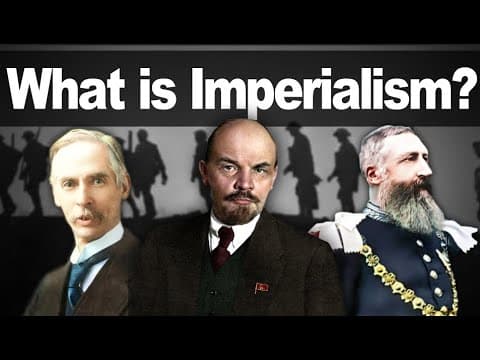
This article explores the complex interplay between imperialism, capitalism, and the outbreak of World War I, arguing that the war was not merely a result of nationalism or the assassination of Archduke Ferdinand, but rather a culmination of deeper economic and political forces driven by capitalist expansion and imperialist rivalry.
The history of World War I plays a fundamental role in shaping how nations perceive themselves and their collective memories. November 11th, known as Remembrance Day, serves as a poignant reminder of the sacrifices made during the war, but it also brings to light the contradictions inherent in how societies remember this conflict. Should we honor the bravery of soldiers, or reflect on the senseless loss of 20 million lives? This article seeks to unravel these contradictions by examining the deeper roots of World War I, particularly the role of imperialism.
In capitalist societies, the narratives surrounding historical events like World War I are often shaped by the capitalist class. The media, history books, and films tend to reflect the interests of those in power, leading to a collective memory that may overlook the systemic issues that contributed to the war. The popular narrative attributes the war's outbreak to a combination of nationalism, militarism, and strategic alliances, ignited by the assassination of Archduke Franz Ferdinand. However, this explanation often fails to address the underlying political and economic factors at play.
The 19th century was marked by rapid industrialization and the rise of capitalism across Europe. Innovations such as coal, steam engines, and large-scale machinery transformed production methods, leading to unprecedented levels of exploitation among workers. While the capitalist class amassed wealth, the working class faced dire poverty and oppression, which sparked widespread resistance and criticism, notably from figures like Karl Marx and Friedrich Engels.
Marx and Engels highlighted the contradictions of capitalism, where the bourgeoisie monopolized resources and wealth, leaving the proletariat in a state of dependency and exploitation. They argued that the capitalist system was inherently flawed, driven by the relentless pursuit of profit and surplus value, which ultimately led to crises of overproduction.
As industrial monopolies grew, so did the need for markets and resources. By the late 19th century, European nations began to engage in a scramble for colonies, driven by the necessity to export surplus production. This competition for resources and markets led to heightened tensions among European powers, setting the stage for conflict.
The Franco-Prussian War of 1870 exemplified the destructive potential of nationalism and militarism. Stoked by leaders like Otto von Bismarck, the war resulted in significant casualties and laid the groundwork for future animosities, particularly between France and Germany. The harsh reparations imposed on France after its defeat only fueled resentment and a desire for revenge, which would later manifest in World War I.
The early 20th century saw further conflicts, such as the Russo-Turkish War, which reshaped national borders and intensified imperial ambitions. The Berlin Conference of 1884, where European powers divided Africa among themselves, illustrated the lengths to which nations would go to secure resources and markets, often disregarding the rights and lives of the colonized peoples.
As tensions escalated, the assassination of Archduke Ferdinand in 1914 was merely the spark that ignited the already volatile situation. The event was exploited by various nations to further their own interests, leading to a complex web of alliances and declarations of war.
Vladimir Lenin's theory of imperialism provides a crucial framework for understanding the causes of World War I. He argued that imperialism was not merely a policy choice but an inherent stage of capitalism, characterized by the monopolization of production and finance. Lenin contended that the capitalist system's need for expansion and control over foreign markets was a driving force behind the war.
Lenin's insights were grounded in the observation that as industrial capital became concentrated, the competition for global markets intensified, leading to conflicts among imperialist powers. He emphasized that the war was fundamentally an imperialist war, driven by the economic interests of the ruling classes rather than the nationalist sentiments often portrayed in mainstream narratives.
The Treaty of Versailles, which concluded World War I, aimed to punish Germany but ultimately exacerbated the conditions that led to future conflicts. By crippling Germany economically and politically, the treaty sowed the seeds for World War II, demonstrating that the contradictions of imperialism and capitalism were far from resolved.
While it is not inaccurate to attribute the causes of World War I to nationalism, militarism, or the assassination of Archduke Ferdinand, such explanations often overlook the deeper economic and political processes at play. Lenin's theory of imperialism connects these surface-level phenomena to the underlying dynamics of capital accumulation and competition among imperialist powers.
Understanding World War I through the lens of imperialism reveals the systemic issues that continue to shape global conflicts today. The lessons of history remind us that without addressing the root causes of war, society risks repeating the mistakes of the past.



















