This blog post explores how long a million dollars can last in retirement, considering factors like spending habits, investment strategies, and tax implications. Using a case study, it highlights the importance of financial planning and the impact of different scenarios on retirement savings.
In today's financial landscape, the question of how long a million dollars can sustain an individual in retirement is crucial. This blog post delves into a case study that examines this very question, providing insights that are applicable to anyone contemplating retirement, regardless of their savings amount.
The scenario involves an individual with a million dollars in liquid assets, aged 60, who plans to retire immediately. They intend to start receiving Social Security benefits at age 62, estimated at $2,000 per month. The investment portfolio is composed of 60% stocks and 40% bonds, which is a common allocation strategy.
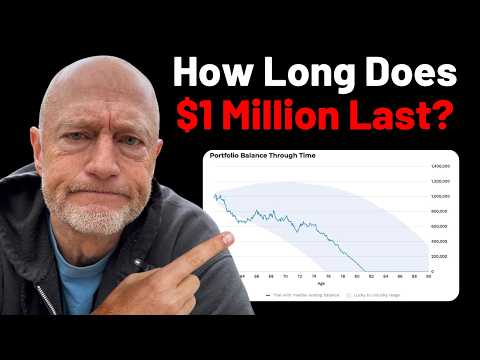
For this analysis, we assume monthly expenses of $6,000. This figure is crucial as it directly influences how long the retirement savings will last. The analysis utilizes a Monte Carlo simulation, which runs 10,000 different scenarios to assess the likelihood of running out of money during retirement.
Upon running the simulation with the initial parameters:
The results indicate that the median retiree would run out of money by age 81. This outcome is concerning, as it highlights the risk of depleting retirement savings too early.
To explore the impact of spending habits, we adjusted the monthly expenses to $4,500. This change significantly improved the financial outlook:
This adjustment underscores the importance of managing expenses in retirement to extend the longevity of savings.
Next, we examined the scenario where the individual delays retirement until age 67, continuing to work and earn $75,000 annually, with a 2% annual increase. In this case, the Social Security benefit would increase to $2,860 at full retirement age. With the same monthly expenses of $6,000, the results were markedly better:
This scenario illustrates the benefits of delaying retirement and continuing to contribute to retirement savings.
When we raised the monthly expenses to $7,000, the simulation showed a wider variance in outcomes:
A million dollars is not always equal to a million dollars when considering tax implications. Funds in traditional retirement accounts are taxed as ordinary income upon withdrawal. Therefore, it is advisable to diversify retirement savings across different account types:
By spreading assets across these accounts, retirees can strategically manage their tax liabilities and maximize their income during retirement.
In conclusion, how long a million dollars lasts in retirement depends on various factors, including spending habits, investment performance, and tax strategies. It is essential to plan carefully and consider different scenarios to ensure financial security in retirement. By being proactive and informed, individuals can enjoy their retirement years without the fear of running out of money.